
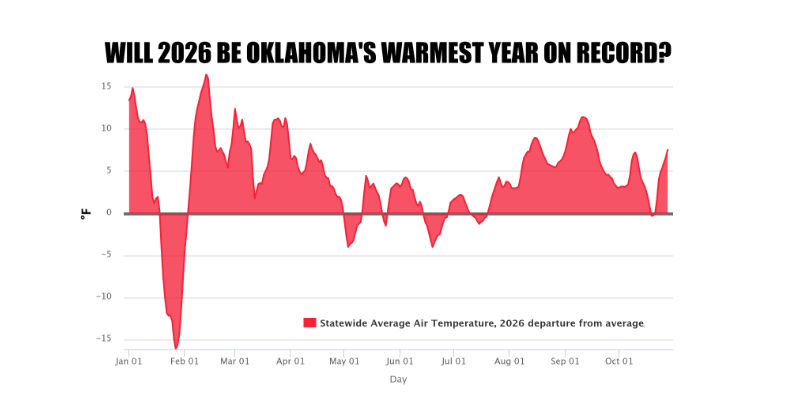
While long-range climate models hint at potential polar vortex disruptions and sudden stratospheric warming far to the north, Oklahoma State Climatologist Gary McManus notes that 2026 is leaving no doubt about where it stands in the state’s historical climate record books. According to McManus, Oklahoma is not simply contending for the all-time warmest year on record—it is on pace to completely dismantle the previous benchmark set in 2012.
The climatological data reveals an astonishing run of persistent heat. From January through September, Oklahoma’s statewide average temperature reached 68.6°F, running 5 degrees above normal and a full 1.5 degrees warmer than the previous record pace established during 2012. McManus points out that October has only accelerated the trend, running roughly 6.1 degrees above average. That trajectory places the statewide January-through-October average around 68.4°F, easily overtaking 2012’s mark of 66.3°F.
Overcoming this persistent heat pattern would require an unprecedented turnaround. McManus explains that unless a drastic shift occurs over November and December—such as a sustained kink in the polar jet stream driving Arctic air south—2026 is firmly positioned to secure the top spot. Even a late-year cooldown may not be enough to prevent a new record, considering the state currently tracks more than 2 degrees warmer than 2012’s final statewide average of 63.2°F, having experienced only one significant Arctic blast and brief below-normal stretches throughout the entire 16-month period.
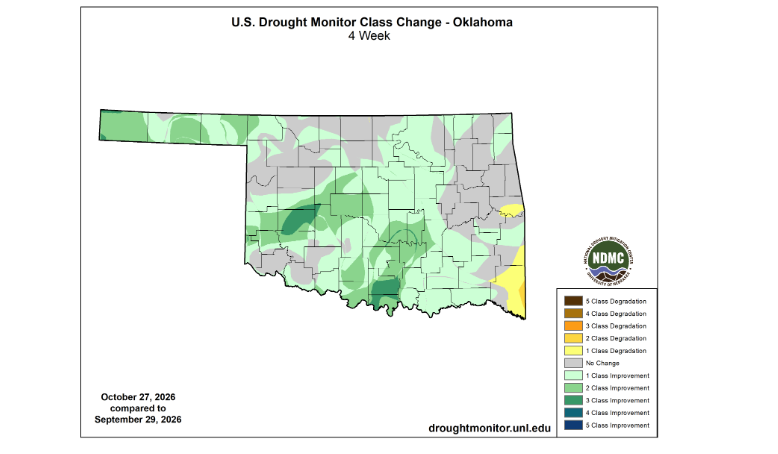
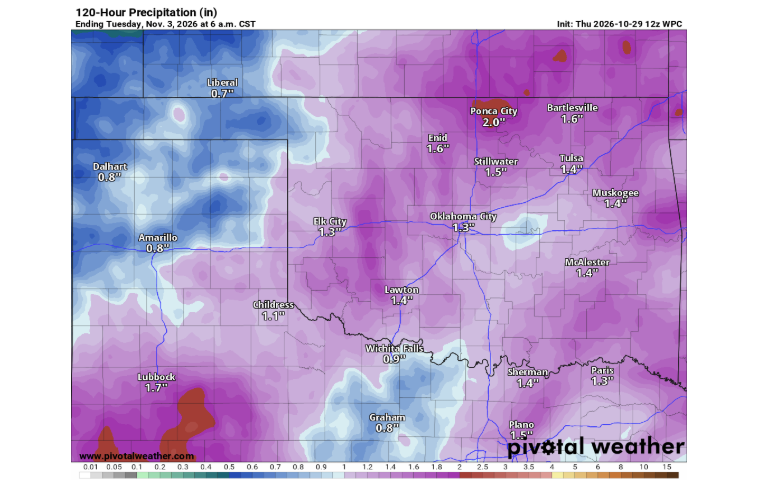
In the short term, rainfall chances across the state offer much-needed moisture to help chip away at lingering drought conditions and improve the U.S. Drought Monitor map. However, significant autumn chill remains absent from the immediate forecast, with McManus pointing out that Saturday will serve as the “coolest” day of the next five, still seeing highs settle comfortably in the 70s.
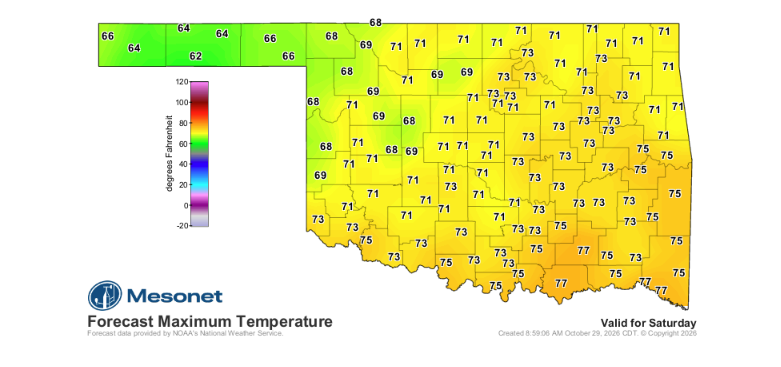
To read more from State Climatologist Gary McManus on his mesonet ticker click here: