EPA’s David Fotouhi Outlines EPA Regulatory Relief for Oklahoma Agriculture
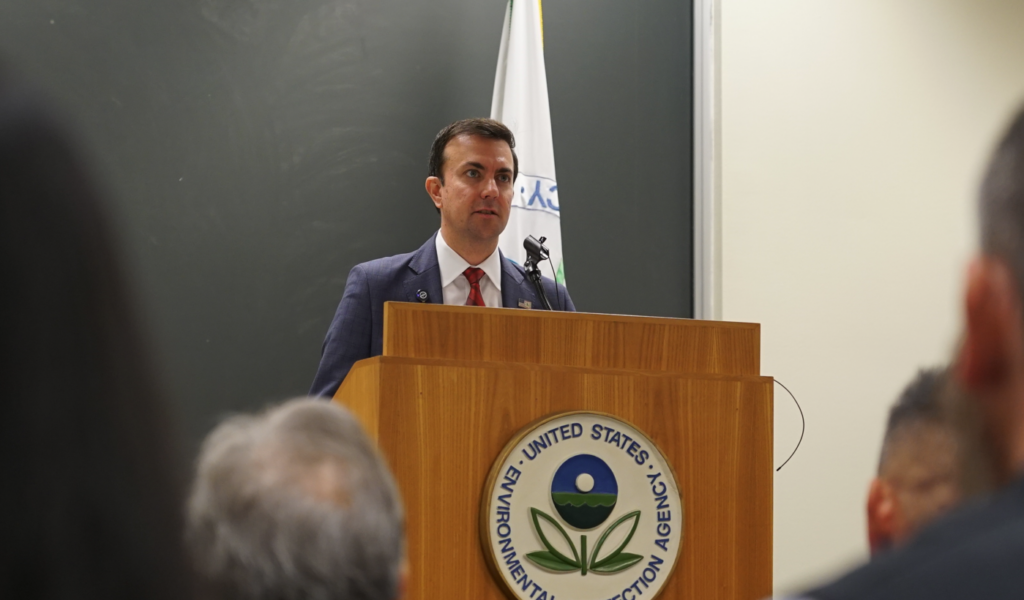
During an extensive tour across the state, EPA Deputy Administrator David Fotouhi sat down with farm director KC Sheperd to detail the agency’s targeted shift toward cooperative oversight, regulatory transparency, and tangible economic relief for Oklahoma agriculture. Highlighting a practical philosophy aimed at removing bureaucratic roadblocks for producers, Fotouhi explained that federal regulators must listen directly to rural communities rather than handing down rigid dictates from Washington, D.C.
A Homecoming Focused on Cooperation and Clarity
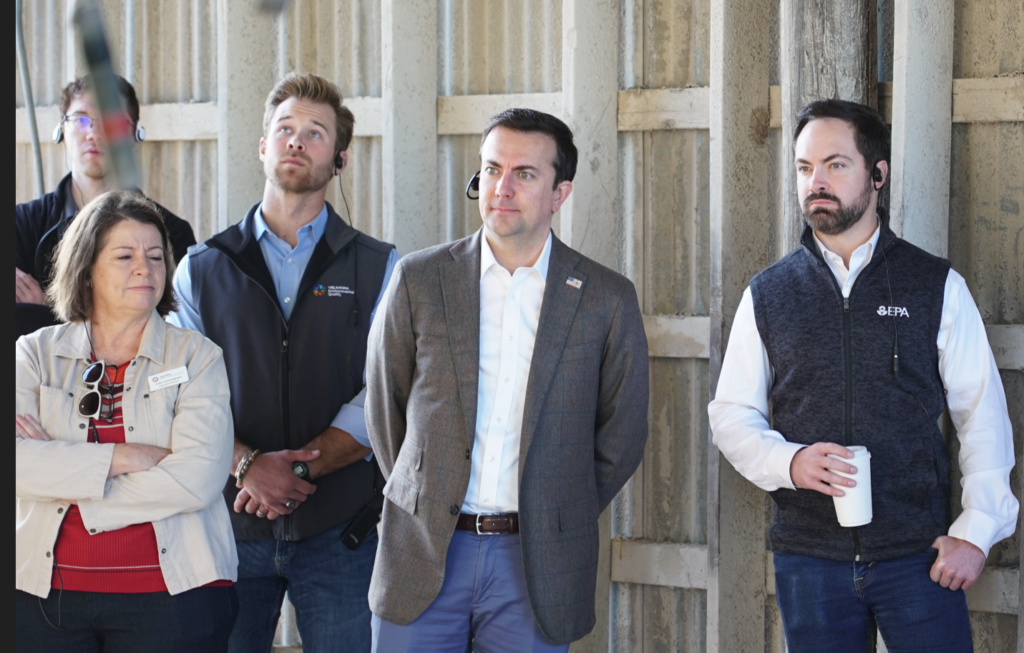
Fotouhi, an Oklahoma native, used his multi-day visit to meet with a broad spectrum of state leaders, including roundtables with the Oklahoma Farm Bureau and the Petroleum Alliance of Oklahoma, alongside on-the-ground stops at multi-generational operations such as Jensen Farms in El Reno.
“It’s really important for us to get out of Washington, D.C. and meet with folks directly in the agricultural community and the energy community to really get a sense of how the regulations that we promulgate in Washington are affecting real folks and real communities on the ground,” Fotouhi said. “And it just so happens that I grew up in Oklahoma, so it’s been a great opportunity for me to come back home and really get to travel around the state and meet with folks and hear directly from them.”
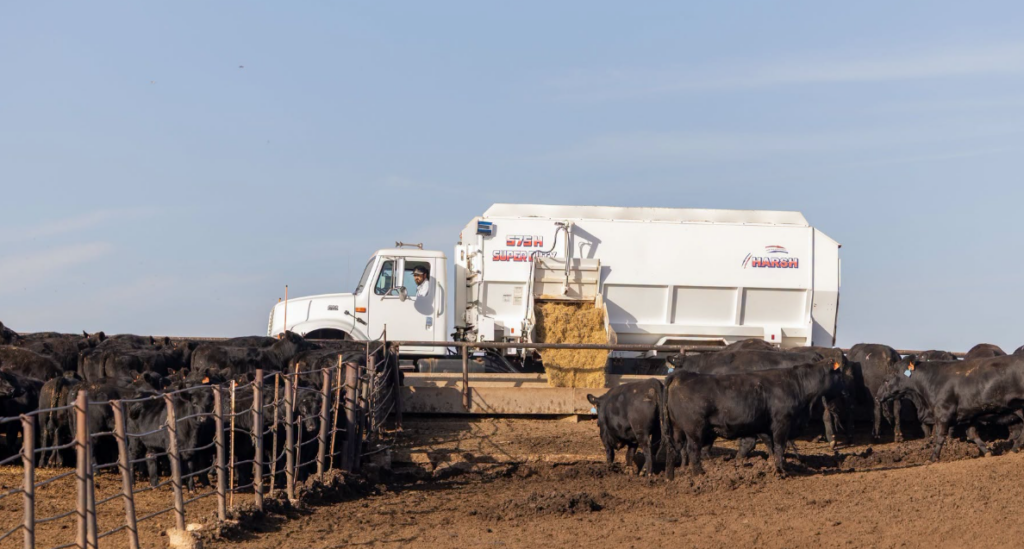
While walking through Jensen Farms’ cattle operation, Fotouhi pointed out that agricultural families have long led the nation in conservation and land management.
“They’re proving that our farmers and ranchers are the best stewards of the environment and are the original conservationists in many ways,” Fotouhi said. “The approach we’re taking at EPA under the Trump administration is to partner with farmers and partner with ranchers as opposed to bringing down the heavy hand of Washington. Really, we can get so much more done in partnership.”
Fotouhi emphasized that the agency’s primary obligation to rural America is eliminating regulatory ambiguity so producers can direct their energy toward daily operations.
“It’s really that message of partnership, of cooperation, of providing technical support, providing that clarity in regulatory requirements so that folks aren’t left guessing about what requirements they need to meet,” Fotouhi explained. “These are folks who are working hard every day. They don’t want to have to spend their time trying to guess at what Washington is going at when it comes to complying with environmental regulations. So that’s our job: to be clear, to be transparent, and to communicate, and that’s what we’ve prioritized.”
OKFB
Targeted Relief: Eliminating Engine Derates and Protecting Biofuels
Addressing the financial squeeze farmers face from rising input costs, fuel expenses, and supply chain delays, Fotouhi noted that the agency is moving aggressively on several fronts to deliver immediate operational flexibility. A key priority has been resolving widespread disruptions caused by diesel exhaust fluid (DEF) systems and forced engine shutdowns.
“We know folks are frustrated because we’ve heard stories of tractors leaving farmers stranded in the middle of their fields during harvest season. We’ve heard from truckers who were stranded on the side of the road due to these mandatory derates,” Fotouhi said. “So we’ve issued guidance, we’ve issued directives, and we’ve taken even stronger action in a recent proposal that would eliminate derates once and for all. We’re reviewing the public comments on that proposal… and we’re going to take final action on that really soon.”
Fotouhi also pointed to concrete measures taken under the Renewable Fuel Standard (RFS) to reinforce domestic biofuel production and maintain market certainty.
“One last step I’ll just mention is setting the highest Renewable Fuel Standard volumes in the program’s history—an action that we took earlier this year—and then a recent action, which is to propose to reallocate into the program 100% of those excess waived volumes from the small refinery exemptions that were issued in order to ensure that that program maintains the integrity of the volumes that were set earlier this year,” Fotouhi said.
$45 Billion Regulatory Reform to Lower Energy Costs
Recognizing the vital intersection between Oklahoma’s agricultural and energy economies, Fotouhi broke down a newly announced proposal projected to save $45 billion in regulatory compliance costs. By revising burdensome rules inherited from the prior administration, the EPA aims to keep marginal wells online, directly bolstering domestic supplies to ease utility bills and fuel prices.
“What we’re projecting is a number of the marginal wells that would have had to close if the Biden rules were to remain in place—because those would be the wells that are least able to meet the additional requirements that that Biden-era rule would have imposed—that will result in additional supply hitting the market,” Fotouhi explained. “We are calculating that once we take final action on that rule, about 210 million additional barrels of oil will be unleashed because of that action, and 1.4 trillion cubic feet of natural gas that would otherwise be locked up because it wouldn’t be economical will now be accessible and will now hit the market.”
Fotouhi underlined that supporting domestic oil and natural gas production is both an economic necessity and an environmental benefit.
“The last administration tried to pick winners and losers, and tried to declare war on liquid fuel of all types, tried to declare war on coal, tried to declare war on natural gas,” Fotouhi stated. “We’ve stopped that at the Trump EPA… We’re really focused on trying to increase domestic production because we know we do it better here—more sustainably, more environmentally friendly than anywhere else in the world. And it makes no sense to push that production offshore only then to import that energy that was generated and extracted using less environmentally friendly methods than what we have here at home.”
Pic courtesy of OKFB facebook page
$70 Million Investment Marks 60 Years at Ada Research Lab
During his travel, Fotouhi also traveled to Ada to celebrate the 60th anniversary of the EPA Robert S. Kerr Environmental Research Center alongside Congressman Tom Cole, regional university representatives, and tribal leaders. He pointed out that the facility plays an indispensable role in safeguarding national water resources.
“This is the lab that EPA has in Ada, Oklahoma, that does groundbreaking, cutting-edge research on groundwater, how pollutants move in groundwater, and how to treat contaminated sites across the country that have groundwater issues or soil contamination,” Fotouhi noted. “EPA, over the last couple of years and into next year, is investing $70 million to improve that Ada laboratory, and we’re also bringing up employees who are currently located at a lab in Houston and we’re moving them to Ada to newer, more modern lab space so they can do cutting-edge work that the whole country relies upon.”
Jensen farms in El Reno
Delivering Certainty and Long-Term Optimism
Reflecting on the conversations held across his tour, Fotouhi noted that the most encouraging feedback he heard from Oklahomans was the relief that comes with regulatory certainty, allowing family operations to budget and expand without fear of abrupt administrative penalties.
“It’s just the positive reception of how, when the Trump EPA and when the administration overall provides that clarity and certainty for what the regulatory landscape looks like, it gives folks that ability to plan, ability to make investment decisions,” Fotouhi shared. “I had one person say, ‘Under a prior administration, I was sort of worried that the EPA was going to try to shut me down, try to shut down my farm operation. And now I don’t have to worry about that because I know you all are looking out for us and will be there to work with us if issues come up.’ And that’s the mentality and that’s the approach that we’re really trying to advance.”
Looking ahead, Fotouhi reiterated that under the leadership of Administrator Lee Zeldin, the agency intends to serve as a reliable partner for agricultural producers and energy operators alike.
“They’re the backbone of our nation’s economy. We’re looking out for them, and we want to make sure that we’re doing everything we can from the federal government’s perspective to either provide support or get out of the way so that they can go out, make investment decisions, and grow their business and grow the economy along with it as they provide for their families,” Fotouhi said. “Administrator Lee Zeldin and I are doing everything we can within our authority to make sure that EPA is a partner along the way in that journey.”