
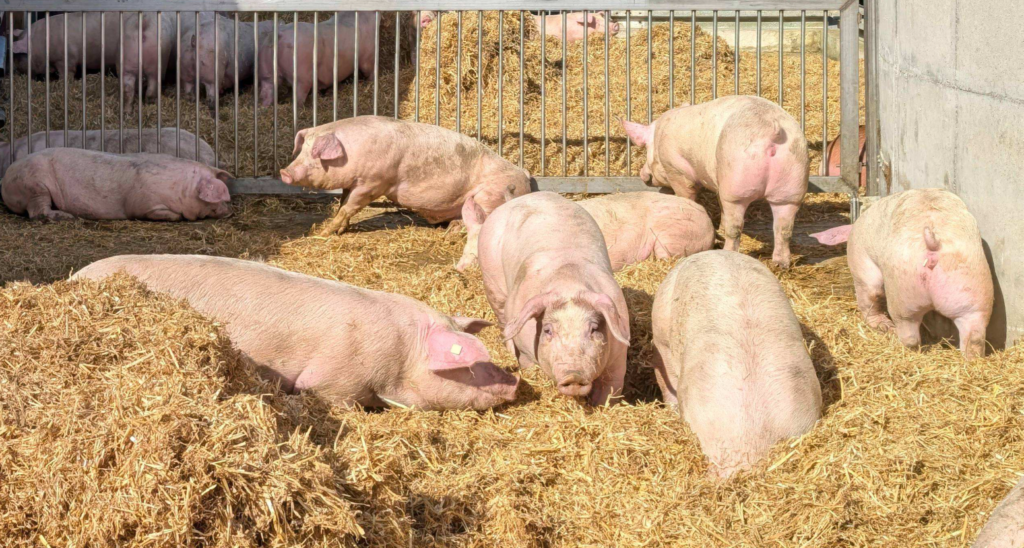
For more than 20 years, hog and other livestock farmers have lived with uncertainty over what new federal permitting or reporting requirements could result from an emissions study conducted nearly two decades ago.
In a regulatory win for pork producers and other farmers, the Environmental Protection Agency announced it will not finalize those emissions-estimating methodologies and will move to end obligations set under a 2005 agreement. After reviewing data collected from 2005-2007, EPA determined the data are too old and too limited to support reliable methods, noting that farm designs, production practices and technologies have changed significantly in the years since.
The National Pork Producers Council has long pushed for this decision, and America’s pork producers applaud the Trump administration and EPA Administrator Lee Zeldin for bringing certainty to the country’s farmers by concluding the data are insufficient to support reliable methods. Producers are also thankful for the efforts of Small Business Administrator Kelly Loeffler in listening to the concerns of America’s small business family farmers on this matter.
NPPC President Rob Brenneman, a farmer from Washington County, Iowa, said, “This move confirms what farmers have long known: Every farm is different, and there is no one-size-fits-all model to apply to them. Each farm should be judged on its own factors, including its location, its practices, its animals and its people. We’re grateful to EPA for listening to the farmers who feed this nation.”
In 2005, EPA entered into an Air Compliance Agreement with livestock and poultry farms and launched the National Air Emissions Monitoring Study to collect data the agency planned to use to develop methods for estimating emissions from farms. Scientists under both Republican and Democratic administrations have criticized the study, with farmers concerned over how those methods ultimately could have affected their operations under federal air regulations if finalized.