

Many of producers in Oklahoma are growing summer annual forage crops such as forage sorghums, sudangrass, or hybrid sorghum-sudangrass. There is also johnsongrass in many pastures this year. Several producers I have talked with plan to use these fields for stockpiled fall forage for cows or weaned calves. Other producers have planted small grains directly into the standing cover crops or crop residues have seen volunteer corn, sorghum, or sudangrass come up with the wheat.
Prussic acid is found when susceptible plants are under stress from drought conditions or after a frost. At the Stillwater Mesonet station, the median date for the first hard freeze (28º F) is November 8. That date is past but there is no freeze forecasted through November 15. A pasture can be impacted by a light frost when the low is in the mid-30s, so prussic acid may already be an issue.
Stressed sorghum, johnsongrass, sorghum-sudagrass hybrids, or sudangrass accumulate compounds that release prussic acid when leaves are damaged by frost or chewed by cattle. Prussic acid is a form of cyanide that passes through the rumen wall into the bloodstream. Cyanide prevents the animal’s tissues from using the oxygen carried by the blood. The blood can remain bright cherry red even as the animal suffocates. The symptoms of prussic acid poisoning are similar to those of nitrate poisoning, but in nitrate poisoning the blood loses its ability to carry oxygen and may turn chocolate brown. The symptoms include anxiety, weakness, labored breathing, and death. Often the first sign a producer sees is a dead animal.
The plants that have the most issues with prussic acid poisoning are (in order of susceptibility) grain sorghum (most), johnsongrass, sorghum-sudan hybrids, and finally pure sudangrasses. Millets (such as pearl millet) and corn do not produce prussic acid, but both are nitrate accumulators.
Prussic acid potential is higher in younger plants than older plants, higher in leaves than stems, and higher in upper leaves than lower leaves Even a light frost can damage leaves and release prussic acid while the rest of the plant remains green. Scout pastures for frost-damaged leaves and check near the base of tall plants for young shoots. This regrowth can be especially high in prussic acid.
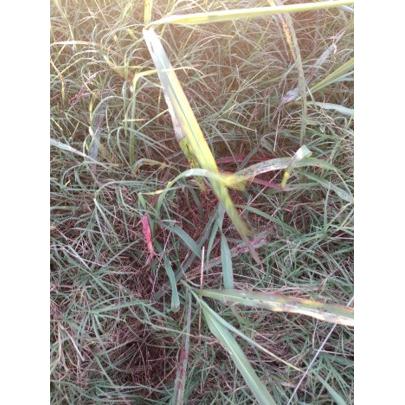
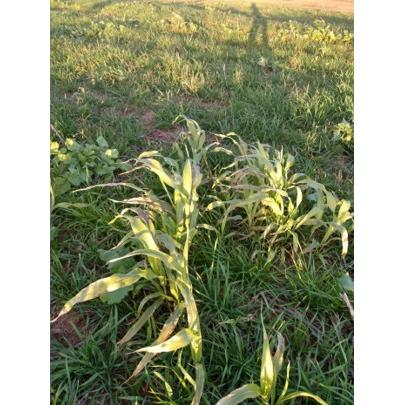
The pictures below show frost-damaged johnsongrass (top) and sorghum-sudangrass (bottom) that could cause prussic toxicity risk. These forages may cause death losses from prussic acid poisoning if consumed by livestock.
What to do…
- Do not allow animals to graze young plants or regrowth until plants reach 18 to 24 inches for sudangrass or 24 to 30 inches for sorghum-sudangrass.
- After a light frost that damages leaves but plants remain alive, keep cattle off for at least 14 days. Count from the most recent frost. If new shoots appear, wait until the regrowth itself reaches grazing height, even if the older stems are already 30 inches tall.
- After a killing freeze, keep cattle off the field for at least 7 days and until the plants are completely dry and brown. Drying may take 10 days or longer.
- Harvesting a suspect stand for silage can reduce prussic acid levels. Allow the silage to ferment for at least 8 weeks and test it for prussic acid before feeding.
Prussic acid can be an issue every year. Scout suspected pastures after a frost, checking for new shoots, and giving damaged forage time to dry can help prevent cattle losses.
Resources:
Prussic Acid Poisoning. Oklahoma State University Cooperative Extension Fact Sheet PSS-9204. https://extension.okstate.edu/fact-sheets/prussic-acid-poisoning
Dr. Barry Whitworth explains how prussic acid poisoning occurs in cattle and how to keep your herd safe on SunUpTV form July 22, 2024. https://www.youtube.com/watch?v=Vn74idl7rds