

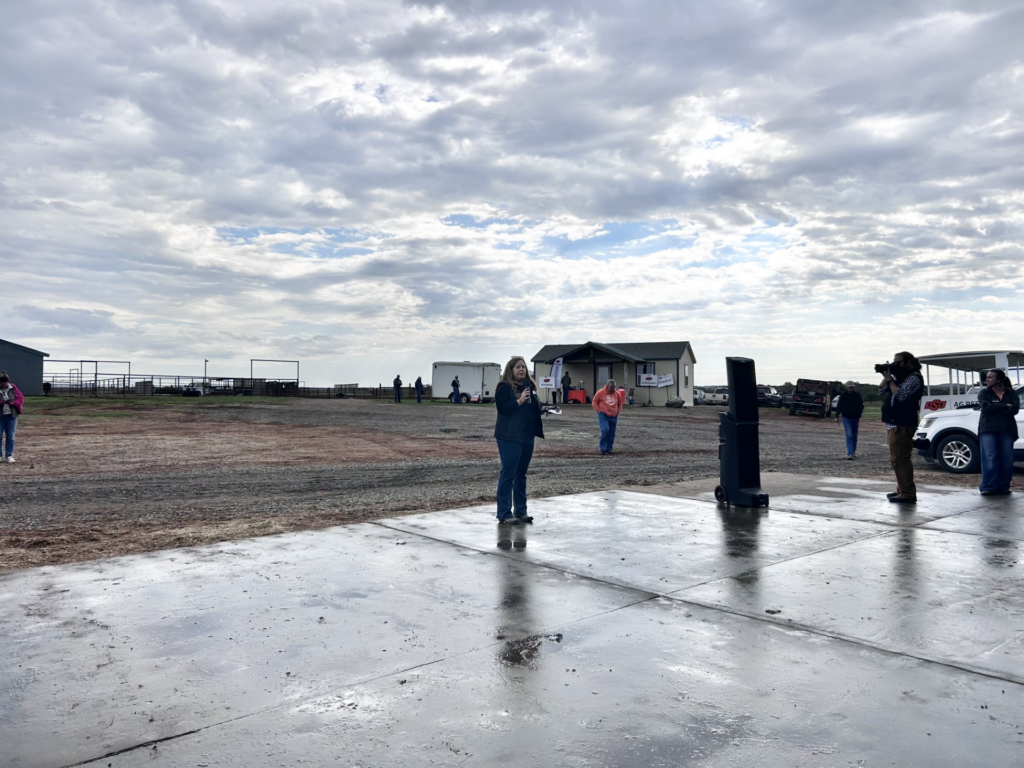
Pasture mealybugs are a growing concern for forage producers across the Southern Plains, and Oklahoma State University Extension specialists are encouraging producers to know what to look for as the pest spreads. Speaking with Associate Farm Reporter Carli Davenport at Oklahoma State University’s Livestock, Range and Field Day, Dr. Ashleigh Faris, assistant professor and extension specialist at OSU, discussed how to identify pasture mealybugs, the damage they can cause and management options available to producers.
Faris described the pasture mealybug as a very small, waxy insect that can be difficult to spot in a pasture. “The pasture mealybug is going to be a very small, waxy insect,” Faris said. “They have fine hairs that protrude off the body when we’re talking about the females and the nymphs.”
Female mealybugs are typically the most noticeable, while males are more elusive and have wings. Females can range from two to five millimeters in size and have an oval shape. “When we think about that waxy coat we have on them, sometimes you might first notice it actually on your pant leg or your boots when you’re walking through a field because it can leave some of that coloration on your pants,” Faris said.
Pasture Mealybugs Have Been Identified in Texas
Although the pest is now a concern in the United States, its exact introduction and movement into the region remain unclear.
Faris said Texas producers and Extension specialists first began noticing the pasture mealybug in 2025. However, looking back through previous Extension reports and producer calls suggests the insect may have been present even earlier. “I mentioned earlier at the field day that Texas really first noticed this in 2025,” Faris said. “But they started going back through and looking at some of the kind of comments and calls that they get as extension agents, and going out to different types of producers’ fields.” She said those records indicate the pest may have been present in South Texas as early as 2022.
As producers monitor their pastures, Faris said identifying the insect early is important because the damage can resemble other common pasture stressors.
Discoloration Can Be an Early Warning Sign
One of the first signs producers may notice is a change in the color of the grass, often appearing in scattered spots throughout a field.
However, Faris cautioned that discoloration alone does not necessarily mean pasture mealybugs are present. “When you notice those spots, you want to go out and check and see: okay, is there actually an insect out here, or is it possibly a nutrient deficiency, or is it possibly drought that’s causing this discoloration?” Faris said.
She explained that the symptoms can look very similar to other types of stress in forage, making it important to inspect affected areas rather than assume the pest is responsible.
Another potential warning sign is honeydew, a sugary substance produced by piercing-sucking insects as they feed. Faris said the insects excrete excess water and nutrients, which can leave behind the substance. As it interacts with the environment, it eventually begins turning black in color.
Nymphs Cause the Most Damage to Grass
While producers should be aware of the different life stages of the pasture mealybug, Faris said the nymphs are typically responsible for the most damage.
As the insects feed, they inject toxic saliva into the grass, weakening the plant and potentially making it more vulnerable to additional problems. “When they’re feeding, they’re injecting a toxic saliva, and what this also does to the grass is it’s going to start to weaken the grass,” Faris said.
That weakened grass can become more susceptible to secondary infections from pathogens already present in the environment. “If there are other types of pathogens that are available in the environment, then you could possibly lose some of the grass due to the secondary infections from these pathogens,” she said.
Grazing and Hay Management Can Help Reduce Infestations
Faris said Oklahoma producers can take several steps to manage pasture mealybugs using practices they may already have in place.
Grazing management is one option. Reducing lush forage material can help limit the resources available to the insects and make the environment less favorable for them.
Producers can also continue mowing or cutting pastures for hay, but Faris said hay storage deserves additional attention when dealing with an infestation.
Research from Texas A&M has shown that pasture mealybugs can survive inside hay bales for an extended period after the forage is cut.
Faris said preliminary research indicates it could take approximately seven weeks for the insects to die off after moisture is removed from the hay.
That creates an additional consideration for producers deciding where to store harvested forage.
“Do you store it at the edge of a field that possibly hasn’t already been infested?” Faris said. “If that’s the case, you probably want to keep your hay in an area to where it’s not going to be interacting with new pasture that you’re not going to be able to introduce the pest to.”
Careful hay storage can help reduce the risk of moving the pest from an infested area into previously unaffected pasture.
OSU Monitoring Treatment Options for Pasture Mealybugs
Chemical control options are another area of focus as Extension specialists continue evaluating ways to manage the pest.
Faris said the product currently labeled for pasture mealybugs in Oklahoma is Safina and Scalis, which she said works well for lighter infestations. However, its effectiveness has limitations, particularly when dealing with heavier infestations.
OSU is working to explore additional options, including pursuing a label extension for Centric 40 WG.
“Centric 40 WG. It’s not labeled for pasture, but it is something that tests out of Texas and Florida have shown to have good efficacy against some of those heavier infestations,” Faris said.
She also pointed producers toward a pasture mealybug fact sheet from Texas A&M AgriLife, which provides additional information about the pest and insecticide products that have demonstrated efficacy in research.
As researchers continue learning more about the pest and its impact on forage production, Faris emphasized the importance of monitoring fields, identifying potential infestations and using management practices that can help limit its spread.
For Oklahoma producers, recognizing the signs of pasture mealybugs and paying attention to grazing and hay management could be important steps in protecting forage resources.







