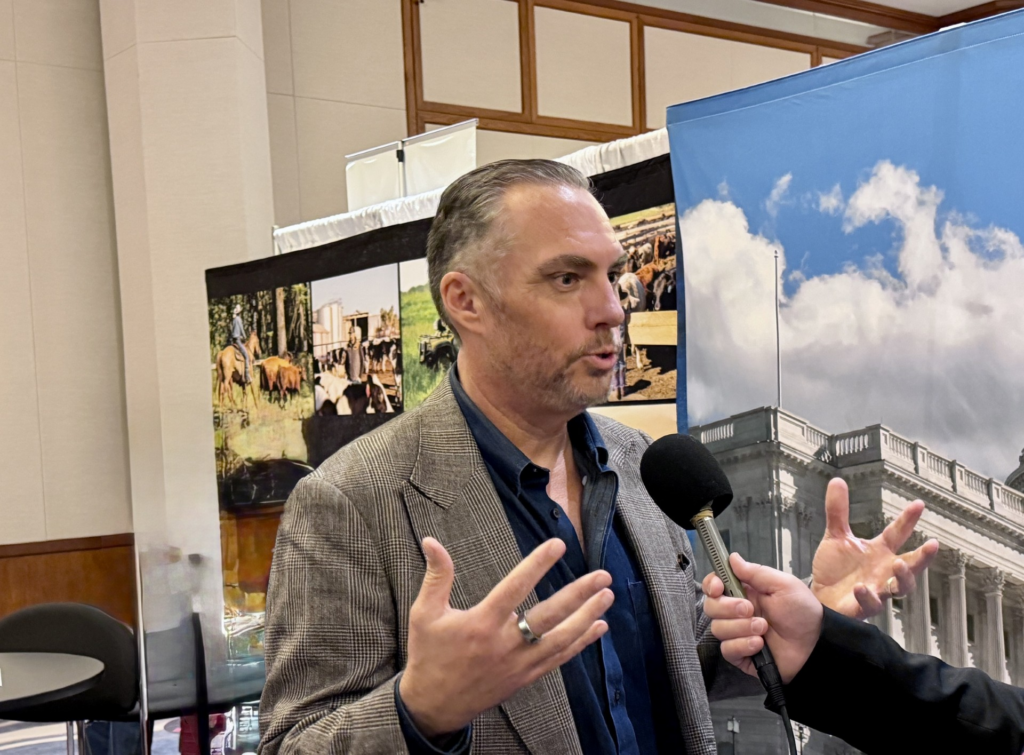
In today’s Beef Buzz, senior farm and ranch broadcaster Ron Hays spoke with Ethan Lane, head of the Washington, D.C., office of the National Cattlemen’s Beef Association (NCBA), about the political debate surrounding beef prices, the impact of recent political rhetoric on cattle producers and how NCBA plans to work with a changing group of lawmakers in Washington.
Consumers Continue Choosing Beef Despite Higher Prices
Lane said the price of beef at retail had a role to play in the recent Senate race in Mississippi, where the Republican incumbent Cindy Hyde-Smith lost in a major upset to Democrat Scott Colom. He addressed comments made during the campaign about less expensive protein options and said consumers continue to demonstrate the value they place on beef. “I think the point that the senator was making is a solid one. It’s one that I’ve made, perhaps a bit differently articulated than she did,” Lane said. Senator Elect Colom seized on the comments made by the incumbent and produced this commercial.
He emphasized that beef continues to hold a strong position with consumers, even with higher prices at the meat case. “Beef is in such high demand because it’s worth it, because the quality is there, and because consumers are stepping up and buying it, even though there are cheaper proteins sitting in the meat case right next to them,” Lane said.
Lane added that consumers are choosing beef with their purchasing power, saying they choose beef 75% of the time with their protein dollar when shopping at the meat case. “Hey, White House, we don’t need your help getting beef prices down. Consumers are fine with it, and they’re paying it. They’ll stop buying it when it gets too high for them,” Lane said. “But in the meantime, we have a product we’re awfully proud of, and a relationship with consumers that we’re just as proud of.”
Cattle Producers Have Paid the Price for Political Rhetoric
Lane also discussed the impact political messaging and headlines surrounding beef prices have had on cattle producers. He said producers have taken a financial hit as the industry has been caught up in the political conversation. “Cattle producers have absolutely footed the bill for this,” Lane said.
He pointed to political headlines, press conferences and what he described as heated media coverage, saying the financial consequences were felt directly at the sale barn. “The price for that was cattle producers taking a two, three, or $400 per head hit at the sale barn for their cattle, and that price was paid in real time,” Lane said. “And that’s a shame for those producers around the country that had nothing to do with the political antics that were going on around the country.”
Lane said he believes voters across rural America recognized those concerns and expressed their frustration through the election results.
NCBA Preparing to Work With New Lawmakers
With a new group of lawmakers preparing to take office, Lane said NCBA is already seeing increased interest from elected officials wanting to hear directly from the cattle industry. “Our phone’s ringing off the hook,” Lane said. “We have a lot of people interested in what the actual industry has to say. What cattle producers and 44 state affiliates across the country have on their mind right now.”
He explained that NCBA works through a policy process designed to bring together producers with different perspectives and production methods to find common ground. “Recognizing that we raise cattle in different ways all across the country, and that you have to create a forum for people to bring those ideas together and find some common ground,” Lane said.
He added that there is no single approach to raising cattle or selling beef that represents every producer. Lane said lawmakers coming into Washington have questions about beef prices and other industry issues, giving NCBA an opportunity to provide information and explain the priorities of cattle producers.
Changes in Washington Could Affect Industry Advocacy
Lane also addressed questions about NCBA’s ability to communicate with the Trump administration after restrictions were placed on lobbyists accessing the White House complex. “They banned all the lobbyists from the administration, so I don’t really know how that changes what we’ve been doing,” Lane said.
He said the organization is still evaluating what the restrictions could mean for access to administration officials and federal agencies.
In the meantime, Lane said NCBA will continue advocating for cattle producers through elected representatives and senators on Capitol Hill. “We’ll certainly continue to push our message up on Capitol Hill with those elected representatives from across the country, and those senators, and certainly willing to sit at any table that will have us to represent the views of producers around the country,” Lane said.
He also highlighted the importance of the cattle industry’s grassroots network, noting that producers regularly interact with lawmakers and administration officials through roundtables, state fairs and other events. “It’s one of the greatest strengths that we have in a grassroots network like that,” Lane said. “You can’t go far without running into one of us.”
Adapting NCBA’s Message to a Changing Congress
Looking ahead to CattleCon and the next congressional session, Lane said NCBA will continue communicating the industry’s priorities while adapting its approach to the lawmakers in office.
He said recent election results and market conditions have reinforced the importance of the information and policy positions NCBA has been sharing. “Whether people choose to listen to that or not is up to them, but I don’t know that that’s a change in strategy,” Lane said.
Lane noted that every two years brings a different group of lawmakers and priorities, requiring the organization to adjust how it communicates with Congress. “The only constant is change,” Lane said. “Every two years, we know we’re going to be dealt a slightly different hand of cards than the one we’re just wrapping up.”
Ultimately, Lane said lawmakers need to focus on the constituents they represent rather than simply the political dynamics inside Washington. “These folks are just trying to make sure they’re doing right by the 700,000 constituents that they respectively represent, and the more they think about those 700,000 rather than the 435 they’re serving with, the better off they’re going to be,” Lane said.
The Beef Buzz is a regular feature heard on radio stations around the region on the Radio Oklahoma Ag Network and is a regular audio feature found on this website as well. Click on the LISTEN BAR above for today’s show and check out our archives for older Beef Buzz shows covering the gamut of the beef cattle industry today.