

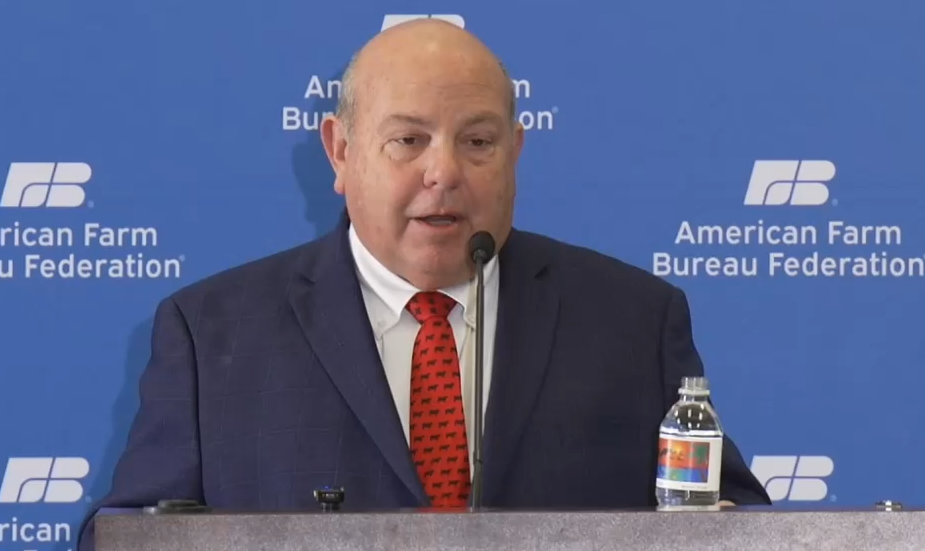
American Farm Bureau Federation president Zippy Duvall opened his traditional news conference on Sunday afternoon by welcoming attendees to California and thanking them for attending the event. He emphasized the significance of gathering in a state with diverse agricultural production and expressed enthusiasm for the year ahead. “We look forward to advocating for American farmers again in 2026 and build off of the successes of 2025,” Duvall said, setting an optimistic tone for the convention.
He noted that the coming year holds historic importance as the nation marks its 250th anniversary, tying agriculture directly to America’s founding and future. Duvall reminded attendees that “when the United States was formed, nine out of 10 people were involved in agriculture,” compared to just 1% today. That shift, he said, highlights how essential farmers remain, because “every farmer is more important today than ever before to the food stability and the future success of our country.”
Duvall outlined the Farm Bureau’s theme, “Farm 250,” built around four pillars: “feeding families, achieving innovation, rural resilience, mindful stewardship.” He said these pillars represent not only the foundation of agriculture but also the strength of the nation itself. “These four pillars are the key of the success of agriculture, and ultimately, the success of the United States,” he said.
Innovation and policy took center stage as Duvall stressed the urgent need for a modernized Farm Bill. While he acknowledged Congress’s temporary extension, he made clear that more is required. “Only a full modernized farm bill can bring the stability and certainty that farmers need for rural development across our country,” he said, pointing to research, technical support, and long-term planning as critical components.
On resilience, Duvall addressed financial pressures facing farmers, including taxes and ad hoc assistance. He expressed appreciation for permanent tax provisions and the $12 billion bridge payment authorized in December, but cautioned that “it does not go anywhere near fulfilling the needs that our farmers have.” He also said funding set aside for fruits and vegetables “comes so short of even attempting to fill the needs in that area.”
Labor challenges were described as agriculture’s most pressing crisis. Duvall reiterated a message he has delivered repeatedly, saying, “the most urgent crisis facing American agriculture today is a lack of labor.” He urged Congress to overhaul the guest worker program in a way that works for both employees and farm operations, ensuring farms can “keep people working and keep producing for our country.”
Trade and market development were also highlighted as priorities. Duvall said opening new markets and resolving disputes can “unlock and expand market opportunities for farmers.” He praised progress on domestic demand, including passage of the Whole Milk in Schools Act, noting, “we’ve been pushing for that for many years,” and said American children deserve access to nutritious options.
Energy policy and conservation were key themes as well. Duvall said year-round E15 ethanol is “so close, we can almost taste it,” calling it a win for consumers and farmers alike. He also stressed the importance of mindful stewardship, saying farmers must have access to affordable inputs and science-based regulations. He welcomed progress on WOTUS, saying the new rule is “durable” and “defensible” and better reflects Supreme Court guidance.
Looking ahead, Duvall emphasized the importance of telling agriculture’s story and investing in the next generation. He said interest in food production is growing and that farmers welcome those conversations. He also highlighted efforts to engage young and beginning farmers, saying, “we have to take care of the future by bringing them in.” Closing the speech, Duvall thanked attendees and said he looks forward to “celebrating agriculture for the first 250 years and building our future with these young people.”
Media at the convention had the opportunity to ask questions to Zippy Duvall, some of the questions included:
What has President Trump’s response been to conversations related to tariffs and trade?
What did you think of the new dietary guidelines that were released?
What are some of the steps farmers can take to get year-round E-15?
What can you tell us about the labor shortage in agriculture?







