


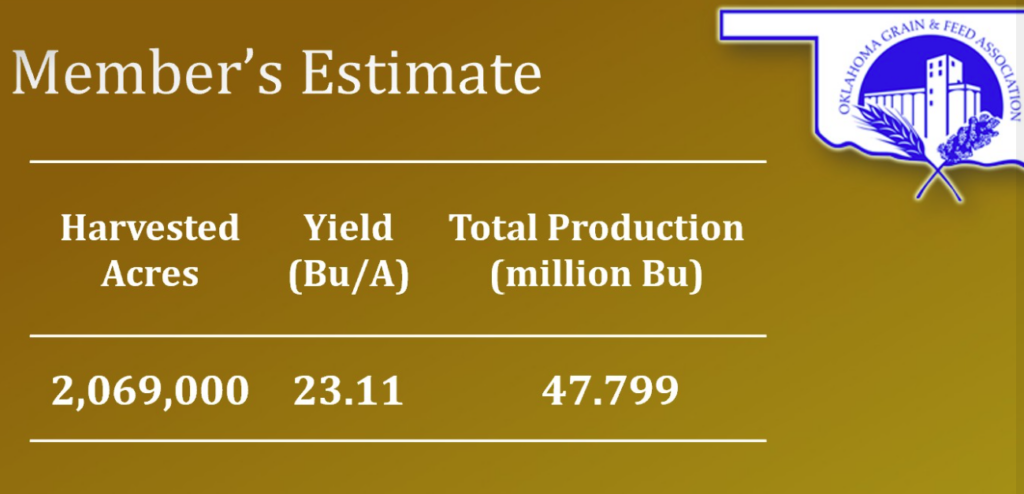
At the 2026 Oklahoma Grain and Feed Association meeting, crop scouts, extension specialists, and grain elevator representatives painted a sobering picture of this year’s hard red winter wheat crop. Their estimates say the 2026 crop is roughly half the size of the previous two years, with production projected at 48.9 million bushels compared to 101.1 million bushels in 2025. The outlook is based on an average yield of 23.93 bushels per acre across an expected 2.043 million harvested acres, highlighting the significant downturn facing Oklahoma wheat producers. Senior farm and ranch broadcaster Ron Hays visited with Josh Bushong from Oklahoma State University, who gave the details.
A Season Defined by Drought and Extremes
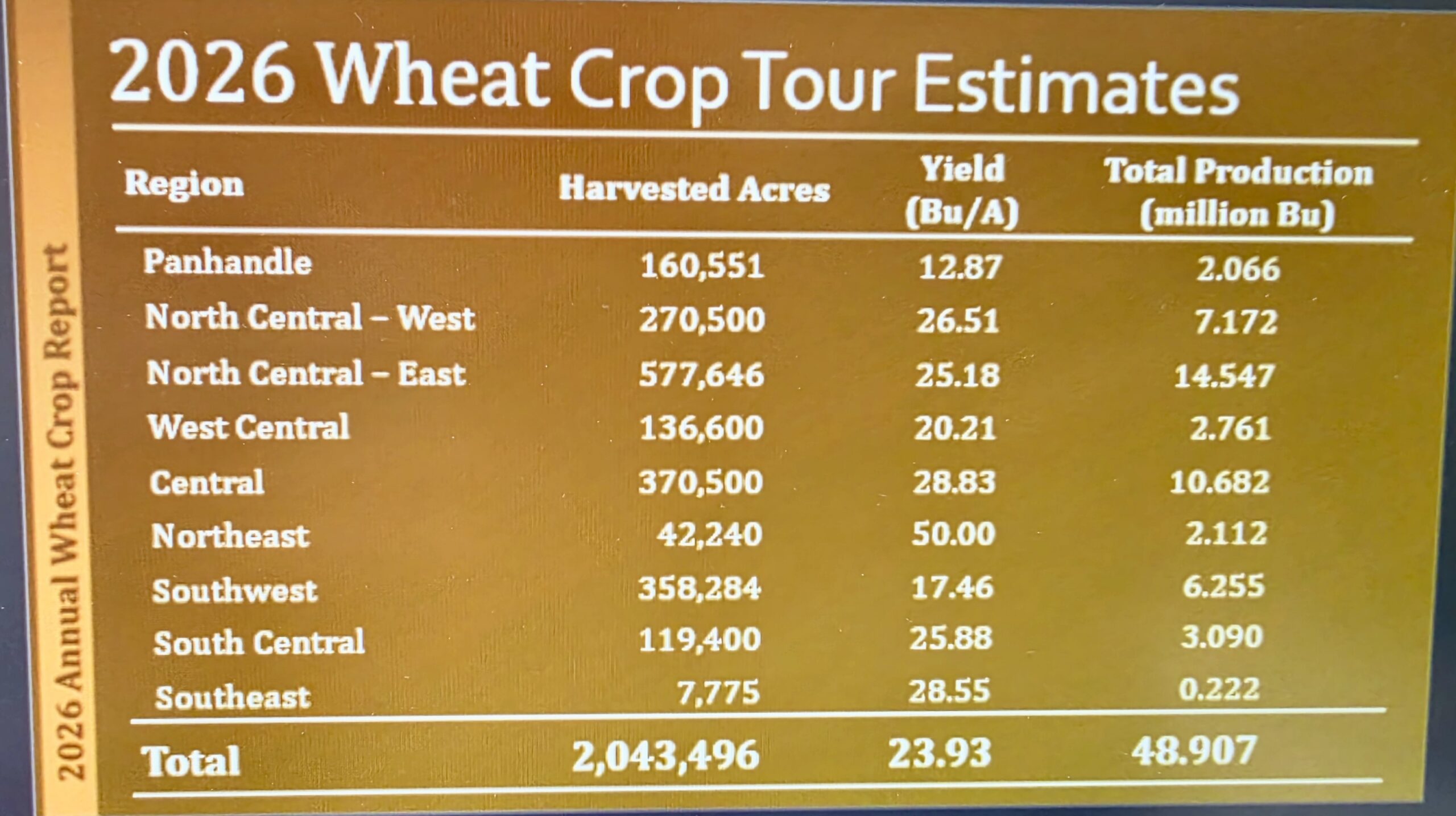
Bushong pointed to persistent drought as the biggest factor shaping this year’s crop. “We started with a little bit of moisture… but for the most part, it was a very dry winter, and then coming into early spring, hot, dry and windy,” he explained. “So it just kind of persisted—that drought. We really didn’t get much chance to set a good crop yield.”
That lack of moisture, combined with heat, limited the crop’s ability to develop. “That heat kind of limited some of our later tiller production, we just kind of capped our grain yield potential,” he said. While disease and insect pressure were generally lower, drought-stricken areas saw additional challenges. “The drought brought in more mites, more aphids, some more viral issues so they just kind of compounded in those more droughty areas.”
Crop Adjusters Busy Across the State
With conditions deteriorating in many regions, Bushong said crop adjusters have been active in evaluating damaged fields. “There’s a lot of activity from the crop adjusters, trying to get them scheduled out there as soon as we can,” he said. “We don’t want to destroy anything before we have to.”
He also encouraged producers to think long-term when making insurance decisions. “We don’t want to be shooting for low numbers. That helps us short-term for a bigger check, but we start dropping that APH over time, our premiums go up, coverage is less,” Bushong said. “We want to be mindful of trying to be forward-thinking as well.”
Improved Genetics Offer Some Hope
Despite the tough year, Bushong emphasized that wheat genetics continues to be a bright spot for Oklahoma producers. “I think genetics is a big win for Oklahoma farmers,” he said, noting that many of the top varieties planted come from OSU’s wheat improvement program.
“The number one seeded variety is DoubleStop… most are growing it just for its genetics and agronomics,” Bushong explained. “It has a great disease package, great grazing tolerance and recovery, so that’s why we see that on a lot of acres—especially in western Oklahoma.”
Production Takes a Major Hit
After strong production years in 2024 and 2025, Bushong said 2026 will look very different. “It’s going to be a short crop—not just in height, but also in production. Acres are way down, yields way down,” he said. “Overall, we might be looking at maybe 50 million bushels of wheat, so it’s going to take a pretty big hit.”
Yields vary widely depending on rainfall. “I’ve seen some stuff this past week—50 bushels and up… there’s a lot of 30 bushel,” he said. “But most of it is that 15 to 25 bushels, where it kind of drops that average.”
A Patchwork Crop Across Oklahoma
The 2026 crop tells a story of extremes, with sharp differences even within the same county. “It’s kind of hit and miss,” Bushong said. “You can tell who got that timely rain. Each county has a pocket more or less.”
Weather damage added to the variability. “Some got hit harder by hailstones and storms… but overall, if they caught a rain or two, they might have a few fields that yield pretty good,” he said. “But overall, it’s either that 30 to 50 or 15 to 20.”
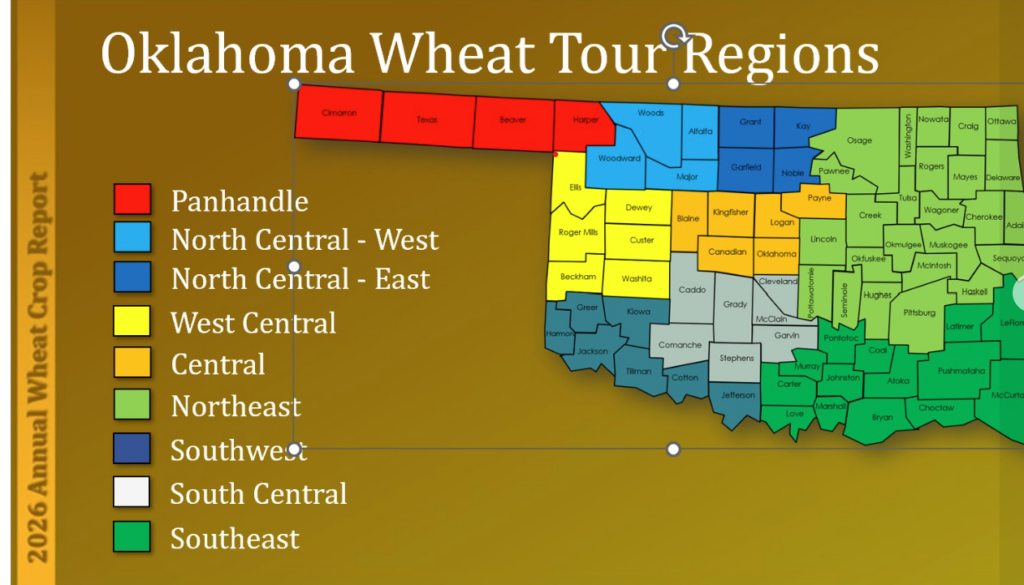
Geographically, the outlook worsens moving west. “Central Oklahoma, north central—even up into Alfalfa County—I saw quite a bit of good wheat,” Bushong noted. “But in general, the further west you go, the worse it gets. The Panhandle was really hit multiple times… southwest Oklahoma is pretty drought-stricken as well.”
As harvest approaches, Oklahoma’s wheat crop reflects a year of tough conditions and tough decisions, with producers relying on both improved genetics and careful management to navigate one of the more challenging seasons in recent memory.