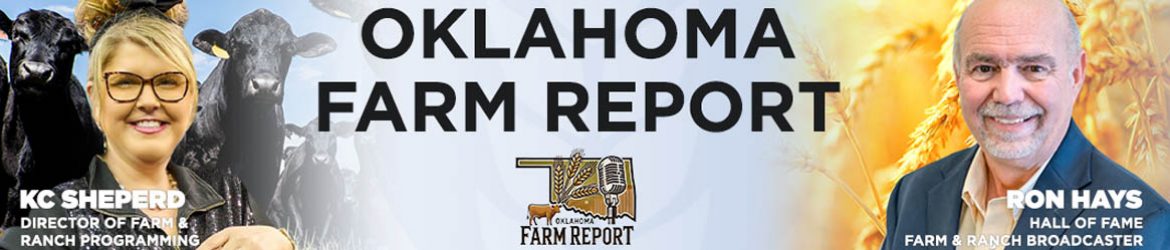


In today’s Beef Buzz, senior farm and ranch broadcaster Ron Hays speaks with Dr. Jeff Goodwin, who explains how the beef industry is working to answer sustainability questions through research, collaboration, and data-driven tools designed to benefit producers across the supply chain. Hays and Dr. Goodwin talked at the 2026 General Assembly Meeting of the US Roundtable for Sustainable Beef about the efforts to coordinate sustainability up and down the supply chain. At that same meeting, Goodwin was named the Chairman Elect of the organization.
Building Better Questions for Beef Sustainability
Goodwin, who leads the Center for Grazing and Ranch Management through Texas AgriLife, said one of the biggest priorities for the beef industry is making sure it is asking the right questions before trying to find solutions. “One of the things that we’ve tried to prioritize is making sure that we’re asking the right questions,” Goodwin said. “We’ve tried to bring together some of the brightest in the industry to help us identify the research gaps that we find, and then not just identify the gaps but find solutions.”
He said the collaborative structure of the U.S. beef industry has helped create an environment where supply chain partners can work together to solve problems and develop meaningful answers. “We’re not just trying to answer the questions of the cow-calf producer,” Goodwin said. “There’s questions at the retail food service area, into the supply chain as well, and so we’re trying to create an opportunity where we’ve identified the key questions that need to be answered, find a solution, conduct the research, and then provide decision support tools or informed data-driven models to help us answer those questions.”
Sustainability Solutions at the Right Scale
Goodwin emphasized that sustainability research must work for producers and businesses of different sizes and needs, rather than taking a one-size-fits-all approach. “We’re trying to work towards providing those solutions at scales that are relevant to the person asking that question,” he explained. “We have questions at the ranch scale, we have questions at supply shed scale. It’s not a one-size-fits-all opportunity, but we really want to begin to try to find those solutions at scales that matter to the person asking.”
He noted that with roughly 750,000 beef cattle operations across the country, research priorities must focus on practical questions producers face every day, especially around grazing management and land stewardship. “There’s a lot of questions around grazing management,” Goodwin said. “How does grazing management impact the ecosystem services that we’re interested in, whether that’s the production of food and fiber or carbon sequestration?”
Measuring Sustainability and Producer Value
According to Goodwin, the conversation has shifted from whether cattle producers provide environmental benefits to how those benefits can be measured and valued. “It’s not a matter anymore of are we providing those ecosystem services,” he said. “The questions now are, how do we measure it? Can we accurately measure it, validate it at the ranch scale? And then, what’s the value?”
Goodwin said determining whether those benefits provide economic returns—or other forms of value—is central to helping producers stay in business. “What’s the value back to a producer?” he asked. “Is that an economic value or an intrinsic value? What is the value of that, and how do we balance that with a profitability goal for an individual operator?”
Profitability Still Drives Sustainability
Goodwin stressed that sustainability efforts must remain grounded in economics, arguing profitability is essential for long-term success in the cattle business. “That’s been our goal from day one, is to try to provide the opportunities for producers and supply chain partners to be as sustainable as possible,” Goodwin said. “Part of sustainability is being profitable. If you’re not profitable, you’re not going to be in the business for very long.”
He added, “Economics is a big part of what we do, and that’s been a big driver on the research side as well.”
Supply Chain Resilience Matters Too
Looking further down the beef supply chain, Goodwin said food and beverage companies are increasingly focused not only on environmental reporting, but also on maintaining a dependable supply of beef. “From a carbon side, I think they have requirements in their business models where they have to do some level of reporting,” Goodwin said. “But bigger than environmental reporting, those businesses are very interested in ensuring that we have a resilient supply chain.”
He said protecting the viability of producers is critical to maintaining a consistent beef supply for consumers. “Ensuring that those producers at the base of that supply chain can continue to provide a beef product,” he said, is key because companies want “a consistent supply,” adding that supply chain resilience has become “a big deal for the food and beverage sector.”
The Beef Buzz is a regular feature heard on radio stations around the region on the Radio Oklahoma Ag Network and is a regular audio feature found on this website as well. Click on the LISTEN BAR above for today’s show and check out our archives for older Beef Buzz shows covering the gamut of the beef cattle industry today.