OSU Equine News- Protein is often both over (provision of high protein feeds) and underfed (low quality forage sources) in horses. Feeding of horses does not focus on optimizing feed efficiency and growth as in other species where the depth of knowledge on protein and even amino acid requirements is much more detailed. Unfortunately, in horses, the knowledge of specific amino acid requirements is lacking. Current protein requirements are based on crude protein amounts needed to keep a horse in zero nitrogen balance, or essentially when the same amount of nitrogen entering the horse as leaving (urine, manure). However, this does not account for other nitrogen losses such as hair, sweat etc. Crude protein requirements are therefore just an estimate of the amount of nitrogen needed, and does not take into account the digestibility of the crude protein source.
In general, digestibility rates of concentrates such as soybean meal (58 to 72%) are greater than forage (only 27-41% digestibility). This is because protein in concentrates and cereal grains are digested enzymatically in the foregut, whereas forage digestion takes place through fermentation in the hindgut. There is little evidence to support any amino acid uptake out of the hindgut of the horse. Therefore, it is common to ensure adequate protein and amino acid intake by provision of cereal grain protein sources, especially with lower quality forage sources. Supplemental amino acids or crystalline amino acids can be used to augment lower quality protein and improve the amino acid profile of the diet.
Unlike in other species, the only amino acid which is listed as a known value of the horse’s requirement is lysine. The remainder of amino acid requirements are extrapolated from lysine requirements, in the proportion that they appear in muscle tissue. However, this may underestimate amino acid requirements without the knowledge of digestibility, or utilization of amino acids in tissues other than muscle. For example, threonine and glutamine are catabolized extensively in the gut for energy.
The unique organization of the horse’s digestive tract, with the site of fermentation following the small intestine where amino acid uptake takes place, means that horses will require higher quality amino acids than ruminants. For example, urea, a nonprotein nitrogen source, can be used to synthesize microbial protein in the ruminant, but is of little value in the horse. Compared to horses, ruminants can utilize forage protein to a greater extent. This explains why “horse hay” is typically higher quality, higher in protein and lower in fiber, than that for cattle.
Because of the limited amount of information regarding specific requirements for horses beyond crude protein, it is common to overfeed protein. Unfortunately, amino acids fed in excess of the horse protein requirements will not result in increased muscle mass. Instead, excess amino acids will be catabolized and used for immediate energy needs or stored as fat. In exercising horses, excess protein may be detrimental as it may lower blood pH, and cause the animal to drink and retain more water needed to facilitate N excretion in the urine. However, supplementation of as little as 5 – 7 grams of lysine per day, have improved growth characteristics of yearling horses.
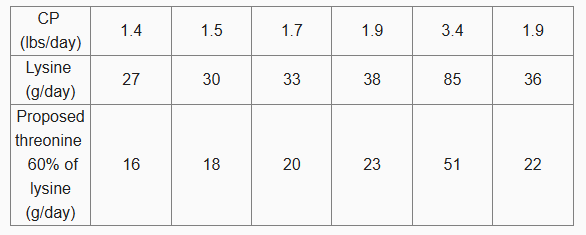
Requirements for 1100 pound horse with different classifications.
Crude protein (CP), lysine and threonine requirements for a 1100 pound horse.
Many horse owners may question why so little information is available on specific amino acid requirements for horses, or if protein requirements further change according to age, work or disease state. Unfortunately, this type of work is relatively expensive. Large numbers of horses which are genetically similar are not available as in cattle, chickens or pigs. Further, each individual horse has relatively greater value than other livestock species. Equine research also necessitates less invasive testing versus terminal states. While there are other methods which allow for testing amino acid requirements, available of funding will continue to limit our understanding. Until then, focus on providing high quality forages, or supplement with concentrates which provide readily digestible protein sources.