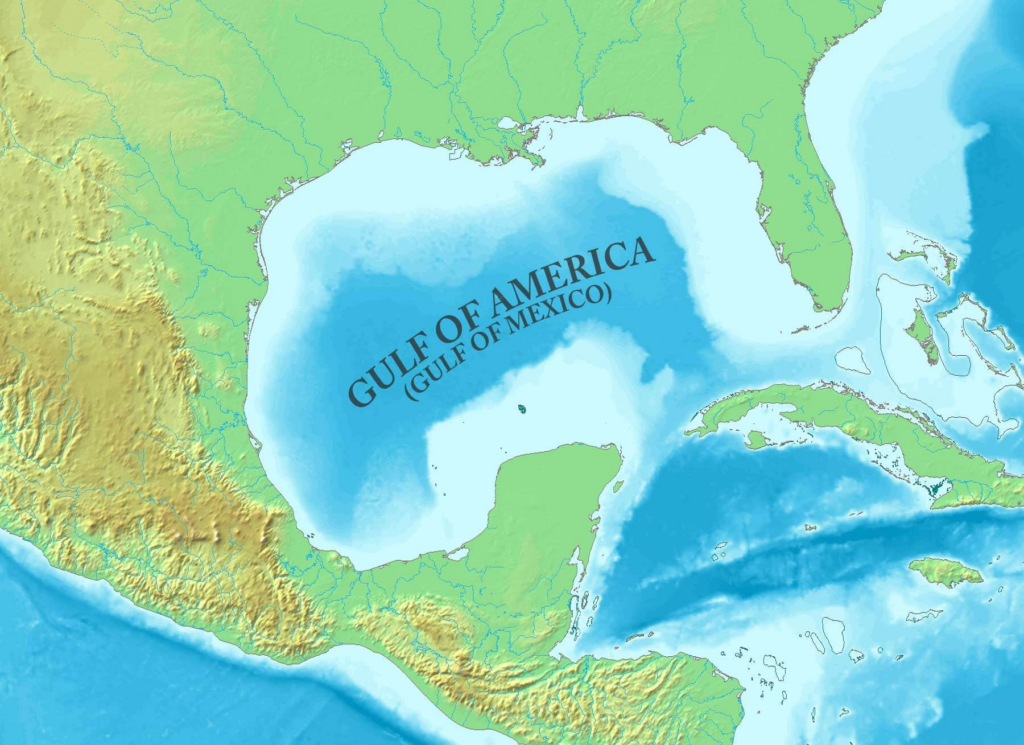
Today, U.S. Environmental Protection Agency (EPA), as co-chair of the Gulf of America Hypoxia Task Force, reported progress meeting voluntary, interim goals to reduce excess nutrients that can enter the Mississippi/Atchafalaya River Basin and flow into the Gulf of America, impacting water quality. A key finding of this report is that state-led actions helped achieve and surpass the nitrogen reduction goal for 2025.
“The Gulf of America is a national treasure and a critical economic engine for coastal states. Reducing excess nutrients to improve water quality in the Gulf strengthens economic prosperity while protecting aquatic resources,” said Jessica Kramer, EPA Assistant Administrator for Water and Hypoxia Task Force Federal Co-chair. “The decrease in nitrogen pollution we are seeing is an important step in the right direction, but we still have work to do to reduce the size of the Gulf’s dead zone. I look forward to continuing EPA’s commitment to cooperative federalism and supporting state leadership that is driving progress.”
The nutrient reduction goals—called the 2025 interim targets—aim to reduce total nitrogen and total phosphorus loads from the Mississippi and Atchafalaya River Basin to the Gulf of America by 20 percent. The interim targets were developed to measure progress toward the larger 2035 coastal goal outlined in the Gulf Hypoxia Action Plan.
Today’s announcement highlights U. S. Geologic Survey (USGS) 2025 data showing that total nitrogen has decreased by 28 percent compared to the baseline. While celebrating significant improvements in nitrogen loads, EPA and its fellow Task Force members acknowledge that the interim target for total phosphorus has not yet been met. USGS 2025 data show that total phosphorus loads from the Basin increased by 13 percent compared to baseline. An important factor behind this is the time lag between reducing phosphorus inputs and seeing the results downstream. Research on how phosphorus moves through and persists in the environment continues to evolve, and we now understand that large stores of “legacy” phosphorus—accumulated over years of past inputs—are held in watershed sinks such as soils, groundwater, and lake and stream sediments. These sinks can release phosphorus months or years later, sustaining the loads measured downstream even where conservation practices have already cut current inputs to the watershed. As a result, the benefits of today’s reductions may take years to register in monitoring data.
The 12 states in the Mississippi/Atchafalaya River Basin watershed participate in the Hypoxia Task Force. The states include Arkansas, Illinois, Indiana, Iowa, Kentucky, Louisiana, Minnesota, Mississippi, Missouri, Ohio, Tennessee, and Wisconsin. Together, they have been working to shrink the large hypoxic zone (also known as the dead zone) where there is very little oxygen in the water due to the impacts of excess nutrients. Today’s announcement makes it clear that these partners have made strong progress implementing state-led nutrient reduction strategies.
“The progress highlighted in this report demonstrates what’s possible when local, state, and federal partners work together toward a common goal,” said Iowa Secretary of Agriculture Mike Naig, States’ Co-Chair of the Mississippi River/Gulf of America Hypoxia Task Force. “Across the Mississippi River Basin, states are implementing their own nutrient reduction strategies that reflect their unique needs, geography, priorities, and partnerships. That flexibility is important because there is no one-size-fits-all approach to improving water quality and balancing the complex needs of a working river spanning 31 states. While weather and river flow will always influence year-to-year results, the data shows that our collective efforts are making a difference. State-driven, science-based strategies and local partnerships are critical to continue scaling up conservation practices, accelerating implementation and delivering measurable results.”
“The USGS partners with federal, state, local, and Tribal agencies across all 31 Mississippi River Basin states to monitor water resources and deepen understanding of how nutrients move through the watershed and into the Gulf,” said Department of Interior Assistant Secretary for Water and Science Andrea Travnicek. “Through these collaborations, the USGS combines its extensive water data with multidisciplinary expertise to develop advanced predictive models that track nutrient trends, identify higher nutrient loads, and guide efforts to reduce nutrient loads that may help protect the Gulf’s ecological and economic vitality.”
“USDA remains committed to supporting state leadership and producer-driven solutions that reduce nutrient losses across the Mississippi and Atchafalaya River Basin,” said U.S. Department of Agriculture Under Secretary, Farm Production and Conservation Richard Fordyce. “Through conservation tools like Nutrient Management, Drainage Water Management, and vegetative buffer practices such as Filter Strips, Riparian Forest Buffers, and Riparian Herbaceous Cover, producers are making measurable progress that benefits working lands and the health of our waterways. States that invest directly in water quality, such as Missouri with its dedicated conservation sales tax, show how long-term, locally driven commitment can accelerate results. We are proud to collaborate with states and producers as they continue making strides to reduce nutrient loading and shrink the Gulf of America’s hypoxic zone.”
“The states in the Upper Mississippi River Basin (Illinois, Iowa, Minnesota, Missouri, and Wisconsin) are collaborating in expanding ways to reduce nitrogen and phosphorus loading into the Mississippi River. The Hypoxia Task Force is an important source of support for the positive changes we are seeing and for the hard work ahead of us,” says Kirsten Wallace, Executive Director of the Upper Mississippi River Basin Association, which is the states’ shared organization for interstate water resources planning and cooperative action in the Upper Mississippi River Basin.
The Hypoxia Task Force remains dedicated to the Action Plan goal of reducing the hypoxic zone to less than 5,000 square kilometers. EPA and the other federal members of the Task Force will continue to seek new science advancements and help states and Tribes to integrate the findings into the development and implementation of their nutrient reduction strategies.
Learn more about the Mississippi River/Gulf of America Hypoxia Task Force.