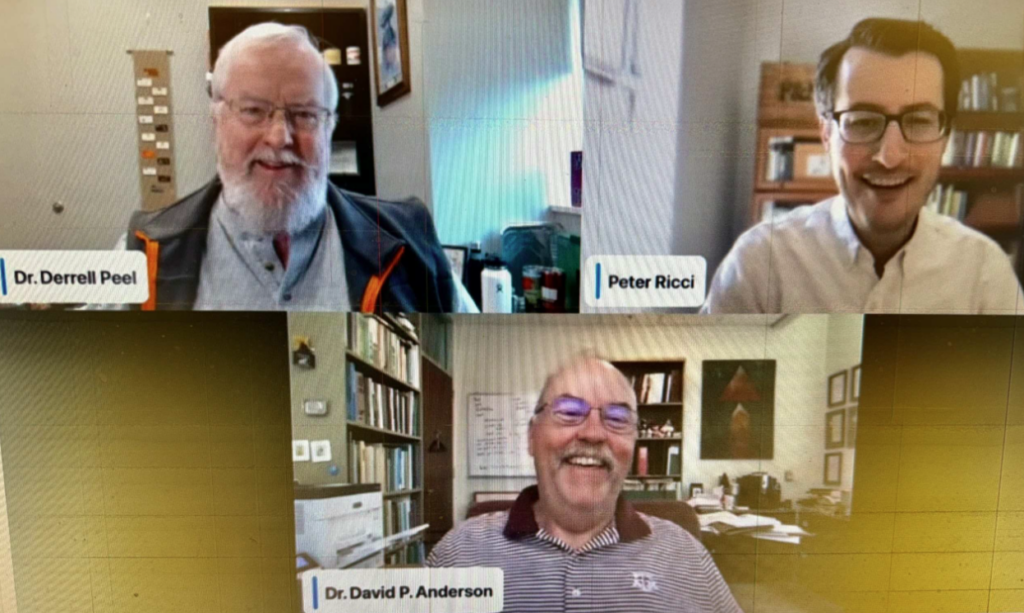
In today’s Beef Buzz, senior farm and ranch broadcaster Ron Hays features comments from two leading beef cattle economists, Dr. Derrell Peel and Dr. David Anderson, about the economic unknowns surrounding the spread of New World Screwworm and what it could mean for the U.S. cattle industry. Dr. Peel and Dr. Anderson discussed a wide range of key industry issues during the Clear-Eyed webinar produced by Meatingplace. The full conversation is available here.
Limited Immediate Market Impact
When asked about the broader economic impact of New World Screwworm on the beef business, Peel said the overall market impact may be limited. “We’ve said all along that at the market level, at the broader market level, New World Screwworm is not expected to have a lot of impacts,” Peel said. “I don’t see any disruption in the flow of cattle to processing or in the supply of cattle available, or the supply of beef… so I don’t see that it’s really going to have a lot of impacts at that level.”
Rising Costs for Ranchers
Anderson agreed the immediate market disruption may be small, but he warned the indirect effects are already significant—especially due to policy decisions and added costs for producers. “Our policy response to screwworms in Mexico has caused some disruption because closing the border and that’s a big deal at 26,000 head a week,” Anderson said. “Near term, short term, I don’t think there’s any effect, but this is going to increase ranchers’ costs.”
Those costs, he explained, go beyond medicine and treatment. “We’ve got to be out there every day—the labor, the medicine, just the plain hard work of managing that leads to higher costs,” Anderson said. “And if nothing else changes, we’re going to produce fewer cattle, because our costs go up.”
Labor Concerns Add Another Layer
Anderson also pointed to another challenge: the physical labor required to monitor and inspect cattle, especially for aging ranchers. “I had the chance to visit with a group of ranchers in Northeast Texas,” Anderson said. “One of the guys there… said, ‘If we really get those here, I’m afraid I’m too old to do this work anymore.’”
He said that concern resonated across the room. “They’re worried about whether they have the human capacity to do that work, because it’s not easy,” Anderson said. “I think that’s another little risk out there, depending on how this spreads.”
Border Debate Intensifies
Another major question for the industry is whether the U.S. should continue keeping Mexican cattle out of the country. Peel said that decision is largely political. “In terms of what we’re going to do, of course, that’s mostly a political decision,” Peel said. “I hope it’s a decision that’s informed by epidemiologists and veterinarians.”
Peel noted the recent U.S. detection of New World Screwworm changes the conversation with Mexico. “Certainly from a Mexican perspective, they’re going to say, ‘You said it was closed because we had it and you didn’t—now you have it,’” Peel said. “It certainly renews that conversation.”
Politics Driving Policy?
Anderson was even more direct, arguing the original border closure itself was politically driven. “Closing the border was a political decision too,” Anderson said. “I don’t think it was based on anything else.”
Still, Peel believes there is pressure on both sides of the border to reopen trade. “There’s some interest on both sides of the border, and in some political realms, to go ahead and open the border,” Peel said. “But what decisions will get made, I have no idea at this point.”
Economic Consequences Already Showing
According to Anderson, the economic consequences of keeping the border closed are already showing up. “I think we’re already seeing the economic effects of us closing the border,” Anderson said. “Those cattle stayed there, they’ve been fed there, they’ve been processed there.”
That shift, he said, means the U.S. may be losing valuable economic opportunity. “What we’ve done is we gave away a bunch of our value-added agriculture to somebody else, and now we’re importing the finished product,” Anderson said. “It’s really hard to escape economics.”
Anderson believes the numbers are beginning to confirm that reality. “You can kind of buck that system for a while,” he said, “but I think we’re actually seeing this happen.”
The Beef Buzz is a regular feature heard on radio stations around the region on the Radio Oklahoma Ag Network and is a regular audio feature found on this website as well. Click on the LISTEN BAR above for today’s show and check out our archives for older Beef Buzz shows covering the gamut of the beef cattle industry today.