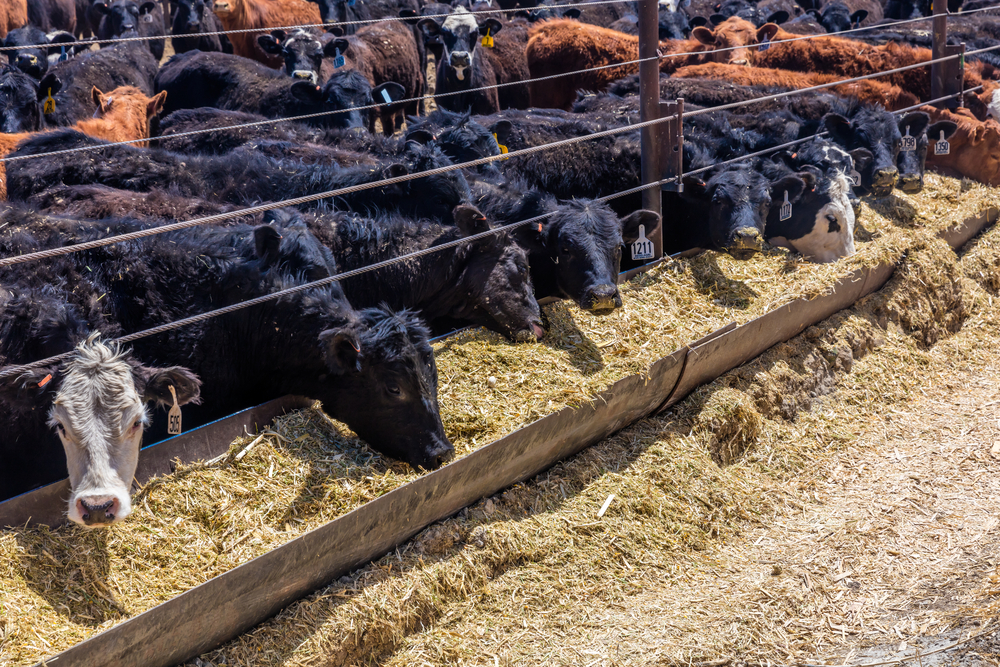
In today’s Beef Buzz, senior farm and ranch broadcaster Ron Hays features comments from Dr. Marshall Streeter, Associate Director of Technical Service – Cattle at Merck Animal Health. He says the beef industry is approaching a point where continually increasing cattle weights may begin creating unintended consequences throughout the production chain. During the recent Tug of War in the Cattle Industry webinar hosted by Oklahoma State University, Streeter discussed the realities of feeding cattle to record weights, the health concerns that accompany longer feeding periods, and the challenges producers face when breeding cattle that meet both maternal and carcass performance goals.
While heavier cattle have helped offset the nation’s historically tight cattle inventory and strong consumer demand for beef, Streeter believes the industry is approaching practical limits.
Feedyards Are Handling Cattle Bigger Than Ever Before
One of the first challenges, Dr. Streeter explained, is simply that feedyard infrastructure was never built with today’s cattle in mind. “One of the issues that exists is the feedyards themselves aren’t necessarily designed to handle that weight of cattle,” Dr. Streeter said. “I’m thinking specifically of re-implanting. We’re kind of adamantly opposed to re-implanting at this point in time, but that’s the majority of the cattle.”
He noted that many cattle are now being processed for re-implanting at weights that would have been considered finished cattle just a few years ago. “We’re re-implanting these cattle… at or past the weight that three years ago or four years ago we harvested them,” he said. “There’s that concern and the stress associated with doing it that creates a feedyard problem.”
Streeter explained that every additional handling event increases stress on cattle, and when those animals weigh well over 1,200 pounds, managing them safely becomes increasingly difficult for both livestock and employees.
Longer Feeding Periods Increase Health Risks
Beyond facility concerns, Streeter said extending days on feed also means cattle simply have more opportunities to encounter health problems before harvest. Dr. Streeter said, “I always tell our sales Reps, the leading cause of death is living.” And he adds, “late-term death is a concern- the more days that we add, there’s more days at risk for something to go wrong.”
According to Dr. Streeter, the industry still doesn’t fully understand how previous respiratory disease or other health issues affect cattle that remain on feed for extended periods. “We don’t have a good understanding of what damaged lung does that late into the feeding period, or some of the heart problems that we see that late into the feeding period when they’re having to support the body mass that they are,” Streeter explained.
Even so, he doesn’t expect carcass weights to stop climbing anytime soon because beef demand continues to outpace available cattle supplies. “As long as we see beef demand where we see it, there’s no other place to get that beef beyond added weight, because there’s no more supply,” Streeter said.
Success Starts Long Before the Feedyard
Although much of the discussion centered on feedyards, Streeter stressed that cow-calf producers play an important role in preparing cattle to succeed later in life.
He pointed to calfhood vaccination programs as one of the biggest opportunities to improve health throughout the production chain. “The biggest struggle we see is probably vaccination rates at the cow-calf level,” Dr. Streeter said.
He acknowledged that the greatest return from those programs often benefits the next owner rather than the producer who administers the vaccines. “The biggest beneficiary from calfhood vaccination programs is probably whoever owns the cattle next,” he said.
Streeter also emphasized that vaccines alone aren’t enough. A healthy immune system begins with proper nutrition and overall herd management. “If you have poor body condition and poor mineral status, you just limit what response I can get,” Streeter said.
Ultimately, he believes maintaining respiratory health remains one of the most valuable investments producers can make. “Protecting lung health to the best ability is probably the biggest thing that can be done,” he said.
Balancing Maternal Efficiency and Carcass Growth
As carcass weights continue to increase, Dr. Streeter said seedstock producers are facing one of the industry’s toughest genetic balancing acts.
On one hand, commercial producers need efficient cows that thrive on forage and remain productive for many years. On the other, feedyards continue seeking cattle capable of exceptional growth and heavier carcasses. “That’s a huge challenge from a seedstock producer perspective,” Streeter said. “Do you end up designing bulls in two different veins, one on a maternal side and one on a carcass side?”
While specialized breeding programs may be possible for some purebred operations, Dr. Streeter questioned whether most commercial ranches have enough resources to implement that type of system. “Most ranches don’t have that capacity,” he said. “How do we implement that to where at the commercial level they’re able to take advantage of the maternal side to maintain smaller, more efficient cows and then terminally cross the cows that we want with this bull that has more growth rate potential to meet the feedyard demand?”
He called that challenge one of the biggest questions facing the beef industry today. “I think that’s the $64,000 question,” Streeter said.
He also remains skeptical that one animal can excel equally in both areas. “I don’t think you can do it in one animal,” he said. “The geneticists may prove me wrong, but I don’t think you can do it in one animal.”
Could Feeding Strategies Eventually Split?
Toward the end of the discussion, Dr. Streeter was asked whether feedyards could eventually divide into specialized operations—some feeding cattle for fewer days to produce lean grinding beef, while others feed cattle longer to maximize premium carcass value.
While the concept has circulated within the industry for years, Dr. Streeter doesn’t believe today’s economics support that type of specialization. “We’ve had that discussion a lot really over the past 10 years,” he said. “I don’t think the economics drive you that way today.”
He explained that cattle marketed earlier would have fewer days over which to spread their purchase costs, making profitability more difficult. “If I have my lean grind market today, how I accomplish that is probably fewer days, and so I can’t dilute my initial cost,” Streeter said.
Although specialized genetics could eventually create opportunities for different production systems, he said implementing those programs consistently at the commercial ranch level remains a significant hurdle. “Implementing that on the ranch level is probably challenging,” Streeter said. Dr. Streeter’s complete presentation in the Tug of War series can be seen on YouTube- available here.
The Beef Buzz is a regular feature heard on radio stations around the region on the Radio Oklahoma Ag Network and is a regular audio feature found on this website as well. Click on the LISTEN BAR above for today’s show and check out our archives for older Beef Buzz shows covering the gamut of the beef cattle industry today.