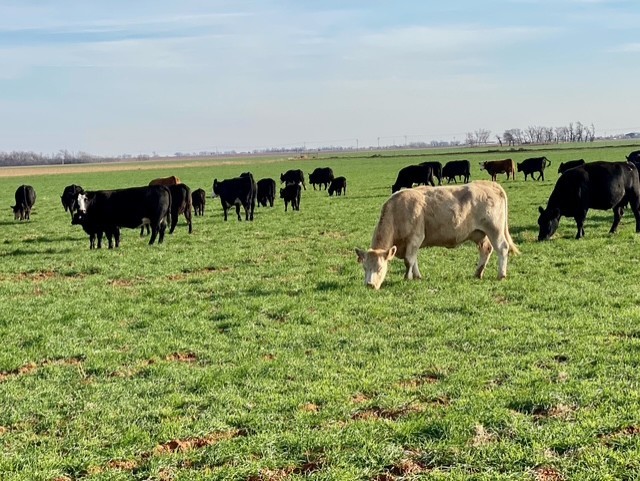
Cattle and beef markets suffered through a significant correction in July. Led by Live and Feeder futures, feeder and fed cattle markets were dragged lower through July; with USDA news of planned opening of the Mexican border adding additional pressure at the end of the month. Cattle markets are attempting to recover in August but the struggles continue with extended summer heat causing deterioration of pasture conditions and limiting summer activities.
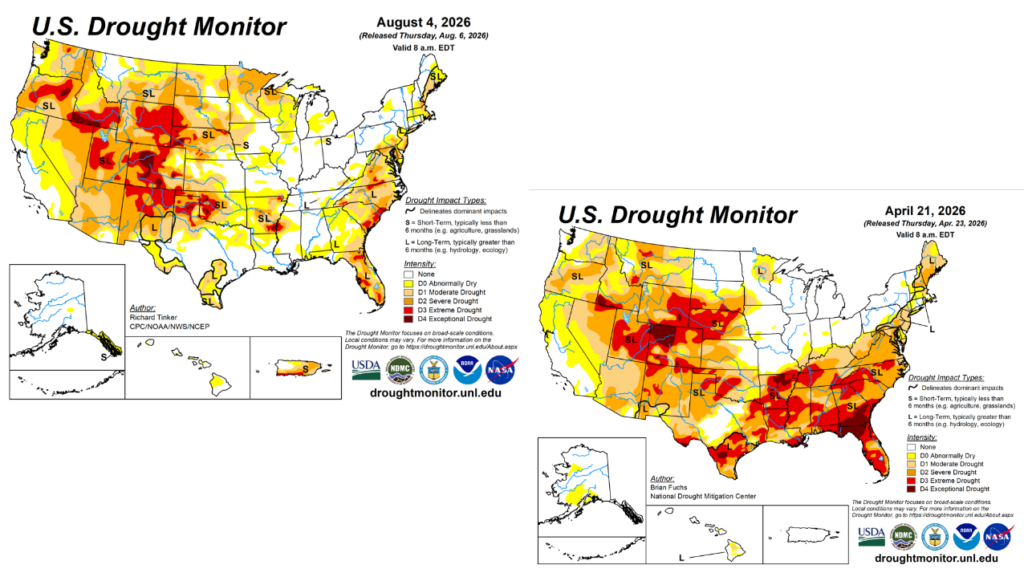
Widespread drought earlier in the year moderated significantly into July. Figure 1 shows that, compared to the peak drought level in April, conditions have improved, especially in the southeast and Mississippi delta. However, significant drought remains in much of the Great Plains and the West and remains a threat in numerous other regions. Average U.S. drought conditions were most improved by late July and have begun to deteriorate again with widespread extreme temperatures the past two to three weeks.
Figure 1.
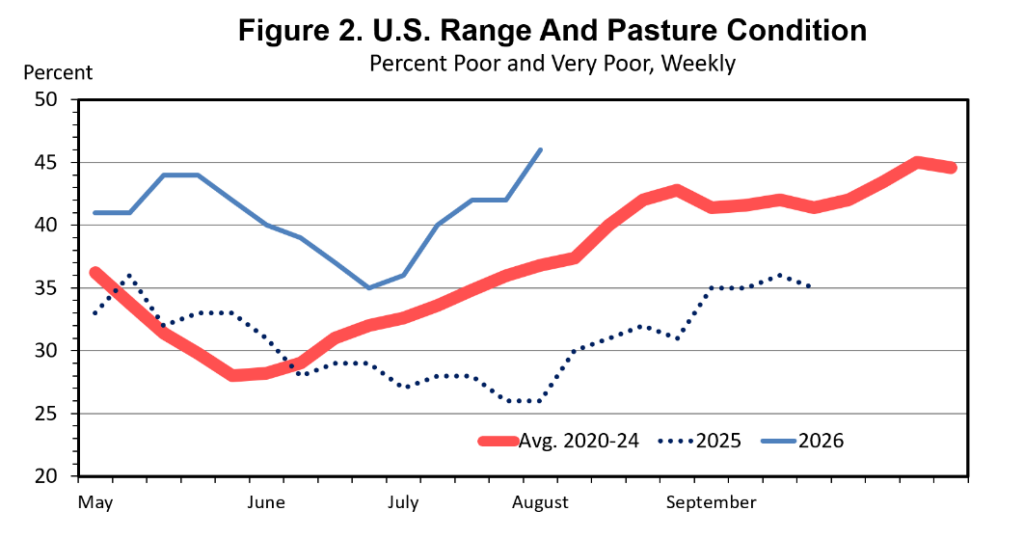
Generally matching the drought maps, U.S. pasture and range conditions improved through June and have deteriorated since. The latest reported pasture and range conditions were 46 percent in poor and very poor condition for the country, well above the five-year average of 37 percent. (Figure 2). The worst range conditions are reported in the Great Plains region from Kansas north and including the plains areas of Colorado, Wyoming and Montana where 53 percent of range and pastures are in poor to very poor condition compared to a five-year average of 31 percent. The western region of the country has current conditions at about 40 percent poor and very poor, close to average for this time of year; and the Southern Plains also has conditions about average with roughly 36 percent in poor to very poor condition. The Southeast region showed the most improvement early in the year with the percentage of poor to very poor pasture conditions dropping from 36 percent in May to a low of 21 percent in late July but have increased in the most recent weekly data.
The latest drought monitor and August weather outlook point to hotter and drier-than-normal conditions. In this Mesonet Weather Report, state climatologist Gary McManus discusses the latest drought conditions along with the August temperature and precipitation outlooks on SunUpTV from August 8, 2026. https://www.youtube.com/watch?v=uBmMQXFlvQU
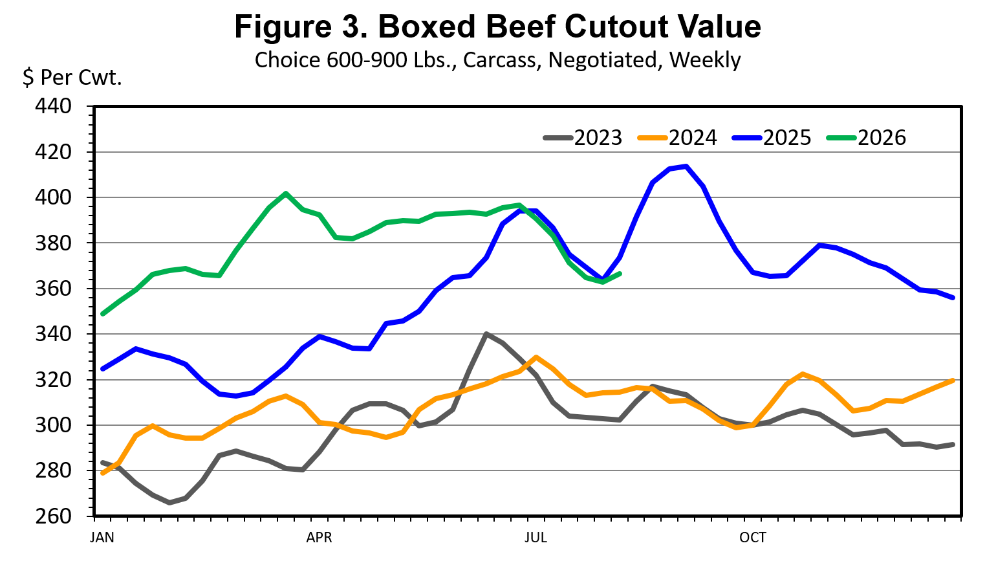
Hot summer temperatures have also taken a seasonal toll on beef demand after the Independence Day holiday. Choice boxed beef prices have decreased through the summer doldrums matching one year ago in typical seasonal changes (Figure 3). Wholesale beef values have turned slightly higher in the past week with sputtering attempts at a last kick higher for Labor Day demand. Prolonged triple digit heat in many regions is making that more difficult. After a brief August boost, average boxed beef prices typically decrease to the end of the year although tenderloin and ribeye prices move seasonally higher to the end of the year. Strong boxed beef prices in the second half of 2025 may be hard to match this year, even with good demand.
Cattle and beef markets are expected to continue recovering from the summer correction, but the persistent summer doldrums may make it a slow grind for the next few weeks.
Amy Hagerman, OSU Extension agricultural policy specialist, provides a drought assistance update and discusses details on program changes affecting row crop and forage producers on SunUpTV from August 8, 2026. https://www.youtube.com/watch?v=Jb2Qu6Vt0uw