
A panel of veteran agricultural leaders held a comprehensive media briefing to formally launch Restore American Agriculture, an initiative aimed at breaking congressional gridlock, restoring long-term bipartisan alliances, and directly addressing the worsening economic crisis across rural America.
The group—responsible for coordinating recent bipartisan letters signed by dozens of agricultural figures to the House and Senate Agriculture Committees—emphasized that while economic pressure on producers is intensifying, communication between Washington and the countryside has ground to a near-total halt.
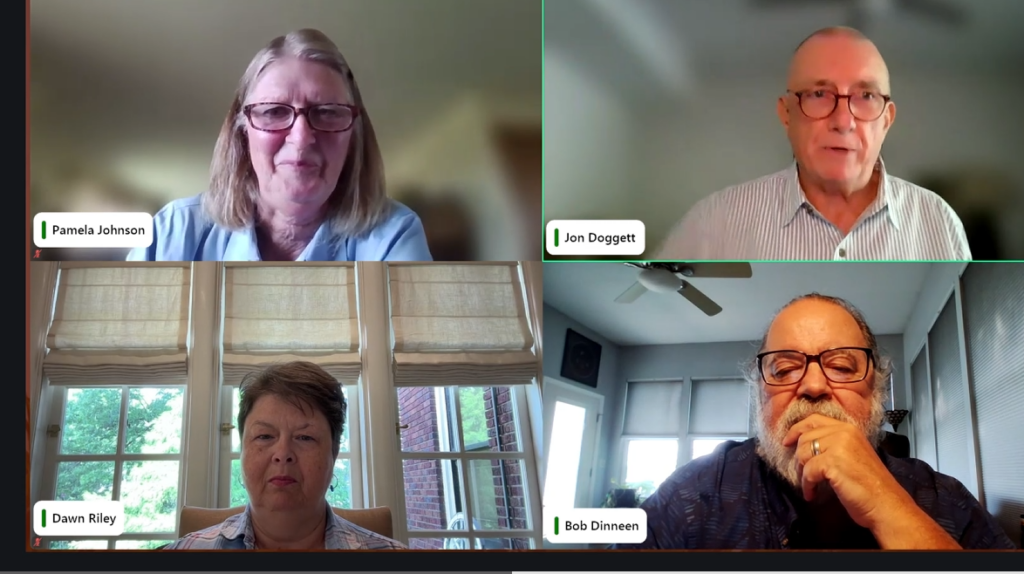
The availability featured Jon Doggett, past CEO of the National Corn Growers Association; Pam Johnson, retired Iowa farmer and past NCGA president; Bob Dinneen, past president and CEO of the Renewable Fuels Association; and Dawn R. Riley, former George W. Bush USDA appointee and former agriculture staffer to Senator Mitch McConnell.
Broken Coalitions and Town Hall Drought
A major theme of the discussion was the structural collapse of the traditional Farm Bill coalition, which historically joined production agriculture, conservation, and nutrition programs (SNAP) into unified, bipartisan packages.
Dawn Riley pointed out that lawmakers have largely abandoned open engagement with rural constituents, referencing reports that only 11 in-person town halls were scheduled across the entire country during the August congressional recess. Riley also cited internal USDA reorganizations that have led to a loss of experienced agency personnel and weakened traditional oversight channels.
Pam Johnson stressed that political polarization has replaced pragmatic problem-solving, urging lawmakers to move past partisan attacks. She noted that the historical alliance between farm groups and anti-hunger advocates ensured that farm policy delivered broad, durable benefits for all Americans.
Reconciliation Limits and the Flaws of Ad-Hoc Relief
Addressing the legislative stalemate, Jon Doggett expressed skepticism that standard budget reconciliation maneuvers or stopgap measures would adequately resolve the crisis.
The panelists noted that when Washington avoids comprehensive policy, it defaults to sending emergency ad-hoc disaster assistance checks. Doggett emphasized that while emergency payments are often necessary during acute disruptions, they do not fix systemic flaws in market access, production costs, and supply chain concentration.
Bob Dinneen echoed that producers want real, functioning markets rather than federal handouts. He pointed to the biofuels sector—specifically ethanol, biodiesel, and nationwide year-round E15 access—as prime examples of generational, value-added markets that expand farm income but face policy uncertainty. Dinneen also warned that erratic trade decisions have placed hard-won international markets at risk.
Rebuilding Public Research and Next-Gen Science
The discussion placed heavy emphasis on the decline of public agricultural research funding relative to foreign competitors such as Brazil.
Johnson highlighted the necessity of federal and public-private research partnerships, citing the Foundation for Food & Agriculture Research (FFAR) and historical public investments in mapping the corn genome. She warned that without robust public research infrastructure and dependable funding, American agriculture risks falling behind in productivity, innovation, and global competitiveness. Riley added that research entities require stability and trust to attract and retain the next generation of agricultural scientists.
Overcoming Retaliation Fears and Demanding Accountability
In response to questions regarding industry silence, the speakers acknowledged that many individual producers and organizations currently fear speaking out due to potential administrative or political retaliation.
Doggett and the panel urged farmers not to let frustration turn into apathy, emphasizing that with fewer than 10 to 12 legislative days remaining before upcoming congressional deadlines, grassroots participation is crucial. The leaders called on growers to contact the Capitol switchboard (202-224-3121), attend local forums, submit their stories through the Restore American Agriculture platform, and demand accountability directly from elected officials.
You can learn more and get involved by clicking here: