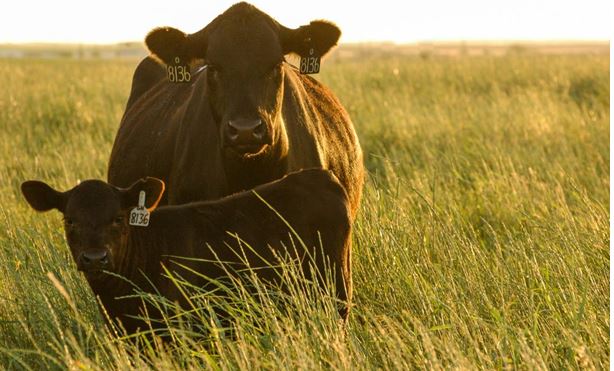
Many producers have considered starting to wean their calves early this year due to drought and declining forage quality. As Mark discussed in recent Cow-Calf Corner article from August 3 (https://extension.okstate.edu/programs/beef-extension/cow-calf-corner-the-newsletter-archives/2026/august-3-2026) early weaning is an effective drought-management tool to reduce the nutrient requirements of the cowherd, preserve cow body condition, and reduce forage demand.
Weaning is a stressful event in a calf’s life and we need to consider the added stress caused by hot weather. At weaning calves are separated from their dams, moved to a pen from the pasture they have been their entire life, and are presented with new unfamiliar in feed and water sources. Processing, vaccination, transportation and commingling occur at the same time. Adding severe heat stress to this list must be avoided. Our objective is not to just get the calves weane…it is to get them weaned, eating, drinking and healthy during the most stressful period they will experience.
Heat-stressed cattle have reduced feed intake, spend more time standing and increase water consumption in an attempt to dissipate heat (Cow-Calf Corner, July 13, 2026 https://extension.okstate.edu/programs/beef-extension/cow-calf-corner-the-newsletter-archives/2026/july-13-2026). As heat load increases, respiration rate increases and cattle begin panting. More severe signs include drooling, open-mouth breathing, an extended tongue and isolation from the herd. Water requirements increase greatly during heat stress, and bawling calves lose more water through the respiratory tract than normal. Newly weaned calves that are already eating and drinking less than normal have little margin for another environmental stressor.
Choose your weaning day carefully. Avoid beginning the weaning process immediately before a major heat event if possible. Heat load accumulates over several days, and when we have hot nights over 70 degrees cattle are unable to dissipate the heat accumulated during the previous day. Cattle handling should be postponed when little nighttime cooling occurs. The Oklahoma Mesonet Cattle Comfort Advisor (https://www.mesonet.org/agriculture/livestock/cattle-comfort-advisor?ref=1924) is a great resource to guide the decision for when to wean and process calves. It accounts for temperature, humidity, solar radiation and wind rather than relying only on the daytime high temperature.
Water is the top priority. Make sure calves can find the clean fresh water source quickly.
Calves that are bawling, walking fence lines searching for mom and unfamiliar with water sources are at the greatest risk for heat stress. Clean, cool water is particularly important because cattle drink less as water temperatures increase above about 80°F.
Shade is important. Natural or constructed shade reduces solar heat load and lowers respiration rate and body temperature. Shade around the receiving and weaning area is particularly valuable when early weaning during hot weather in August and early September.
Keep cattle handling short and early. Get started with cattle processing early in the morning. Cattle are still carrying the greatest accumulated body heat load late in the day. Work calves in small groups, minimize time in holding pens and handle them quietly.
When severe heat is forecast, it is better to separate the parts of the weaning process over several days with time for the calves to rest and cool down during the day.
- If possible, separate the calves from their dams and fence-line wean for a few days before hauling to another facility for processing.
- Haul in the early morning then let the calves rest.
- Conduct cattle processing early in the morning on another day.
- Process calves in small groups, keep cattle in holding areas for less than 30 minutes during processing.
- Return calves to pens promptly after processing.
Hot weather does not necessarily mean we should delay a needed drought-management decision. It does mean we need to plan the weaning process carefully. Watch the forecast, provide abundant clean water, have adequate shade available, work calves early and quietly, and avoid stacking unnecessary stressors on the same day.