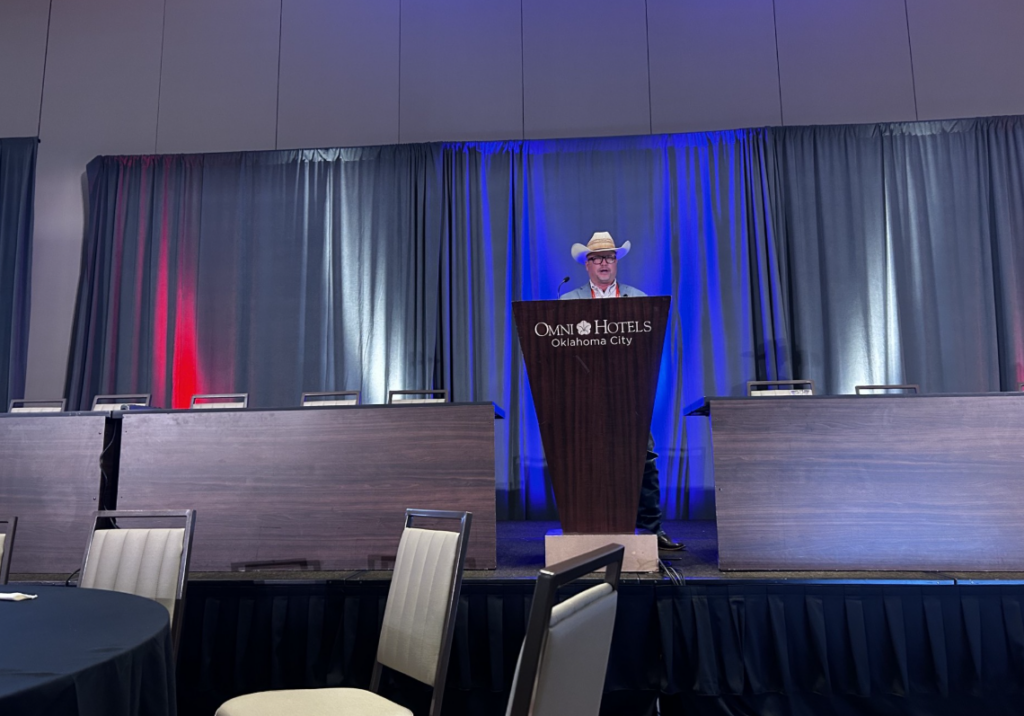
For cattle producers, DNA testing can provide information that is not available by simply looking at an animal and can help guide breeding and herd management decisions. Kenny Stauffer with Neogen says genomic testing gives producers more information about an animal’s genetics before they make costly long-term decisions. Stauffer spoke with Associate Farm Reporter Carli Davenport at the American Wagyu Association’s annual meeting about how DNA technology is being used in the cattle industry.
Using DNA to Better Understand Cattle Genetics
Stauffer says Neogen works with both beef and dairy producers, providing genomic technology to help producers make more informed decisions. “For those that don’t know what Neogen is, we’re the largest global genomics company, and specifically with beef cattle, you know we work with both beef and dairy,” Stauffer said. “We’re providing the DNA technology and tools for them to make better, quicker, more precise decisions for their operations.”
According to Stauffer, DNA testing can provide information ranging from parentage to more advanced genomic data. “It could be as simple as parentage,” he said. “You can’t see that from looking at them.”
That information can become especially useful in a multi-sire breeding pasture, where producers may want to know which bulls are contributing to the next generation. “If you have a multi-breeding pasture, which bulls are out there doing their jobs, which ones are laying under the tree, which bulls are giving you maybe a dystocia issues, which ones are producing the females that you want to keep on your operation,” Stauffer said.
More advanced testing can examine a much larger amount of genetic information.“We’re running a high-density array that we’re looking at 100,000 markers of that animal,” Stauffer said. “And what was the true inheritance? Which chromosomes did that animal get from the dam, the sire?”
Identifying Replacement Females Earlier
Stauffer says one of the potential benefits of genomic testing is identifying animals that may not fit the purpose for which they are being selected before producers invest years and additional costs into them.
He used the example of selecting a female as a replacement for the cow herd. “If you were gonna select, for an example, a female to stay in your herd for reproduction and to be a mama cow, and she inherited all of the terminal traits, it’s probably not the best decision,” Stauffer said.
That genetic information may not be apparent from looking at the animal. “Looking at her, you would not know that until two, three years down the road when she falls out of the herd, after you have all the expense into her,” he said. Stauffer says DNA testing can potentially help producers make that decision much sooner.
The Financial Impact of Genetic Decisions
For producers focused on improving their bottom line, Stauffer says one of the primary benefits of DNA testing is the ability to make decisions faster. “DNA, it’s going to be through making decisions quicker,” he said.
He returned to the example of a replacement female that does not perform as expected. “You take that female and you select her to be a replacement, and she stays in your cow herd,” Stauffer said. “She brings you in the lightest birth weight or the lightest weaning weight calf every year. She’s open year two because of her fertility.”
Stauffer says keeping that animal can become expensive. “That female is costing you a lot of money,” he said. “And that’s the most expensive. She falls out of the herd, and at that rate, you get cull cow value for her when you could have took a premium and got a premium for her as a yearling going into the feed yard.”
The missed opportunity, he says, comes from keeping an animal in a role that does not fit its genetics. “You’re missing out on that opportunity of that premium by selecting her for what her genetics was not cut out to be,” Stauffer said. “She was not meant to be a reproductive female in your operation.”
Lessons From the Poultry Industry
Stauffer also shared an example from the poultry industry that changed the way he viewed the economics of DNA testing. He said he initially questioned how it could make financial sense to spend $20 or $30 on a DNA sample for a chicken worth about $5. “It didn’t make sense to me,” Stauffer said. “And he corrected me and said I was looking at this wrong.”
The difference comes from how quickly genetic progress can occur in poultry and how many offspring can be influenced by a single breeding animal.
“The genetic change and the genetic interval in the chickens is every 21 days,” Stauffer said. “And there’s so much competition out there. If they’re selecting the elite breeding animal every single time, they’re already behind the eight ball.”
Stauffer said one rooster can have a tremendous impact on the population. “That one breeding stock, that one rooster is going to impact 1.5 million offspring,” he said.
He says the example demonstrates how quickly a poor genetic decision can put an operation behind. “You make one bad decision with an industry that’s changing so fastly, you’re already behind the eight ball,” Stauffer said.
Genetic Decisions in the Cattle Industry
While genetic change occurs more slowly in cattle than in poultry, Stauffer says that can make accurate decisions even more important because producers have to wait longer to see the results. “You look at the cattle space, and it’s the same way,” he said. “Yeah, the genetic interval’s much slower, but that even impacts it worse.”
Stauffer says producers can spend years waiting to determine whether a mating decision worked. “You make the wrong mating decision; it’s two years down the road before you realize whether that was the wrong decision,” he said.
Genomic testing can provide producers with information earlier in the process. “You could have taken advantage of that elite animal at year one versus waiting for two or three years after you figure out you were wrong,” Stauffer said.
American Wagyu Reserve DNA Bundle
Neogen has also partnered with the American Wagyu Association on a DNA testing program designed to simplify genomic testing for Wagyu producers. “We’re trying to make it simple,” Stauffer said. “We just recently partnered with American Wagyu and launched this program, and it makes it simple.”
The American Wagyu Reserve DNA Bundle uses Neogen’s GGP 100K test. “They order one test, which is our GGP 100K,” Stauffer said. “They get 100,000 markers and all of the traits, all of the conditions that are most important to Wagyu come with that bundle.”
Stauffer says the goal is to make advanced genetic information easier for producers to access and use. “We want to simplify it for the producers, make it as easy as we can to get the most advanced, best data as quickly as we can,” he said. “And that’s been a great little launch, and we’re excited, and it’s working well.”