
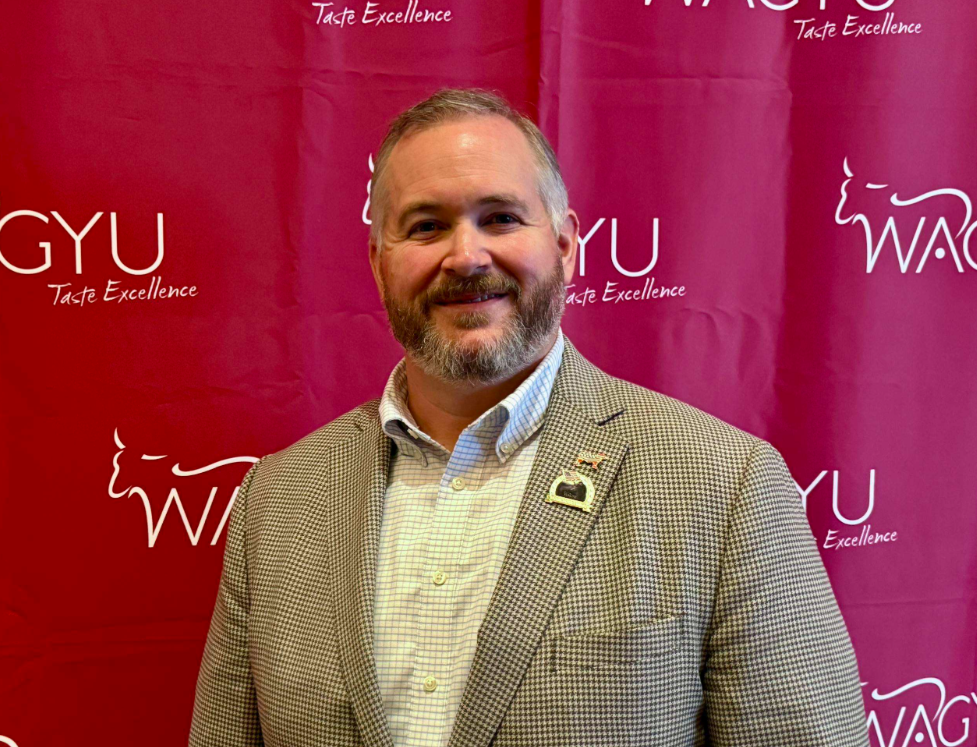
In today’s Beef Buzz, senior farm and ranch broadcaster Ron Hays speaks with Kent Bacus, executive director of government affairs for the National Cattlemen’s Beef Association, about the Trump administration’s recent actions involving beef imports, ground beef prices and the cattle industry.
Bacus recently spoke with cattle producers at the American Wagyu Association’s annual convention in Oklahoma City about the administration’s efforts to increase the supply of ground beef for consumers. The administration’s August proclamation temporarily increased the in-quota quantity for certain lean beef trimmings by 300,000 metric tons, with the additional volume divided into three 100,000-metric-ton tranches beginning September 1.
Beef Imports Focused on Lean Trimmings
Bacus said the new import access is primarily aimed at Brazil and Paraguay. “First, it starts with the proclamation that he made that he’s going to allow up to 300,000 metric tons of imported beef,” Bacus said. “Clearly the way that’s written, it’s designed to encourage lean beef trimmings from Brazil and Paraguay.”
He said the additional volume does not apply in the same way to countries that already have their own specific quotas. “It doesn’t apply to countries that have their own specific quotas,” Bacus said. “So Argentina and Uruguay don’t. You know, even though the president mentioned Argentina, that’s actually not a country that is eligible for this. Australia, New Zealand have their own.”
Bacus said the first 100,000-metric-ton tranche opened September 1, with the next two scheduled to follow. The White House proclamation specifies that the additional quota is allocated to “other countries or areas” and is limited to lean beef trimmings.
Concerns Over Brazil and Paraguay
Bacus said the increased access comes despite concerns among cattle producers about imports from Brazil and Paraguay. “But for the president to unilaterally grant access to two countries where we have serious concerns about the quality of the product they’re sending here, that has not resonated well in the countryside,” Bacus said.
He also pointed to the competitiveness of Brazilian beef in the U.S. market. “That 24% tariff is nothing for them; it’s pennies,” Bacus said. “A lot of that’s because they devalue their currency. You see that from a lot of the trade partners we have.”
He said the currency situation can make imported beef more competitive in the U.S. market. “So having that weaker currency makes them more competitive in the U.S. market, and so that’s not anything that’s going to deter them,” Bacus said. NCBA has previously raised concerns about Brazil’s animal health and food safety record, including questions about delayed reporting of atypical BSE cases.
Country-of-Origin Labeling Back on the Table
Bacus also discussed the administration’s renewed attention to mandatory country-of-origin labeling, or MCOOL.
The White House issued an executive order September 4 directing USDA and other officials to review the legal authorities that could permit mandatory country-of-origin labeling for beef and report their findings within 90 days.
Bacus said producers should understand what that review actually means. “Essentially, all they’re doing is spending the next 90 days looking at the legality of MCOOL and then reporting back what they can actually do,” Bacus said.
He said previous administrations have also examined the issue. “Over the last 10 years, previous administrations, including this one, have failed to find any legal way to bring that back without triggering another trade war, an extended one with Canada, Mexico, and now a lot of other countries who would be involved in that,” Bacus said.
Packers and Stockyards Enforcement
Bacus said the administration also discussed expanding enforcement under the Packers and Stockyards Act, although he said details remain limited. “They also talk about expanding some of the Packers and Stockyards enforcement, some other things on that,” Bacus said. “We don’t have any details on that. Don’t know what that really entails.”
He said there are other proposals that could provide opportunities for cattle producers, including changes involving state-inspected meat processing programs. “There are a few things that will be helpful,” Bacus said. “Part of that is really trying to expand the CIS program through FSIS and getting more of these state-inspected programs into the federal system, so they can trade across state lines.”
“That’s key. That’s going to give some more opportunities,” he added.
Bacus: Government Should Stay Out of Beef Prices
Ultimately, Bacus said the cattle market should determine how much beef is needed rather than government intervention. “But really, what we need the administration to do is just to stop talking about cattle, the cattle sector, and beef prices,” Bacus said. “If they really want to help, the best thing they can do is just shift their focus somewhere else.”
When asked about whether the market actually needs the additional lean beef imports, Bacus said buyers already understand their supply needs. “I think that’s the fundamental part of all this: the market will determine what we need, not the government,” Bacus said.
He said that principle is particularly important when government policy begins influencing supply and prices. “When you have folks that are out there talking about being defenders of conservative values in the free market, and yet you’re having the government determine what’s coming in and what prices are going to be,” Bacus said, “that is not conservative values. That’s not the free enterprise, and that’s not what cattle producers can get behind.”
Bacus said he hopes the administration will focus instead on policies that he believes are helping cattle producers. “So I’m hopeful that they’ll start listening to sound advice and they’ll start really considering how to build on the success of the massive tax bill and all the other regulatory reforms that they made that are actually helping cattle producers,” Bacus said.
“And just focus on that, and stay out of all of the interjections into cattle prices in the marketplace, where clearly that has failed,” he said.
The Beef Buzz is a regular feature heard on radio stations around the region on the Radio Oklahoma Ag Network and is a regular audio feature found on this website as well. Click on the LISTEN BAR above for today’s show and check out our archives for older Beef Buzz shows covering the gamut of the beef cattle industry today.