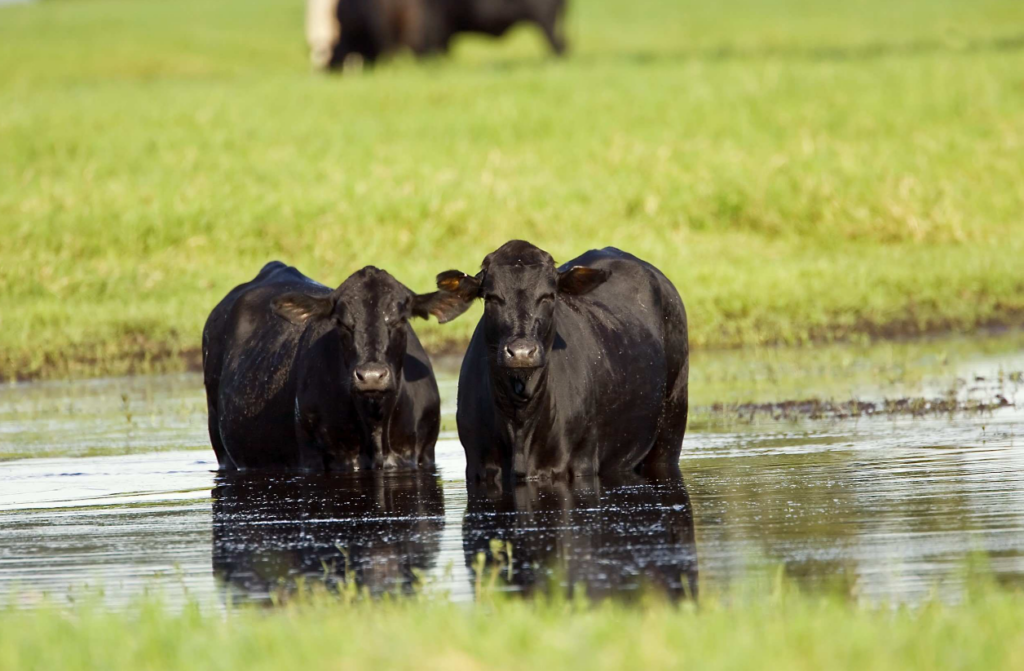
Weeks of extreme heat and limited rainfall can change cattle ponds quickly. Water levels decline, while cattle often spend more time standing in ponds to cool themselves. Hoof action stirs sediment, and more manure and urine are deposited directly into a smaller volume of water. The result may be a shallow, warm and muddy pond.
Muddy water attracts attention, but turbidity and salinity are not the same thing. Turbidity is caused primarily by suspended clay, soil and organic matter. It can reduce palatability and signal increasing erosion or contamination, but muddy appearance alone does not tell us whether water contains dangerous concentrations of dissolved minerals. Conversely, clear water can contain excessive salts, nitrate or sulfate.
As pond water evaporates, dissolved minerals remain and become more concentrated. Total dissolved solids (TDS) is a useful screening measure, although TDS itself does not identify which minerals are present. Water containing less than 3,000 ppm TDS is generally considered satisfactory for cattle. Water containing 3,000 to 4,999 ppm is usually satisfactory, although cattle may initially refuse it or experience temporary diarrhea. Water containing 5,000 to 6,999 ppm is considered marginal and should generally be avoided for pregnant or lactating cattle. Water exceeding 10,000 ppm is considered unsafe. Regardless of TDS, nitrate and sulfate concentrations deserve individual attention.
In an Oklahoma State University study, cattle offered water containing up to 5,878 ppm TDS under relatively cool conditions did not significantly change water intake, forage intake or diet digestibility. However, that small, short-term study should not be interpreted to mean that water near 6,000 ppm TDS is safe during prolonged heat, lactation or other stress.
More commonly, declining pond conditions may reduce performance before causing obvious toxicity. Warm, shallow water with increased manure contamination can promote bacterial and algal growth and develop objectionable tastes or odors. If water intake declines, forage intake often follows, potentially reducing weight gain and milk production.
Test a sample representative of what cattle are actually drinking. A livestock water analysis should include pH, TDS or electrical conductivity, nitrate, sulfate, chloride and major minerals. The Soil, Water, and Forage Laboratory at Oklahoma State Charges $18 for a comprehensive livestock water chemical analysis. Be sure to watch for algae, unusual odor or color, diarrhea, reduced grazing time, hesitation to drink, or a strong preference for an alternative water source. When the animals’ behavior tells you they don’t like to drink the water, it is time (perhaps past time) to intervene.
Longer term, limiting direct pond access and delivering water through a gravity-fed tank or trough behind the dam can reduce bank erosion, sediment disturbance and manure deposition. If pond access for cooling is restricted, provide adequate shade and plenty of clean water. Cool water consumption also serves to dissipate heat and cool the animals.
Turbidity is a visible warning, not a diagnosis. Water can look muddy and be chemically acceptable or look clear and contain harmful dissolved compounds. When pond conditions change, test the water or in the case of the water source becoming unpalatable, be prepared to provide a different water source.
David Lalman, OSU Extension beef cattle specialist, offers guidance on checking water quality in drought-stressed ponds and what producers should consider for their livestock on SunUpTV from September 12, 2026. https://www.youtube.com/watch?v=7W_8j7tnPNQ