

For the first nine months of 2026, U.S. beef imports are up 17.5 percent. Australia remains the largest source of beef imports, with 22.8 percent of the year-to-date total, followed by Brazil (20.7 percent); Canada (15.3 percent); Mexico (12.3 percent); New Zealand (10.4 percent); and Uruguay (6.9 percent). Smaller sources include Argentina (4.4 percent); Nicaragua (3.6 percent); and Paraguay (3.5 percent).
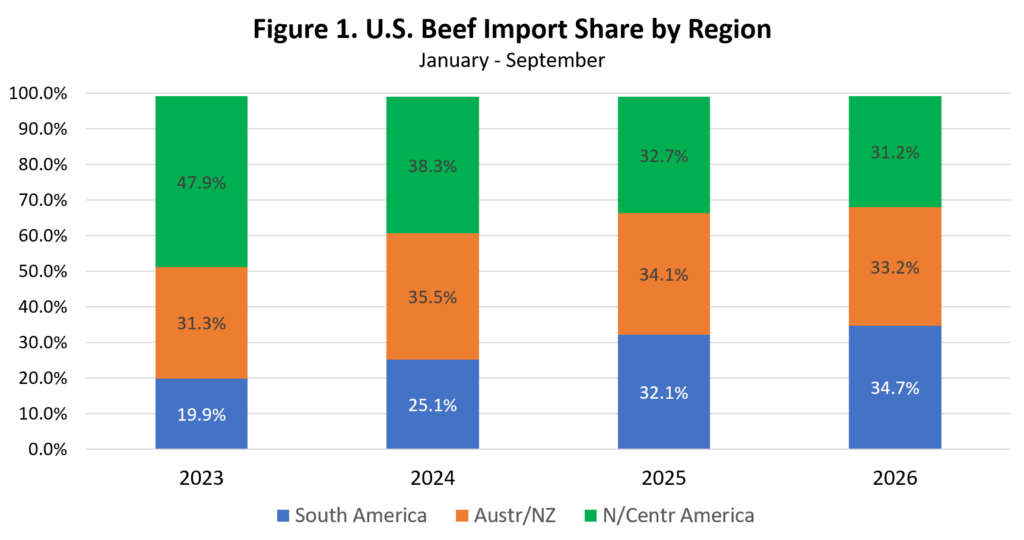
Total beef imports have increased sharply since 2023. For the January – September period, total beef imports have increased 74.6 percent from 2023 to 2026. There have also been significant regional shifts in the source of U.S. beef imports. Figure 1 shows that 47.9 percent of 2023 beef imports originated in North and Central America (Canada and Mexico plus Nicaragua), declining to a 31.2 percent share in 2026. Total beef imports from the region are up, however, by 13.6 percent over the period.
U.S. beef imports from Australia and New Zealand had maintained a relatively constant share of total imports, dropping slightly from 35.5 percent in 2024 to 33.2 percent in 2026 (Figure 1). Total imports from this region increased by 85.0 percent over the four years.
The share of beef imports from South America (Brazil, Uruguay, Argentina and Paraguay) increased from 19.9 percent in 2023 to 34.7 percent in 2026 (Figure 1). Total U.S. beef imports from the region have increased 205.1 percent in four years.
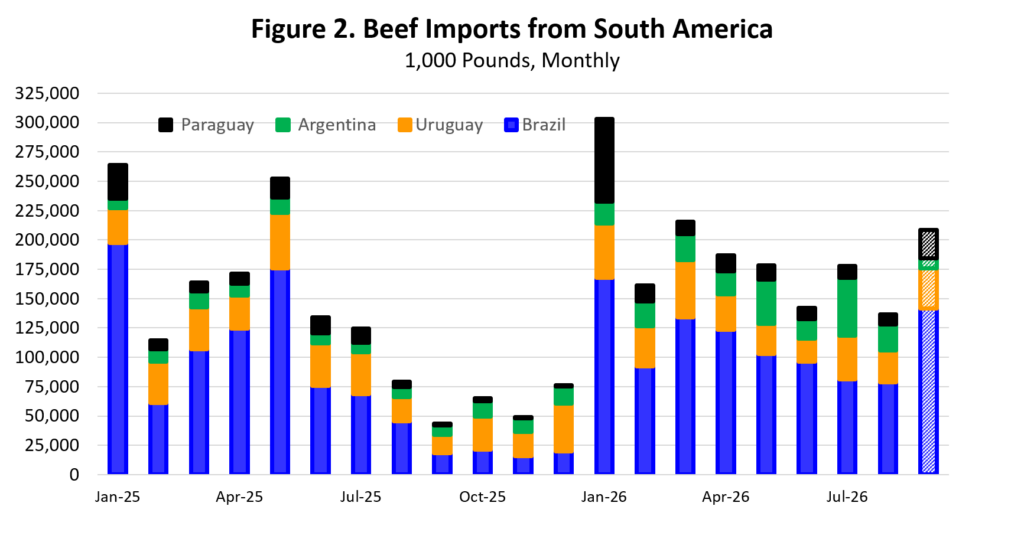
The latest September data shows that total monthly beef imports were up 49.7 percent year over year, with increases from all sources except Argentina. Beef imports from South America were up 376.6 percent year over year (Figure 2). September was the first month of the special tariff-free beef import program announced by the President in late August. The monthly allocation for September would have allowed up to 220.5 million pounds of beef imports with no over-quota tariff. So how much additional beef did come in as a result of this program?
This program primarily benefits Brazil and Paraguay. Total September beef imports from the two countries was 165.822 million pounds. The average monthly imports from Brazil and Paraguay from February through August (with tariffs in place) was 112.42 million pounds. September was up by 53.4 million pounds over this average. This would suggest that just 24.2 percent of the possible additional tariff-free allocation was imported. Of course, it is impossible to know how much beef would have been imported in the absence of the policy but the increased imports due to tariff reductions appear to be far less than the total quantity allowed. Additionally, September beef imports from Argentina (which has had its own special tariff-free deal this year) dropped in September to the lowest level in 14 months. Argentina, which displaced some beef imports from Brazil earlier this year, may now be displaced somewhat by Brazil and/or Paraguay. These abrupt trade policy changes appear to have more impact on the mix of beef import sources than on the total amount of beef imports.
Derrell Peel, OSU Extension livestock marketing specialist, visits with SUNUP Host Lyndall Stout about the cattle industry and market topics he covered with panel guests Don Close and Ford Drummond at the 2026 Rural Economic Outlook Conference on SunUpTV from October 24, 2026. https://www.youtube.com/watch?v=nEGg20DKajw







