Category: Top Ag News

As NFU Legislative Fly-In Wraps Up, AFR President Scott Blubaugh brings back some Take-aways he would like to see in Oklahoma

Thu, 15 Sep 2022 12:34:34 CDT

As NFU Legislative Fly-In Wraps Up, AFR President Scott Blubaugh brings back some Take-aways he would like to see in Oklahoma

Click here to listen to audio

The 2022 NFU Fall Legislative Fly-In wrapped up this week in Washington, DC. Throughout the week, the AFR Oklahoma delegation joined Farmers Union attendees from across the nation at the USDA Jefferson Auditorium. The NFU Legislative Fly-In group of 250 people is the largest to gather in Jefferson Auditorium since the beginning of the Coronavirus pandemic.

U.S. Secretary of Agriculture Tom Vilsack took top billing at the USDA Administration briefing. His remarks focused on the revitalization and building of local and regional food systems in the United States and the development and implementation of climate-smart practices.

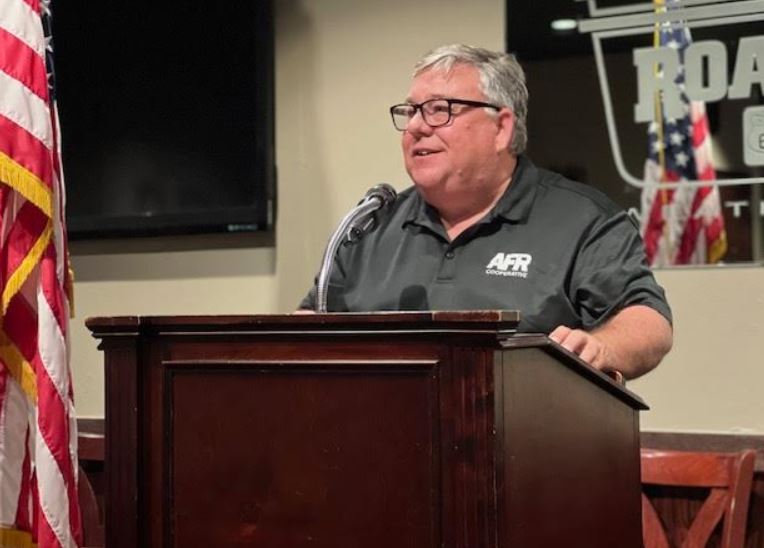
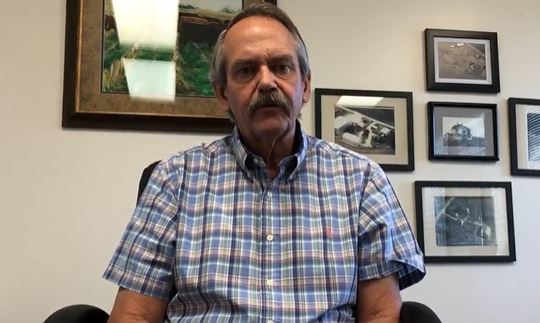
Radio Oklahoma Ag Network Intern Cheyenne Leach had the opportunity to travel with the AFR delegation and caught up with AFR President Scott Blubaugh after the Fly-in to get his take on the events, “We were able to go to the White House and meet with The president and his people. We were able to deal with the USDA Secretary of Agriculture Tom Vilsack, and most of his deputy lieutenants. Then we were able to go to the Federal Trade Commission and the Department of Justice and meet with their attorneys and then, of course, our congressman. So we had a very, very busy schedule, but I was optimistic and very positive.”

Blubaugh said some of his biggest takeaways was the importance of getting a farm bill done and the fairness for farmers’ campaign, which includes several pieces of key legislation, “One of them is the Transparency Act in the beef cattle market and have a contract library and being able to have better price reporting rules, better USDA rules on the Stockers and packers Act, as well as the right to repair our own equipment. That is becoming a bigger and bigger thing.”

Blubaugh said he’s concerned with consolidation issues producers face in Agriculture, “It’s really a national food security issue when the government allows Brazilian and Chinese companies to come in and buy up our food processing systems. And that’s what’s happened now. Chinese or Brazilian firms now own over 50% of our beef processing. And it is a National security issue.”

Blubaugh worries that this type of food system, while very efficient, is not very resilient, “We’ve seen this time and time again with the pandemic. The Holcomb Kansas fires, we even saw cyber attacks on some of the plants and shutting them down. So any disruption at all for whatever reason doesn’t matter. One of those major beef processing plants goes offline for any reason. You’re going to lose about 5% of the nation’s capacity to supply beef to the country. So it’s, it’s extremely concerning for the entire industry.”

When they arrive back in Oklahoma, Blubaugh said he would like to continue to see the administration work on the anti-competitive laws and reign in bad practices, “With anti-competitive behavior, you know, you’ve got basically four big packers that are very similar to a monopoly. There are a lot of rules. Our laws are based on fairness and equality. As independent farmers and ranchers, we want to be treated fair. And so the title of our presentation is fairness to farmers. And we’re trying to promote and bring it to the public’s attention.”

Blubaugh says he sees higher prices in the grocery store. Still, on the farmer/rancher level, we haven’t seen any price increases, and in many cases, we have seen actual decreases, and he says consolidation is to blame, “There’s just no there’s no competitive market to out there. It’s just one deal. And if that doesn’t work, then there’s nothing. So it hurts consumers and makes them pay more for food; it hurts our farmers and ranchers; they’re not being paid what they should be for their hard work. And it probably hurts the rural communities harder than anyone because the wealth our land creates is sucked out of many rural communities. And that wealth is sent overseas to these foreign coffers, Corporate coffers, and they retain that money there and not in Oklahoma. Not in rural America.”

Blubaugh says they will continue to work on getting some legislation passed this session of Congress. Still, with only six weeks left in the session, they will have to move quickly, “We’re working hard to get some of these transparency issues, cattle market issues, some of the labeling issues that we face in the beef market in that product of the USA labels are very deceptive to the consumer.”

The fact that foreign beef is allowed to be repackaged in the United States and then sold as a product of the USA is a problem, says Blubaugh, “We’re importing beef product from lots of different countries, so if we’re going to allow that practice to go on, we need to at least let the consumer know where their food comes from.”

Blubaugh said that everything is very partisan in Washington right now. Still, he says the issues he is speaking about have broad bipartisan support, “I feel like everyone sees the benefit of passing legislation to help the consumer, help the farmer and ranchers, and help our rural community.”

To hear Cheyenne and Scott Blubaugh’s complete conversation click or tap below


Statement by President Joe Biden on Tentative Railway Labor Agreement

Thu, 15 Sep 2022 08:48:58 CDT

The tentative agreement reached is an important win for our economy and the American people. It is a win for tens of thousands of rail workers who worked tirelessly through the pandemic to ensure that Americ…

AFBF Urges Congress to Intervene to Prevent Rail Strike

Thu, 15 Sep 2022 07:56:34 CDT

American Farm Bureau Federation President Zippy Duvall commented today on the possibility of a railway union strike:

“An extended rail strike would have cascading effects on farmers and ranchers, a…

Biden-Harris Administration Announces Historic Investment in Partnerships for 70 Climate-Smart Commodities and Rural Projects

Wed, 14 Sep 2022 10:57:25 CDT

Agriculture Secretary Tom Vilsack announced today that the Biden-Harris Administration through the U.S. Department of Agriculture is investing up to $2.8 billion in 70 selected projects under the first pool …

Emergency Drought Commission to Provide Drought Relief for Oklahoma’s Farmers and Ranchers

Tue, 13 Sep 2022 12:16:43 CDT

Click here to listen to audio

Radio Oklahoma News Network Director, Ken Johnson caught up with Oklahoma Secretary of Agriculture, Blayne Arthur to talk about the executive order to deliver drought relie…

Oklahoma Conservation Commission Director Trey Lam discusses the Emergency Drought Commission

Tue, 13 Sep 2022 10:30:05 CDT


Oklahoma Conservation Commission Director Trey Lam discusses the Emergency Drought Commission

Click here to listen to audio

Yesterday, Governor Kevin Stitt issued an executive order to deliver drought relief to farmers in western Oklahoma and other parts of the state hit hard by the current drought conditions.

“I will always do everything in my power to support Oklahoma’s great farmers and ranchers who work hard every day to feed our state and our nation,” said Gov. Stitt. “Whether it’s inflation or drought conditions, our agriculture producers have been dealing with some tough challenges this year, so I am glad that with the help of the legislature, we can help provide this relief.”

The Emergency Drought Commission will consist of State Secretary of Ag Blayne Arthur, Oklahoma Conservation Commission Executive Director Trey Lam, and the Oklahoma Water Resources Board Executive Director Julie Cunningham.

Today Lam shared some of his thoughts about the importance of the Emergency Drought Commission, “It was good news yesterday when we heard the Governor had declared a drought emergency for all 77 counties in Oklahoma.” Lam said they had heard from all of their conservation districts and farmers and ranchers about concerns over the drought with reduced rainfall throughout the last year, “Ponds are dry, water wells have dried up as well, and they are really suffering out there.” Lam said this will be a great chance to come together and deliver some resources, “There are 3 Million Dollars currently in the drought emergency fund, and we’ll get with the drought commission and decide how to divide up those funds to try and provide some relief to our farmers and ranchers.”

Click or tap below to hear the Statement from Trey Lam.


Read Governor Stitt’s executive order here, https://www.sos.ok.gov/documents/executive/2044.pdf


Governor Kevin Stitt Delivers Drought Relief to Farmers

Tue, 13 Sep 2022 08:46:24 CDT

Today, Governor Kevin Stitt issued an executive order to deliver drought relief to farmers in western Oklahoma, and other parts of the state hit hard by the current drought conditions.

Since mid summer- w…

Allendale’s Rich Nelson says Latest WASDE shows Smaller Yields and Smaller Acres for Corn and Soybeans

Mon, 12 Sep 2022 14:40:48 CDT


Allendale's Rich Nelson says Latest WASDE shows Smaller Yields and Smaller Acres for Corn and Soybeans

Click here to listen to audio

The September WASDE (World Agricultural Supply and demand estimates) was released today and the report showed neutral for corn and wheat, bullish for soybeans. Farm Director KC Sheperd spoke with Rich Nelson at Allendale, and he said on the Wheat Side, this is not a report where USDA Changes wheat production, “They haven’t touched production on this report since back in 2001. Instead, USDA wants to wait until the end of the month for the September 30 Annual small grains summary report.” Nelson said this report revises production for wheat, barley, and oats: “So all these numbers for production on the wheat side were left unchanged here today, and also the same for stocks. Ending stocks left at 610. So, for today’s discussion, corn and wheat did see little support as the acreage declines were a bit better than expected, and for soybeans, smaller yields, but certainly, we’ll have a few more numbers change here on this next October report up ahead.”

Nelson said the Russia/Ukraine War is still a topic of discussion, “On the Russia side, that’s a little frustrating. So USDA did recognize a little higher production on this report, 88 million tons last month, now 91, And most of the private side is still 95 to 97. So USDA will have to raise production yet again. The issue is they left exports unchanged, and, with July, August, and now September export data out of Russia, including the estimates, these numbers are missing the mark. So we are not shipping out a record amount here just yet for our record crop. So this is still something which might frustrate some people.”

Drought is still ongoing throughout parts of the US, and Nelson said that does play a role in this month’s numbers, “That is a significant issue, but they’re not showing up in the numbers. But you know, USDA certainly does recognize that, hey, we got some good August rains for much of the southern plains. That gave us a resurgence for at least a period of time. The current concern is that the forecasters tell us we’re going to remain back into a drier than normal bias in the weeks ahead. So we might slow up a little on Winter wheat plantings as we go into the second half of September.”

To hear the complete conversation with KC and Nelson, click or tap below.

To View the Crop Production Numbers, click here:

To hear more Premium content from Allendale, click here.

USDA on Monday cut corn production 415 million bushels (mb) to 13.94 billion bushels (bb), and also cut soybean production 153 mb to 4.378 bb as well.

Corn yield was lowered corn yields 2.9 bushels to 172.5 bushels per acre (bpa), which fell in line with pre-report estimates.

Soybean yield was cut 1.4 bpa to 50.5 bpa

WHEAT

USDA expects farmers to harvest 1.783 bb of wheat in 2022-23. Production is unchanged from last month, which is expected. USDA will update its wheat production forecasts in its Small Grains Summary, which will be released Sept. 30.

The agency made no changes to demand either, leaving ending stocks unchanged at 610 mb. It did, however, lower the national average farm gate price by a quarter to $9.00 per bushel.

USDA made many more changes to global wheat figures of 2022-23. Ending stocks rose to 268.57 mmt, up 1.23 mmt from last month. USDA sees higher supplies, consumption and exports, with production increases in Ukraine and Russia offsetting lower beginning stocks. Ukrainian production was increased by 1 mmt to 20.5 mmt, while Russian production was up 3 mmt to 91 mmt. If realized, Russian production would be a new record.

CORN

USDA lowered planted acreage for the 2022-23 corn crop by 1.2 million acres (ma) to 88.6 ma and cut estimated harvested acres by 1 ma to 80.8 million acres. USDA dropped the yield estimate 2.9 bpa to 172.5 bushels per acre. The average pre-report yield estimate was 172.4 bpa.

That put corn production at 13.944 bb.
S
USDA also lowered the old-crop carryover by 5 mb to 1.525 bb.

On the demand side, USDA cut 2022-23 Feed and Residual use by 100 mb to 5.225 bb. Feed, Seed and Industrial use overall came at 6.775 bb, down 50 mb. Ethanol usage also was cut 50 mb to 5.325 bb.

Total domestic usage came in at an even 12 bb, down 150 mb from August.

Exports are pegged at 2.275 bb, down 100 mb from August.

USDA put 2022-23 corn ending stocks at 1.219 bb, down 169 mb from August.

The average farmgate price for the 2022-23 corn crop was bumped up 10 cents a bushel to $6.75 per bushel.

Globally, USDA bumped up 2022-23 beginning stocks .3 million metric tons (mmt) to 312.14 mmt. Global production was lowered 7.03 mmt to 1,172.58 mmt. Global exports were lowered 2.04 mmt. That put ending stocks at 304.53 mmt, down 2.15 mmt.

USDA held pat on Russian corn 15 mmt while lowering the European Union’s production 1.2 mmt to 58.8 mmt.

On Ukraine, USDA bumped up production 1.5 mmt to 31.5 mmt and increased exports 1 mmt to 12.7 mmt.

USDA also held pat on its forecast for Brazil’s 2021-22 production at 116 mmt. Argentina’s production was held at 53 mmt as well.

SOYBEANS

USDA says farmers will harvest 4.38 bb of soybeans in 2022 with a national average yield of 50.5 bpa. That’s 153 mb less than last month’s forecast and reflects a 1.4 bpa cut to yield and a half-million-acre revision in planted acreage. Both are toward the low end of pre-report expectations.

USDA lowered ending stocks for 2022-23 to 200 mb. That’s 45 mb lower than last month and the lowest level in seven years. To arrive at that estimate, USDA lowered planted acreage to 87.5 million and harvested acreage to 86.6 ma. USDA increased beginning stocks by 15 mb to 240 mb, putting supplies at 4.633 bb.

On the demand side, USDA lowered its crush forecast by 20 mb, cut exports by 70 mb and trimmed residual use by 3 mb. That lowered overall demand to 4.433 mb, resulting in 200 mb of ending stocks and a national average farm gate price of $14.35, unchanged from last month.

For old-crop, 2021-22 ending stocks, USDA sees supplies at 240 mb, reflecting a lower export forecast.

Globally, USDA pegged ending stocks for 2022-23 at 98.92 mmt, which is toward the low end of pre-report expectations and 2.49 mmt from last month. It reflects lower stocks in the U.S and China. Brazil and Argentina’s production forecasts for the upcoming crop were left unchanged at 149 mmt and 51 mmt respectively. USDA lowered China’s import forecast by 1 mmt to 97 mmt.

LIVESTOCK

Monday’s WASDE report once again shared supportive news to the cattle market. Beef production for 2022 was raised by 16 million pounds, as slaughter speeds continue to run relentlessly. The third quarter of 2022 actually saw a 25-million-pound dip in production from last month’s report as carcass weights are waning, but the third quarter’s drawback was more than offset by the 40-million-pound addition to the fourth quarter. Beef production for 2023 was raised by 70 million pounds, with the first quarter of 2023 being raised by 150 million pounds from August’s WASDE report, while the second quarter of 2023 remained unchanged. Steer prices are expected to average $143.00, up $3.00 from last month, for the third quarter in 2022, and fourth quarter prices are unchanged at $147.00. Beef imports for 2022 fell by 45 million pounds and beef exports for 2022 held steady. Beef imports and exports for 2023 were unchanged from August’s report.

Monday’s WASDE report shared mixed news for the hog complex. Pork production for 2022 gained 55 million pounds from last month’s report as pork production in the third quarter is anticipated to be better than originally expected. Disappointing but expected news was shared about quarterly price projections as obviously pressures in the current market have dropped third quarter prices by $6.00 from August’s WASDE report, and fourth quarter prices in 2022 are expected to average $65.00, which is down $4.00 from a month ago. Quarterly price projections for 2023 are unchanged from a month ago. Pork imports for 2022 fell by 50 million pounds but pork exports also fell by 80 million pounds. Pork imports for 2023 fell by 100 million pounds and exports remained unchanged.

To view the full report for WASDE click here:


Chronic Wasting Disease Kills Deer Near Oklahoma Panhandle Border- ODWC and ODAFF on High Alert

Sun, 11 Sep 2022 16:07:33 CDT


Chronic Wasting Disease Kills Deer Near Oklahoma Panhandle Border- ODWC and ODAFF on High Alert

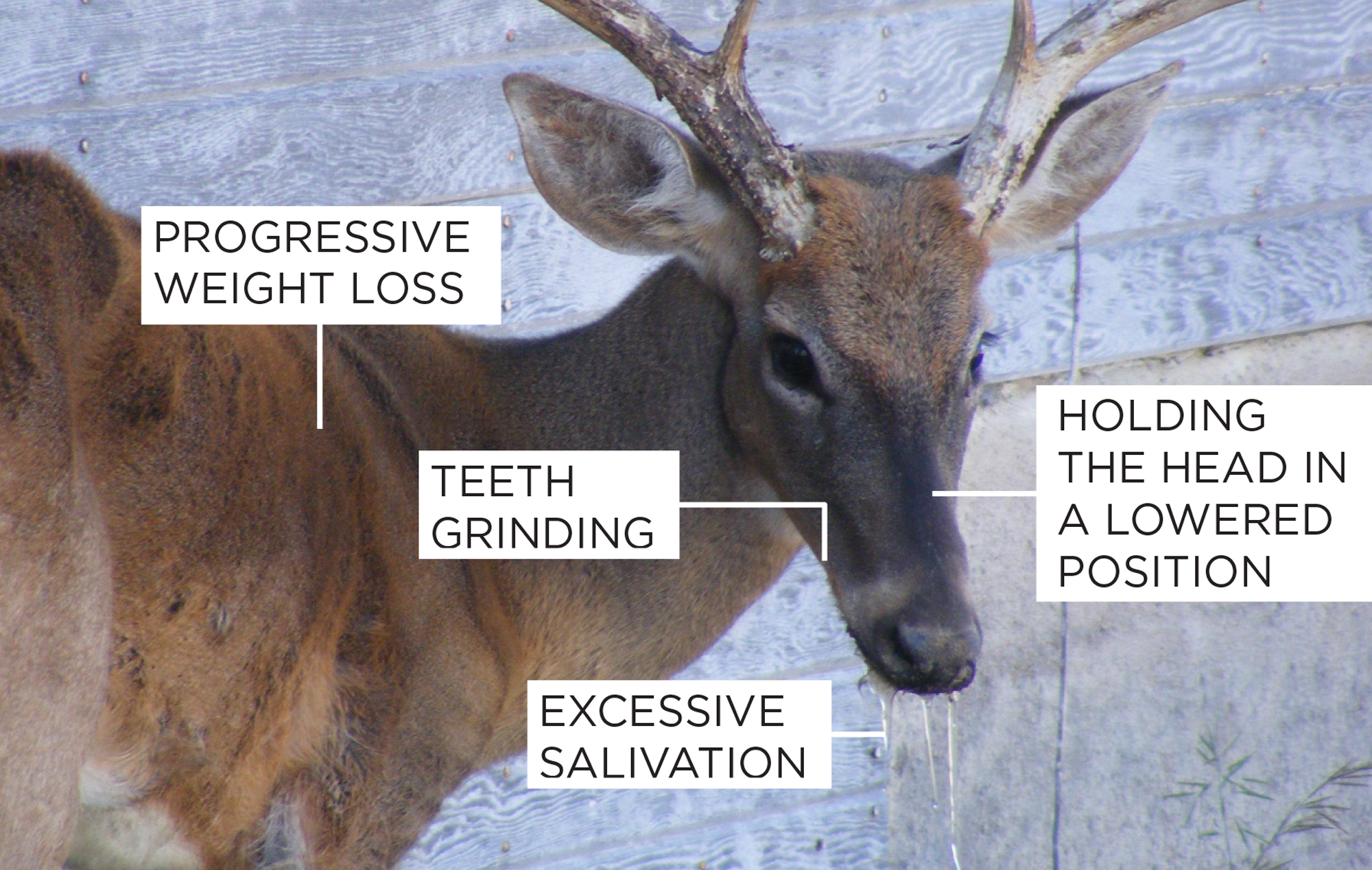
A white-tailed deer carcass recently recovered along a Texas road about 2.5 miles south of the Oklahoma border in the western Panhandle south of Felt, Okla., has tested positive for chronic wasting disease (CWD). The CWD-positive deer was found in an area of Texas with a history of CWD detection dating back three years. Although not inside Oklahoma’s border, due to the proximity of this finding to Oklahoma, the Oklahoma Department of Wildlife Conservation (ODWC) has activated the next stage of the CWD Response Plan that was jointly produced with the Oklahoma Department of Agriculture, Food and Forestry.

“With the ability of deer to easily travel many miles in a day, the CWD Response Plan dictates that we respond to this finding as if CWD has now been detected among free-roaming wild deer in Oklahoma,” said Jerry Shaw, Wildlife Programs Supervisor with ODWC.
   

CWD is an always-fatal neurological disease that affects the brains of deer, elk, moose, and other members of the cervid family, creating holes that resemble those in sponges. It’s important to note that CWD does not affect pronghorn antelope, also found in this area of the state, and that CWD transmission from wild animals to people or livestock has never been documented.

While CWD is similar to the infamous Made Cow Disease or Bovine Spongiform Encephalopathy, scientists agree that CWD cannot cause BSE. BSe or Mad Cow Disease is a neurological disorder of cattle.
   

No CWD-positive wild deer have been found within Oklahoma’s borders. But CWD has been found in two captive elk herds in the state. CWD has been confirmed in wild cervids in every state surrounding Oklahoma. In total, 30 states now have detected CWD within their borders.
   

The Wildlife Department has conducted CWD monitoring on hunter-harvested deer and elk and road-killed deer since 1999. The disease has not been detected in laboratory testing of tissue samples from more than 10,000 wild deer and elk from throughout Oklahoma.
   

The Wildlife Department will continue monitoring for evidence of this disease within Oklahoma’s borders and will release additional information, including ways deer and elk hunters can help with detection and mitigation as hunting seasons approach. Additional guidelines or restrictions will be distributed and well-advertised if determined necessary to further protect Oklahoma’s deer and elk populations.
   

Additional human health information relating to CWD is available by clicking here.
   

For more information on the disease, how it could affect hunting, and proper disposal of infected animals, click here.


Harvest Across the Entire Hard Red Winter Wheat Belt is Now Done- Final Protein Levels Well Above 2021

Fri, 09 Sep 2022 15:09:42 CDT


Harvest Across the Entire Hard Red Winter Wheat Belt is Now Done- Final Protein Levels Well Above 2021

Here’s the latest harvest summary from Plains Grain as compiled by their Executive Director, Mark Hodges. This report is as of Friday, September 9, 2022:

State Percent Complete:

Texas 100%

Oklahoma 100%

Kansas 100%

Colorado 100%

Nebraska 100%

South Dakota 100%

Montana 100%

Washington 99%

Oregon 100%

Idaho 99%

Wyoming 100%

All 2022 HRW samples across all states are now in the lab and milling contiues. Next week will mark the end of weekly reports with a final report to be issued when all testing is complete (approximately the last week of this month). All states are now 99% to 100% complete with harvest.

There are now 524 samples in lab originating out of 11 states with many in multiple stages of evaluation (mill/dough/bake test). Kernel data before weighting factors for production indicates overall dockage is still at 0.5, TW, 60.7 (significantly above 60.3 2021). Defective kernel totals are a contrast to last year (2.1 vs. 1.7% in 2021). Overall protein content avg. 12.7 (dropped slightly as harvest progressed, but still significantly higher vs. 12.0 in 2021), and 11.9 in 2020.

Thousand Kernel Weights are averaging 30.8 g (has increased as harvest moved northwest as has kernel diameter (2.59 mm vs. 2.58 2021). Hardness average is 65.2 vs. 61.1 2021. FN is now at 347 vs 368 in 2021. Again, to emphasize that these are all results based on straight averages before production weighting factors have been applied.

To see more details about the test results compiled to date- click on the PDF below.

Click here:


Verified by MonsterInsights