Wed, 28 Sep 2022 11:29:14 CDT
Click here to listen to audio
Farm Director, KC Sheperd, got the chance to visit with Mary Chris Barth to talk about the 5-State Beef Conference coming up on Tuesday, October 4 from 10 a.m. to 4 p.m. at…


Sep 28
Wed, 28 Sep 2022 11:29:14 CDT
Click here to listen to audio
Farm Director, KC Sheperd, got the chance to visit with Mary Chris Barth to talk about the 5-State Beef Conference coming up on Tuesday, October 4 from 10 a.m. to 4 p.m. at…
Sep 27
Tue, 27 Sep 2022 17:12:49 CDT
Click here to listen to audio
As Congressman Frank Lucas gets closer to possibly being part of the House of Agriculture Committee for 2023, Senior Farm and Ranch Broadcaster, Ron Hays, visits with Lucas…
Sep 26
Mon, 26 Sep 2022 16:11:04 CDT
As drought continues to take its toll on the Southern Plains, Texas, Oklahoma and Kansas see a drop in pasture and range ratings in this week’s Crop Progress Report. As for winter wheat plantings, Okla…
Sep 26
Mon, 26 Sep 2022 14:57:18 CDT
Click here to listen to audio
As the next meeting of the Emergency Drought Commission will take place this Friday, KC Sheperd, Farm Director, caught up with Vice President of Operations at Farm Data Ser…
Sep 26
Mon, 26 Sep 2022 08:36:34 CDT
Click here to listen to audio
September is Suicide Awareness Month in Oklahoma. Farm Director, KC Sheperd, had the chance to visit with Brent Brewer, who serves on the American Farmers and Ranchers/Okla…
Sep 26
Mon, 26 Sep 2022 04:42:48 CDT
Oklahoma bakers- young and old gathered on Sunday at the OKC Fairgrounds. For the first time since COVID, the Oklahoma Wheat Commission hosted their annual "Best of Wheat" Bread Baking Contest.
…
Sep 23
Sun, 25 Sep 2022 13:42:06 CDT
On this Road to Rural Prosperity Podcast, KC Sheperd shares the story of Joey Carter, a hard-working farmer who was widely regarded as a model citizen in a rural North Carolina town. Carter is the focus of a…
Sep 23
Fri, 23 Sep 2022 09:39:43 CDT
Click here to listen to audio
Farm Director, KC Sheperd, got the chance to visit with Representative Dell Kerbs of District 26 after the first meeting of the Emergency Drought Commission. Kerbs talks ab…
Sep 22
Thu, 22 Sep 2022 16:44:16 CDT

This Week on SUNUP is Oklahoma State University Extension grain market economist, Kim Anderson. During this week’s edition, Anderson talks about factors impacting commodity prices.
Anderson said wheat prices this week were trending downward.
“Last week they dropped off a little bit,” Anderson said. “On Monday they were lower, but then on Tuesday, we had a big increase in wheat prices, and we got wheat prices going from about $8.70 a bushel to $9.25 a bushel in northern Oklahoma.”
Anderson said the most important thing to take away is that prices broke at 9 dollars and that has been a resistance point lately in wheat prices.
“I think the big reason for the increase in prices is what is going on in Ukraine with Russia,” Anderson said. “Ukraine has been taking territory that Russia had captured earlier. President Putin has been under the gun- there have been calls for him to resign within Russia and the way he seeks to get his points back up, get back popularity increasing, is to start winning in Ukraine.”
When Putin starts making threats such as shutting down the black sea, Anderson said prices are going to move.
Anderson said the Russia and Ukraine situation did not have any impact on corn and bean prices.
“We didn’t see any spillover into corn and beans, and I was surprised at that, especially corn with Ukraine because Ukraine has been exporting corn,” Anderson said.
Because of this, Anderson said he feels like it shows that the world is more concerned with wheat than corn and soybeans.
“You look at corn, around $7.60, it dropped off a little bit earlier in the week, it came back a little bit, but not much moves at all in corn,” Anderson said. “Same thing with soybeans, up around $4.15, dropped off 30 cents or so, which is not much for beans, and came back and recovered that area.”
Cotton has fallen from about $1.16 for December contract, Anderson said, and went down to 93 cents, then up to 96 cents.
Anderson said aside from Russia and Ukraine, the dollar index is impacting prices.
“That increasing value of the U.S. dollar I think is having an impact on all the prices,” Anderson said. “You go back to April, that index was 98, it is up near 111 right now. That is a 13 percent increase in the value of the dollar, and that means our commodities are 13 percent more expensive on the world market, and I think you’ve got to look at exports and the demand for exports. That is what has been driving our prices.”
Four years in a row, Anderson said world wheat production has been a record, but also four years in a row, consumption has been at a record and also higher than production, so we are losing stocks.
“I think what you have to look at there, is would the consumer rather have an extra bag of flour on the shelf or be wondering where they are going to get that next bag and I believe our use has increased because we are stocking the flower and the importing countries are stocking the wheat,” Anderson said.
This week on SUNUP:
• Amanda Silva, OSU Extension small grains specialist, offers planting advice for producers who are dusting in wheat.
• Colter Chitwood, OSU assistant professor of wildlife, talks about the recent case of chronic wasting disease in a deer found near the Oklahoma border.
• Wes Lee, OSU Extension Mesonet agricultural coordinator, says drought conditions have depleted the percentage of plant available water. State climatologist Gary McManus predicts more hot and dry weather is on the way.
• Mark Johnson, OSU Extension beef cattle breeding specialist, explains the benefits of early culling in beef breeding heifers.
• Kim Anderson, OSU Extension grain marketing specialist, analyzes the impacts of Russia’s war with Ukraine on the wheat market.
• Tom Royer, OSU Extension entomologist, says producers planting wheat for pasture need to be on the lookout for fall armyworms.
• Finally, Dave Lalman, OSU Extension beef cattle specialist, discusses ways to manage hay waste this winter.
Join us for SUNUP:
Saturday at 7:30 a.m. & Sunday at 6 a.m. on OETA-TV
YouTube.com/SUNUPtv
SUNUP.okstate.edu
Sep 22
Thu, 22 Sep 2022 05:00:26 CDT
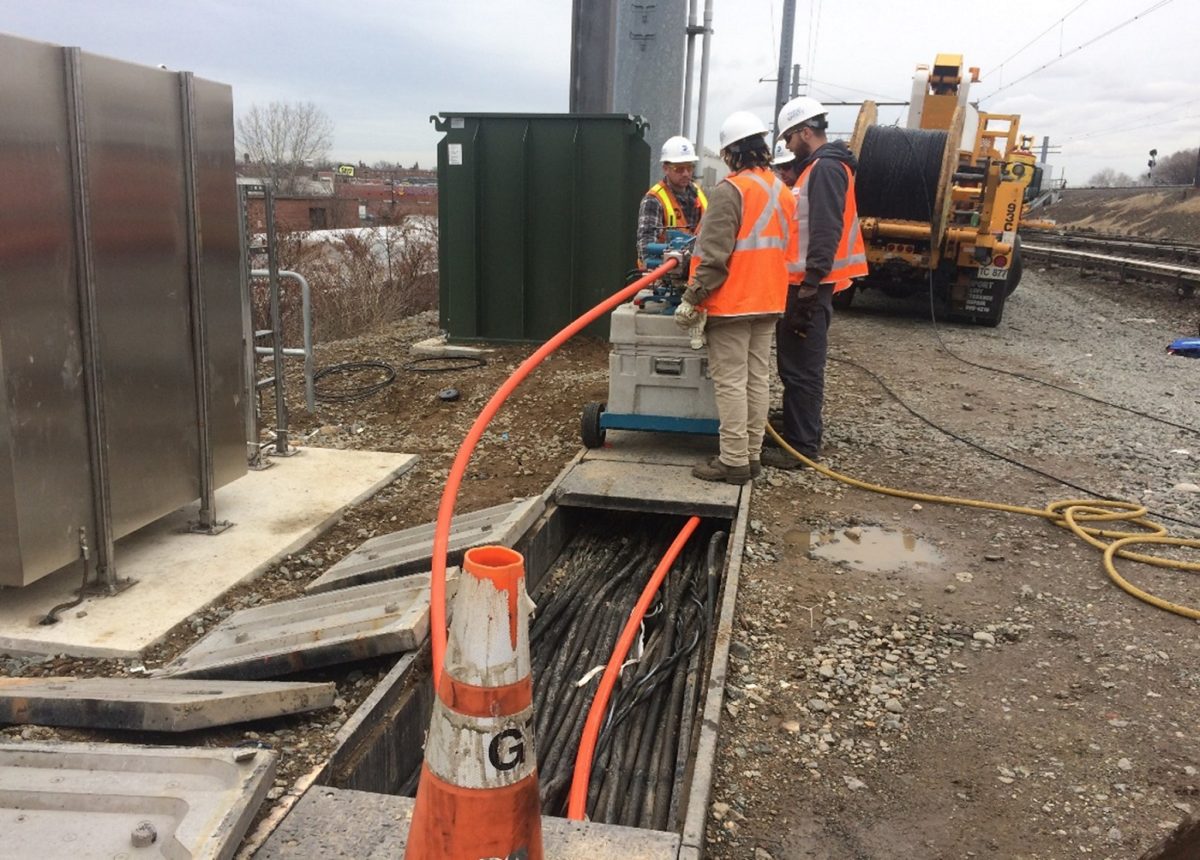
U.S. Department of Agriculture (USDA) Secretary Tom Vilsack today announced that the Department is awarding $502 million in loans and grants to provide high-speed internet access for rural residents and businesses in 20 states. The funding is part of the Biden-Harris Administration’s commitment to investing in rural infrastructure and providing reliable, affordable, high-speed internet for all. USDA is making the investments through the third funding round of the ReConnect Program. The Department will make additional investments for rural high-speed internet in the coming months, including funding from the Infrastructure Law, which provides $65 billion investment to expand affordable, high-speed internet to all communities across the U.S.
“President Biden’s commitment to high-speed internet in rural communities is foundational to ensuring that the nation’s economy continues to expand from the bottom up and the middle out,” Vilsack said. “High-speed internet will improve the rural economy. It will help rural businesses grow and get access to new markets. It will help rural residents get access to more and better health care and educational opportunities. USDA knows rural America is America’s backbone, and prosperity here means prosperity for all.”
USDA is making 32 awards in Alabama, Alaska, California, Colorado, Illinois, Iowa, Kansas, Michigan, Minnesota, Mississippi, Missouri, Montana, Nebraska, North Carolina, North Dakota, Oklahoma, Oregon, Tennessee, Texas and Wyoming. Many of the awards will help rural people and businesses on Tribal lands and people in socially vulnerable communities.
As part of today’s announcement:
Oklahoma’s Southern Plains Cable LLC is receiving an $8.1 million loan and an $8.1 million grant to deploy a fiber-to-the-premises network that will connect 7,093 people, 230 businesses, six farms and 29 schools to high-speed internet in Caddo, Comanche, Cotton and Grady counties. Southern Plains will make high-speed internet affordable by participating in the FCC’s Affordable Connectivity and Lifeline programs. This project will serve the Kiowa-Comanche-Apache-Fort Sill Apache tribal statistical area as well as socially vulnerable communities in Cotton County. (Editor’s Note- Southern Plains Cable LLC is wholy owned by Hilliary of Medicine Park, Oklahoma- the parent company of OklahomaFarmReport.Com.)
The Osage Nation in Oklahoma is receiving over $13 million to deploy a fiber-to-the-premises network. This network will connect 831 people, 18 businesses, and 128 farms to high-speed internet in Osage County in Oklahoma. The Osage Nation will make high-speed internet affordable by participating in the FCC’s Affordable Connectivity Program. This project will serve the Osage Nation and socially vulnerable communities in Osage County.
In southeast Oklahoma- Valliant Telephone Company Inc. is receiving $883,000 in grant money to deploy a fiber-to-the-premises network. This network will connect 200 people, 16 businesses and one educational facility to high-speed internet in Choctaw and McCurtain counties in Oklahoma. Valliant Telephone Company Inc. will make high-speed internet affordable by implementing the FCC’s Affordable Connectivity and Lifeline programs, and offering four internet packages. This project will serve the Choctaw Oklahoma Tribal Statistical Area and socially vulnerable communities in McCurtain County.
In southwestern Missouri- Net Vision Communications LLC is receiving a $12.4 million loan to connect 4,587 people, 300 businesses, nine farms and 15 public schools to high-speed internet in Barton County, Missouri. This project will serve socially vulnerable communities in the county.
USDA has announced $858 million in the third round of ReConnect funding so far and plans to make more investment announcements under this program in the coming weeks. Today’s announcement follows the Department’s July 28 announcement that it has invested $356 million through the ReConnect Program to help very rural residents and businesses in 11 states (PDF, 192 KB) gain access to high-speed internet.
To be eligible for ReConnect Program funding, an applicant must serve an area where high-speed internet service speeds are lower than 100 megabits per second (Mbps) (download) and 20 Mbps (upload). The applicant must also commit to building facilities capable of providing high-speed internet service at speeds of 100 Mbps (download and upload) to every location in its proposed service area.
To see the full list of grants and loans being awarded in this round of the ReConnect Program- click on the PDF link below.