Category: Top Ag News

Winter Wheat Plantings in Oklahoma Continue to Fall Behind Last Year and the Average

Tue, 11 Oct 2022 16:31:58 CDT

Winter Wheat Plantings in Oklahoma Continue to Fall Behind Last Year and the Average

In Oklahoma, good to excellent range and pasture conditions fall to 2 percent this week. The nation’s row-crop harvest – particularly the soybean harvest – picked up speed last week, pushing progress ahead of five-year averages, USDA NASS reported in its weekly Crop Progress report on Tuesday. The report is normally released on Mondays but was delayed this week due to the holiday.

Nationwide Winter Wheat:

Winter wheat planted for the U.S. reached 55 percent, down 3 percentage points from the previous year and the average. Winter wheat emerged reached 26 percent, down 3 points from the previous year and down 6 points from the average.

Nationwide Cotton:

Cotton bolls opening for the U.S. reached 84 percent, up 7 points from the previous year and up 3 points from the average. Cotton harvested reached 29 percentage points, up 10 points from the previous year and up 4 points from the average.

Cotton conditions for the 15 states reported rated 30 percent good to excellent, 23 percent fair and 47 percent poor to very poor.

Nationwide Corn:

Corn mature for the U.S. reached 87 percent, down 6 points from the previous year and up 2 points from the average. Corn harvested reached 31 percent, down 8 points from the previous year and up 1 point from the average.

Corn conditions for the 18 states reported rated 54 percent good to excellent, 26 percent fair and 20 percent poor to very poor.

Nationwide Range and Pasture:

Range and pasture conditions for the U.S rated 23 percent good to excellent, 31 percent fair and 46 percent poor to very poor.

To view the U.S. Crop Progress Report, click here.

Oklahoma:

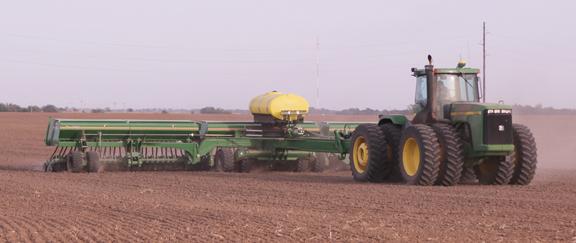
Winter wheat planted reached 38 percent, down 10 points from the previous year and down 18 points from normal. Winter wheat emerged reached 20 percent, down 3 points from the previous year and down 9 points from normal.

Cotton bolls opening reached 89 percent, up 4 points from the previous year and up 9 points from normal. Cotton conditions reached 5 percent good to excellent, 47 percent fair and 48 percent poor to very poor. (Since last week, good to excellent cotton conditions have dropped by 2 percentage points, but poor to very poor has also decreased- by 6 percentage points.)

Corn mature reached 97 percent, up 3 points from the previous year and from normal. Corn harvested reached 51 percent, down 7 points from the previous year and down 5 points from normal. Corn conditions rated 24 percent good to excellent, 31 percent fair and 45 percent poor to very poor. (Since last week, good to excellent corn conditions have dropped by 1 percentage point.)

Sorghum mature reached 76 percent, down 12 points from the previous year but up 1 point from normal. Sorghum harvested reached 30 percent, down 2 points from the previous year and down 5 points from normal. Sorghum conditions rated 10 percent good to excellent, 29 percent fair and 61 percent poor to very poor. (Since last week, good to excellent sorghum conditions have dropped by 4 percentage points and poor to very poor conditions have increased by 7 points.)

Soybeans dropping leaves reached 50 percent, down 9 points from the previous year and down 4 points from normal. Soybeans harvested reached 15 percent, up 2 points from the previous year and up 1 point from normal. Soybean conditions rated 22 percent good to excellent, 46 percent fair and 32 percent poor to very poor.

Peanuts harvested reached 5 percent, down 6 points from the previous year and down 5 points from normal. Peanut conditions rated 77 percent good to excellent, and 23 percent fair.

Hay:
In the West Central district, reporters indicated that hay is in very short supply. Statewide, the fourth cutting of alfalfa hay reached 87 percent, down 1 point from the previous year and down 2 points from normal. The fifth cutting of alfalfa hay reached 25 percent, up 1 point from the previous year and up 11 points from normal. The third cutting of other hay reached 80 percent, up 25 points from the previous year and up 28 points from normal. The fourth cutting of other hay reached 15 percent.

Pasture and Livestock:
Pasture and range conditions rated 2 percent good to excellent, 20 percent fair and 78 percent poor to very poor. Livestock conditions rated 26 percent good to excellent, 46 percent fair and 28 percent poor to very poor.

Since last week, good to excellent pasture and range conditions have dropped 1 percentage point and poor to very poor conditions have increased by 2 percentage points.

To view the Oklahoma Crop Progress Report, click here.

Kansas:

Winter wheat planted was 50 percent, behind 60 percent last year, and near 54 percent for the five-year average. Emerged was 19 percent, behind 29 percent last year and 31 percent average.

Corn mature was 95 percent, near 97 percent last year and 93 percent average. Harvested was 61 percent, near 64 percent last year, but ahead of 54 percent average. Corn conditions rated 22 percent good to excellent, 24 percent fair and 54 percent poor to very poor.

Soybeans dropping leaves was 82 percent, equal to both last year and the average. Harvested was 30 percent, ahead of 25 percent, last year and 21 percent, average. Soybean conditions rated 25 percent good to excellent, 29 percent fair and 46 percent poor to very poor.

Sorghum coloring was 96 percent, near 99 percent last year, and 98 percent average. Mature was 70 percent, behind 79 percent last year, and near 72 percent average. Harvested was 25 percent, behind 30 percent last year, but ahead of 19 percent average. Sorghum conditions rated 21 percent good to excellent, 25 percent fair and 54 percent poor to very poor.

Cotton bolls opening was 81 percent, equal to last year, and ahead of 73 percent average. Harvested was 16 percent, ahead of 2 percent both last year and the average. Cotton conditions rated 17 percent good to excellent, 25 percent fair and 58 percent poor to very poor.

Pasture and Range:
Pasture and range conditions rated 8 percent good to excellent, 18 percent fair and 74 percent poor to very poor. Since last week, good to excellent ratings have increased by 2 percentage points and poor to very poor has decreased by 4 percentage points.

To view the Kansas Crop Progress Report, click here.

Texas:

Winter wheat planted reached 58 percent, up 5 percentage points from the previous year and up 4 points from the average. Winter wheat emerged reached 28 percent, even with the previous year and down 1 point from the average.

Cotton bolls opening reached 78 percent, up 7 percentage points from the previous year and up 4 points from the average. Cotton harvested reached 35 percent, up 7 points from the previous and the average. Cotton conditions rated 10 percent good to excellent, 18 percent fair and 72 percent poor to very poor.

Corn harvested reached 85 percent, down 3 percentage points from the previous year and up 6 points from the average. Corn conditions rated 18 percent good to excellent, 31 percent fair and 52 percent poor to very poor.

Sorghum harvested reached 95 percent, up 8 percentage points from the previous year and up 12 points from the average. Sorghum conditions rated 17 percent good to excellent, 41 percent fair and 42 percent poor to very poor.

Soybeans harvested reached 55 percent, down 18 points from the previous year and down 15 points from the average. Soybean conditions rated 13 percent good to excellent, 24 percent fair and 63 percent poor to very poor.

Peanuts mature reached 51 percent, up 1 percent from the previous year and up 9 percentage points from the average. Peanuts harvested reached 18 percent, even with the previous year and up 6 points from the average. Peanut conditions rated 31 percent good to excellent, 50 percent fair and 19 percent poor to very poor.

Pasture and Range:
Pasture and range conditions rated 14 percent good to excellent, 30 percent fair and 56 percent poor to very poor. Since last week, good to excellent conditions have decreased by 4 percentage points and poor to very poor conditions have increased by 4 points.

To view the Texas Crop Progress Report, click here.
   

Preparing for Financial Opportunity – Retention of Heifers

Tue, 11 Oct 2022 09:31:15 CDT

Mark Johnson, Oklahoma State University Extension Beef Cattle Breeding Specialist, offers herd health advice as part of the weekly series known as the "Cow Calf Corner" published electronically by …

Derrell Peel Talks Worsening Drought Conditions in Oklahoma

Mon, 10 Oct 2022 11:53:04 CDT

Mondays, Dr. Derrell Peel, Oklahoma State University Extension Livestock Marketing Specialist, offers his economic analysis of the beef cattle industry. This analysis is a part of the weekly series known as …

Celebrate The Fall Season with Oklahoma Agritourism Pumpkin Patches and Mazes all Over the State

Fri, 07 Oct 2022 12:22:26 CDT

Click here to listen to audio

Associate Farm Editor, Reagan Calk, got the chance to visit with the Agritourism and Farmers Market Coordinator at the Oklahoma Department of Ag, Micaela Halverson, talking…

Economic Uncertainty Forcing Oklahoma Producers to Make Difficult Decisions

Fri, 07 Oct 2022 08:43:18 CDT


Economic Uncertainty Forcing Oklahoma Producers to Make Difficult Decisions

Click here to listen to audio

This Week on SUNUP is Oklahoma State University Extension grain market economist, Kim Anderson. During this week’s edition, Anderson talks about the current economic situation and how it is impacting the grain markets.

“Crop prices were up a little bit this week, but I don’t think there are any big changes,” Anderson said.

Wheat went up about 40 cents, Anderson said, from $9.25 to $9.65.

“I think we have got the drought problems that are impacting prices,” Anderson said. “And of course, things that are going on in the war in Russia and Ukraine.”

Corn had around a 15-cent price increase Anderson said, and harvest is about 20 percent complete.

“If you look at soybeans, going from $13.30 up to $13.70, about 40 cents there- a little price move, but when you have got $13.50 beans, or $13.70 beans, 40 cents is just not very much,” Anderson said.

Cotton was volatile, Anderson said, but no big moves.

“It started out at 84, went up to 88 and it is back down to 83, so moving in the mid- ‘80s on that futures contract and you can take about 3 cents off of that to get to Oklahoma prices,” Anderson said.

We have got relatively tight stocks, Anderson said, especially for wheat.

“You get into corn they are tight,” Anderson said. “Domestically, a little less in the world situation.”

Anderson said soybeans are also relatively tight.

“To ship a container from Asia to the United States was $19,000 a container,” Anderson said. “You come into January; it was $14,500. Now, it is $39,000, an 80 percent decline in the cost to transport something from Asia to the United States, and I think that should help our prices come down, and of course, the markets watching the war.”

Russia’s invasion of Ukraine, Anderson said, is impacting prices all over the board. Russia is a number one wheat, and natural gas exporter, he added, not to mention many other world exports such as nitrogen fertilizers.

“You mess up the supply of those products and commodities, you’ve got problems with prices,” Anderson said.

The current economic situation, Anderson said makes decision-making for Oklahoma farmers more difficult with all of the uncertainty in the market.

“You got relatively high input prices, you’ve got relatively high output prices, but you’ve got uncertainty on those prices,” Anderson said.

The drought situation, Anderson said, does not help matters

Anderson and his colleagues will be talking about the current economic situation at next week’s Rural Economic Outlook Conference at the ConocoPhillips Alumni Center located on the OSU campus on October 12.

This week on SUNUP:

Amy Hagerman, OSU Extension agricultural policy specialist, examines the Oklahoma Legislature’s recent approval of $20 million for drought relief.
Dave Lalman, OSU Extension beef cattle specialist, discusses the discounted hay and livestock water testing OSU Extension is offering to producers.
• We have information on farm stress and mental health programs available for those in need.
Wes Lee, OSU Extension Mesonet agricultural coordinator, predicts more above average temperatures for next week. State climatologist Gary McManus says this is the driest period in the past 100 years.
Kim Anderson, OSU Extension grain marketing specialist, discusses the impact Russia’s war with Ukraine is having on world crop markets.
Mark Johnson, OSU Extension beef cattle breeding specialist, gives winter preparation tips for cattle producers.
John Weir, OSU Extension fire ecologist, explains how these extremely dry conditions could increase wildfire potential this fall and winter.
• We preview the upcoming OK-Fire workshops.
• Finally, Barry Whitworth, OSU Extension veterinarian, says avian influenza could become an issue again as waterfowl migrate south.

Join us for SUNUP:
Saturday at 7:30 a.m. & Sunday at 6 a.m. on OETA (PBS)
YouTube.com/SUNUPtv
SUNUP.okstate.edu


August Pork Exports Trend Higher; Beef Exports Again Top $1 Billion

Thu, 06 Oct 2022 14:54:14 CDT


August Pork Exports Trend Higher; Beef Exports Again Top $1 Billion

August exports of U.S. pork topped year-ago totals for the first time in 2022, according to data released by USDA and compiled by the U.S. Meat Export Federation (USMEF). Beef exports were slightly above last August’s large volume and again topped $1 billion in value, reaching this milestone in seven out of eight months this year.

“We speak often about the importance of developing a wide range of markets for U.S. red meat, and the August export results are a great illustration of that,” said USMEF President and CEO Dan Halstrom. “Exports face significant headwinds in some key destinations, with weakened currencies topping the list. But the emphasis on broad-based growth really pays dividends in these situations, allowing the overall export picture to remain very positive. I also cannot say enough about the loyalty of our international customers, many of whom have diminished purchasing power but continue to show a strong preference for U.S. red meat.”

Pork exports led by growth in Mexico, Korea, strong variety meat demand

August pork exports were once again led by Mexico, where 2022 shipments remain on a record pace. While August export volume (81,178 mt) was up only slightly from a year ago, export value increased 20% to $195 million. This pushed January-August exports to Mexico to 620,718 mt, up 14% from a year ago, while value increased 13% to $1.25 billion. Unlike many trading partner currencies, the Mexican peso has been remarkably stable, averaging just over 20 pesos to the dollar this year, remaining essentially steady with 2021.

Fueled by strengthening demand for pork variety meat, pork exports to China/Hong Kong totaled 55,695 mt in August, up 14% from a year ago, while export value climbed 31% to $137.8 million. Most of the volume increase was in the variety meat category, for which exports were record large (34,831 mt, up 18%). But muscle cut exports were also 7% above last year at 20,864 mt, the highest since June 2021. For January through August, total exports to China/Hong Kong remained 44% below last year at 323,422 mt, with value down 37% to $850.1 million.

South Korea recently opened a duty-free quota on imported pork – a move that mainly benefited Canadian, Mexican and Brazilian pork, because imports from the U.S., the European Union and Chile already enter Korea at zero duty. While August volume was the smallest in six months, U.S. exports to Korea were still sharply higher than the small year-ago total, climbing 37% to 13,568 mt. Export value reached $48.6 million, up 34%. For the first eight months of 2022, pork exports to Korea were 1% above last year at 120,687 mt, while value was up 9% to $424.1 million.

Other January-August results for U.S. pork exports include:

Fueled by record exports to China/Hong Kong (see above), global exports of U.S. pork variety meat were the third largest on record in August at 52,958 mt, up 14% from a year ago. Export value was the second largest on record at $118.3 million, up 12%. In addition to China/Hong Kong, August exports increased year-over-year to the Philippines, Vietnam, Canada, Colombia, the Dominican Republic, Japan, Korea, Guatemala, Honduras and Taiwan.
August pork exports to the Philippines rebounded to 5,712 mt, up 44% from a year ago and the largest in 13 months. Export value climbed to $18.1 million, up 66%. August exports to Vietnam and Singapore were also higher year-over-year, pushing shipments to the ASEAN region to 6,489 mt (up 49% from a year ago), valued at $20.5 million (up 66%). For January through August, exports to the region were still 53% below last year at 35,432 mt, valued at $102.6 million (down 49%).

Although August exports to Colombia were slightly below last year in both volume and value, year-to-date exports remain on a record pace. Through August, shipments to Colombia increased 10% to 69,502 mt, while value was up 9% to $163 million.

Led by strong demand in the Dominican Republic, pork exports to the Caribbean also remained on a record pace through August at 64,294 mt, up 33% from a year ago, valued at $175.6 million (up 36%). While the DR accounted for most of this growth, exports are also on a record pace to the Bahamas, the Leeward-Windward Islands, Bermuda and Turks and Caicos. Shipments also trended higher to most other markets, including Barbados, Cayman Islands, Haiti and the Netherlands Antilles.

Pork exports to Japan continued to trend lower in August at just under 27,000 mt, down 18% from a year ago, valued at $107.4 million (down 25%). Through August, exports to Japan were 10% below last year’s pace at $245.3 million, valued at $1.02 billion (down 11%). With the historic devaluation of the yen, Japan has been importing dramatically more pork from the European Union, Mexico and Brazil.

August pork export value equated to $60.04 per head slaughtered, up slightly from a year ago. The January-August average was $59.40 per head, down 9%. Exports accounted for 27.3% of total August pork production and 22.5% for muscle cuts, down from 28.3% and 24.3%, respectively, a year ago. The January-August ratios were 26.9% and 23.5%, down from 30.4% and 26.8% in the first eight months of 2021.

Widespread growth, led by China/Hong Kong, Middle East and ASEAN, bolster August beef exports

Despite China’s ongoing travel restrictions and periodic lockdowns in some of its largest metropolitan areas, demand for U.S. beef continues to grow. August exports to China/Hong Kong reached a record 30,806 mt, up 20% from a year ago, while value increased 17% to $272.3 million. Through August, exports increased 25% to 193,511 mt, while value was up 38% to $1.77 billion. China/Hong Kong is the second highest value destination for U.S. beef in 2022, trailing only South Korea, and China was the top value destination for U.S. beef muscle cut exports in August. Though not reflected in the January-August results, Hong Kong’s foodservice and hospitality sectors recently received a boost as health officials lifted onerous hotel quarantine requirements for incoming travelers.

August beef exports to Korea were slightly above last year’s large volume at 24,546 mt, though export value slipped 2% to $213.1 million. Through August, exports to Korea were 4% above last year’s record pace at 197,749 mt, with value climbing 28% to $1.93 billion. Similar to pork, Korea recently opened a duty-free quota for imported beef. Although the quota temporarily eliminated U.S. beef’s tariff rate advantage over major competitors and helped underpin a sharp increase in imports from Australia and Canada, the move has bolstered overall beef demand amid rising inflation and sharp devaluation of the Korean won.

Following a strong July performance, beef exports to Japan took a step back in August at 25,959 mt, down 18% from a year ago. Export value was $189.3 million, down 19%. This included a sharp decline in beef variety meat exports (mainly tongues and skirts), which fell 46% to 3,964 mt. Through August, Japan remained the leading volume destination for U.S. beef exports at 212,198 mt, down 2% from a year ago, while export value increased 11% to $1.67 billion. Japan is the leading value destination for U.S. beef variety meat exports, and while January-August exports were down 8% in volume (37,545 mt), export value climbed 28% above last year’s record pace at $379.4 million.

Other January-August results for U.S. beef exports include:

August beef exports to Taiwan rebounded from a down month in July but were still 7% lower than a year ago in both volume (6,008 mt) and value ($65.8 million). Through August, exports to Taiwan remain on a record pace in 2022, climbing 15% to 47,865 mt, valued at $561.5 million (up 36%).

Led by growth in Egypt and the United Arab Emirates, August beef exports to the Middle East reached 5,691 mt, up 85% from a year ago, while export value more than doubled to $28.3 million (up 114%). For beef muscle cuts, August exports were the second highest since 2013 (after May of this year) at 2,098 mt, up 114%, while value increased 132% to $219 million. Fueled by a rebound in the foodservice and hospitality sectors, January-August exports to the region increased 15% from a year ago to 46,280 mt, valued at $210.9 million (up 64%).

Beef exports to Canada posted a strong August performance at 9,440 mt, up 10% from a year ago, while export value climbed 16% to $77.1 million. Through August, exports to Canada were 2% above last year at 70,160 mt, while value increased 16% to $574.2 million. Tourism in Canada is likely to get a boost from removal of COVID vaccination and testing requirements for incoming travelers, which were dropped on Oct. 1.

In the ASEAN region, beef exports are on a record pace to the Philippines, Singapore, Thailand and Cambodia and year-over-year growth is robust to Vietnam. January-August exports were 8% higher than a year ago at 43,472 mt, while value soared 57% to $318 million. Export value to the Philippines more than doubled to $113.3 million (up 112%), while Vietnam climbed 72% to $56.7 million. Exports to the Philippines set a new record in August, nearly tripling last year’s totals in both volume (2,744 mt, up 196%) and value ($16.8 million, up 177%).

Beef exports to Colombia continued to climb in August, increasing 45% in volume (784 mt) and 13% in value ($3.3 million). Through August, exports to Colombia are on a record pace at 6,690 mt, up 51%, while value increased 64% to $32.2 million.

August beef export value equated to $437.98 per head of fed slaughter, down 7% from a year ago, but the January-August average was still up 23% to $471.18. Exports accounted for 15.6% of total July beef production and 13.4% for muscle cuts only, down from 16.4% and 14.2%, respectively, in August 2021. The January-August ratios were 15.5% and 13.3%, each up about one-half percentage point from a year ago.

August exports of lamb muscle cuts trend lower

For the first time in 2022, exports of U.S. lamb muscle cuts were lower than a year ago at 125 mt, down 35%. Export value totaled $827,000, down just 4%. Through August, muscle cut exports increased 65% to 1,407 mt, valued at $8.54 million (up 68%). Led by the Dominican Republic, Netherlands Antilles and Bahamas, exports to the Caribbean more than doubled from a year ago to 720 mt (up 106%) and increased 88% in value to $5.2 million. Exports also increased to Mexico, the ASEAN region and Panama.

As noted last month, USMEF has raised concerns in recent years with USDA about export data collected by the Department of Commerce for lamb variety meat to Mexico. Reported volumes declined dramatically in both July and August to reflect more accurate volumes to Mexico, suggesting that the data reported in prior months and years were disproportionately high. For the time being, USMEF will therefore focus year-over-year comparisons on lamb muscle cuts only.

Complete January-August export results for U.S. pork, beef and lamb are available from USMEF’s statistic’s web page.


As Drought Burdens Producers, OSU’s JC Hobbs Provides Tax Tips for Farmers and Ranchers

Thu, 06 Oct 2022 11:59:12 CDT


As Drought Burdens Producers, OSU's JC Hobbs Provides Tax Tips for Farmers and Ranchers

Click here to listen to audio

Now is the time of year for producers to start thinking about having things in line for their taxes. KC Sheperd, Farm Director, visited with JC Hobbs, Oklahoma State University Extension Tax Specialist, talking about what producers should be doing now, and some tips to help them utilize resources available to them.

“Producers need to be aware of if they have sold animals due to the drought conditions in Oklahoma,” Hobbs said. “These are animals in excess of what they would normally sell so they could get some relief on their pasture possibly.”

For producers selling livestock that they would not normally sell in a year with ideal weather conditions, they need to be sure to document the number of animals sold in excess of normal for 2022.

“This is fairly simple,” Hobbs said. “Basically, you are looking, going back ’21, ’20 and ’19 as being what we would consider our normal years. Then, this year, we compare that to the three-year average, and anything in excess of the three-year average would be our sales in excess of normal and then we would basically keep track of that number and either report the excess in 2023 as sales because they would have normally been sold after the first of the year, or if they are breeding livestock, we can elect to then postpone recognition of that gain by determining on the tax return that we want to buy them back and have them bought back within basically two years from the time they were sold- two years after the drought ends.”

However, Hobbs said for Oklahoma, every county has been given a federal disaster regulation that now allows them four years to buy their livestock back, so instead of having to buy them back by the end of 2024, they will have until the end of 2026 to repurchase the same dollar amount of what was sold.

Hobbs said it is important to discuss your tax options with your tax advisor before you file so everyone is on the same page.

“What is going on here is depending upon what all has taken place in the last few years,” Hobbs said. “As an example, if you have had some losses on your tax return from the last couple of years and those losses have carried forward, it might be wise to go ahead and pay the losses this year on the sale of those excess animals and absorb some of that loss.”

Instead of buying back animals and making that election, Hobbs said it may be better to go ahead and report all the income in 2022 or spit in between 2022 and 2023 instead of buying them back.

“There are a lot of opportunities here and a lot of it depends on what the farmer or rancher decides they want to do,” Hobbs said.

First and foremost, Hobbs said producers need to keep their sale information up to date and on hand. They also need to print out the drought monitor online when they sell certain livestock to show the state of their area during that time.

Hobbs also said to keep track of the excess hay sales and the transportation costs of hay.

To visit OSU Extension’s Drought Resource Page, click here.

To read Sales Tax Rules for Farmers Markets and On-Farm Sales: The Exemption Ends at the Farm Gate from OSU Extension, click here.

Click the LISTEN BAR below to listen to KC Sheperd and JC Hobbs talking about preparing for tax season.


Top Winners of the 2022 Tulsa State Fair Market Animal Show Awarded Over $400,000

Thu, 06 Oct 2022 08:43:23 CDT


Top Winners of the 2022 Tulsa State Fair Market Animal Show Awarded Over $400,000

For the second year, the Tulsa State Fair Market Animal show ended with the grand champion drive and then the awarding of cash prizes to the top 150 4-H and FFA members in the five species.

The Grand Champion Market Steer was the Champion Charolais- owned by Case Conley of the Murray County 4-H. The Grand Champion Steer was presented with a check for $25,000 by the Tulsa State Fair Ringmasters.

Reserve Grand Champion Market Steer was shown by Mannford FFA’s Charlie Hudgins with his Champion Chianina Steer. Charlie was awarded $20,000 for his Resrve Grand Steer.

The Grand Champion Barrow was shown by Garvin Straka from the Yukon FFA- Garvin’s Grand Barrow was the Champion Hamp and he was presented a check for $10,000. Reserve Grand Barrow also came from the Hampshire breed- and shown by Dax Johnson of Crowder 4-H, who got $7,500 for his efforts.

The Grand Champion Market Lamb was the Champion Hamp shown by Callen Minard from the Canadian County 4-H The Grand Lamb also picked up a cash prize of $10,000. The Reserve Grand Champion lamb was the best Crossbred- shown by Jamison Scott of Central High FFA who received $7,500.

The Grand Champion Market Goat was shown by Josie White from the Ft Gibson 4-H, receiving $7,500 for her top goat while the Reserve Grand Goat belongs to JC Treadwell of the Oologah FFA, who earned $5,000.

The Grand Champion Pen of Broilers were shown by Lucas Harmon from the Perry FFA. He received a cash award of $1,500.

Over $400,000 in Scholarships and Cash Premiums were handed out by the Tulsa State Fair and Tulsa State Fair Ringmasters as the Market Animal Show came to a close. (Pictured above are the five Grand Champions from the 2022 Market Show.


Upcoming OLAC Workshop to Help Grow Capacity of Local Oklahoma Agriculture

Wed, 05 Oct 2022 12:00:25 CDT

Click here to listen to audio

KC Sheperd, Farm Director, visited with Meredith Scott with the Oklahoma Local Agriculture Collaborative talking about how the OLAC serves to unite partner agencies with ag…

Governor Kevin Stitt Signs Into Law Twenty Million Dollars of Aid to Help to Push Back on Drought on Farms and Ranches

Tue, 04 Oct 2022 21:51:21 CDT


Governor Kevin Stitt Signs Into Law Twenty Million Dollars of Aid to Help to Push Back on Drought on Farms and Ranches

Governor Kevin Stitt signed HB 1006 today to help Oklahoma farmers and ranchers overcome challenges created by this year’s extreme drought conditions. Specifically, the bill appropriates $20 million to the Emergency Drought Relief Fund. HB 1006 went into effect immediately upon the governor’s signature.

“This year’s extreme drought conditions have created unprecedented challenges for our agricultural producers and as governor I will always do everything I can to support Oklahoma’s great farmers and ranchers,” said Governor Stitt. “I am proud to have partnered up with the Legislature to deliver this much-needed relief.”

Agriculture producers across the state are being impacted by the severe drought that has persisted throughout the spring and summer. These funds will allow them to implement conservation practices and provide essential water and forage to livestock to withstand this drought and be prepared in the future.

Read HB 1006 by clicking here.

The state’s largest general farm organization was quick to praise the Governor. In the midst of a historic drought, Oklahoma Farm Bureau President Rodd Moesel said the additional funding will provide some welcome relief to agricultural producers.

“Oklahoma Farm Bureau members deeply appreciate Gov. Kevin Stitt and the state legislature for appropriating an additional $20 million in drought assistance for Oklahoma farmers and ranchers,” Moesel said. “These funds will help alleviate some of the strain and stress that our members have been facing for months on end.”

“Oklahoma farmers and ranchers are no strangers to our state’s harsh weather conditions, but with no immediate relief in sight, the agriculture community must rally together to support one another and find solutions to carry on our important mission until this natural disaster is over,” he said. “Despite these challenging times, our state’s agricultural producers are resilient and will continue to forge ahead in feeding, clothing and fueling the world.”

The $20 million, added to the initial $3 million allocated to the state’s Emergency Drought Relief Fund, will be used to help producers in sharing the costs of many drought-relief efforts, including pond cleanout, water well drilling and more.

Funds will be distributed across all 77 counties and will be administered by each area’s local conservation district.

Producers needing assistance should reach out to their local conservation district as early as Wednesday, Oct. 5 for more information on the application process.


Verified by MonsterInsights