Mon, 17 Oct 2022 16:10:54 CDT
Click here to listen to audio
Farm Director, KC Sheperd, caught up with Oklahoma Secretary of Agriculture, Blayne Arthur at the third Emergency Drought Commission meeting and talked about meeting highli…


Oct 17
Mon, 17 Oct 2022 16:10:54 CDT
Click here to listen to audio
Farm Director, KC Sheperd, caught up with Oklahoma Secretary of Agriculture, Blayne Arthur at the third Emergency Drought Commission meeting and talked about meeting highli…
Oct 17
Mon, 17 Oct 2022 12:12:19 CDT
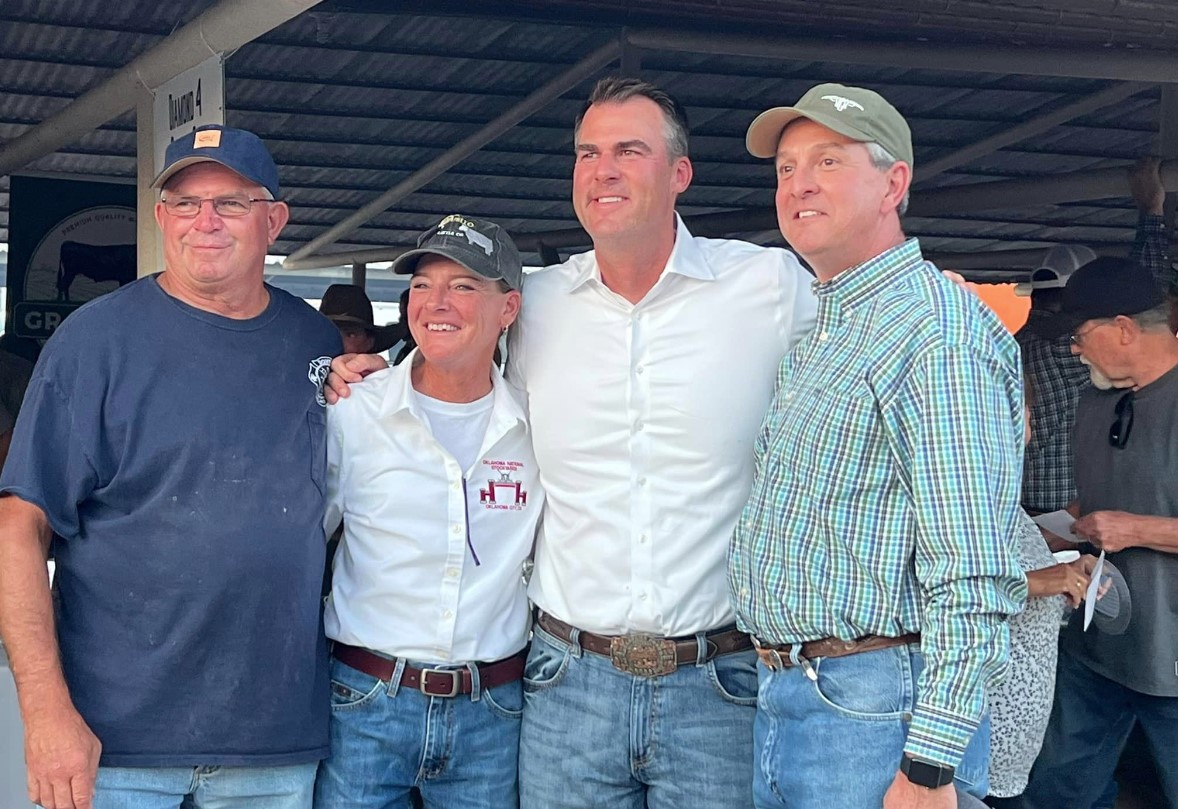
KC Sheperd, Farm Director, got the chance to visit with Governor Kevin Stitt at the 2022 Stockyards Steak Out, which was held at the Oklahoma National Stockyards over the weekend. Coinciding with the Stockyard Stampede, activities for the entire family took place throughout the day.
During this event, local beef producers cooked their best steaks and offered them to the public. These steaks were judged by national judges who chose a champion, and then the general public had the opportunity to taste and vote for a separate award, the “People’s Choice”.
“It is unbelievable- all of these Oklahoma producers,” Stitt said. “I only serve Oklahoma beef at the Governor’s Mansion, so I have got a pocket full of cards and I am going to make sure they order some Oklahoma beef.”
Stitt said he always enjoys his time at the stockyards, as it reminds him of when his grandad was the vet in the stockyards for 25 years until the mid-80s. Stitt joined in on the activities and partook in the cooking of steaks at the event.
“Wonderful ranches here,” Stitt said.
As Oklahoma producers are facing tough times due to drought and the economy, Stitt talked about actions he is taking to provide some relief to those producers.
“I signed an executive order this week to kind of wave some requirements,” Stitt said. “I know farmers are having to bring hay in from other states. We also did a 23-million-dollar drought relief assistance that Secretary Blayne Arthur, my secretary, is going to be getting out all across the state.”
Stitt said he continues to pray for rain, especially with wheat plantings taking place.
With around 20 million dollars in negative ads spent to spread inaccurate information about the governor, Stitt said he wants to remind Oklahomans that he always supports agriculture.
“We always have your back,” Stitt said. “I am an agricultural guy, and my opponent has joined the Biden administration and, you know, they attack our way of life and our lifestyle, and they believe in more regulations and attacking our industry and our way of life.”
Stitt said he has heard many dark money comments, including some claiming that he plans to tear down the Governor’s Mansion.
“It also broke my heart, a young lady came up to me and said, ‘hey, I heard you are going to tear down the Governor’s Mansion,’ and there has been this hit piece on the news station,” Stitt said. “I said, ‘ma’am, that is absolutely not true; we love the Governor’s Mansion. There is only one Governor’s Mansion.’”
Another important point Stitt mentioned is that Oklahoma has the largest savings account in state history.
“I have heard, ‘Governor Stitt wants to defund our schools,’ which is just the most ridiculous thing ever,” Stitt said. “I have put more money into education than any other governor in history and also set up a Redbud fund to make sure rural schools got more money proportionally than the big city schools.”
Stitt said he is very fond of Oklahoma’s rural school system, and he will continue to support teachers.
“I gave teachers a huge pay raise and I put more money into education than any other governor in history,” Stitt said. “We will continue to do that, and at the same time, though, I stand with parents and not big unions.”
Stitt said he does not agree with Washington D.C. trying to control what is taught in Oklahoma schools.
“That is not Oklahoma,” Stitt said. “I am going to stand with parents and make sure parents have the last say in what is taught to their schools and that is the way I was raised. I am a fourth-generation Oklahoman, and I think Oklahomans will see right through these negative ads.”
Click the LISTEN BAR below to listen to KC’s full conversation with the Governor as he advocates for Oklahoma and Oklahoma ag.
Oct 17
Mon, 17 Oct 2022 04:20:31 CDT
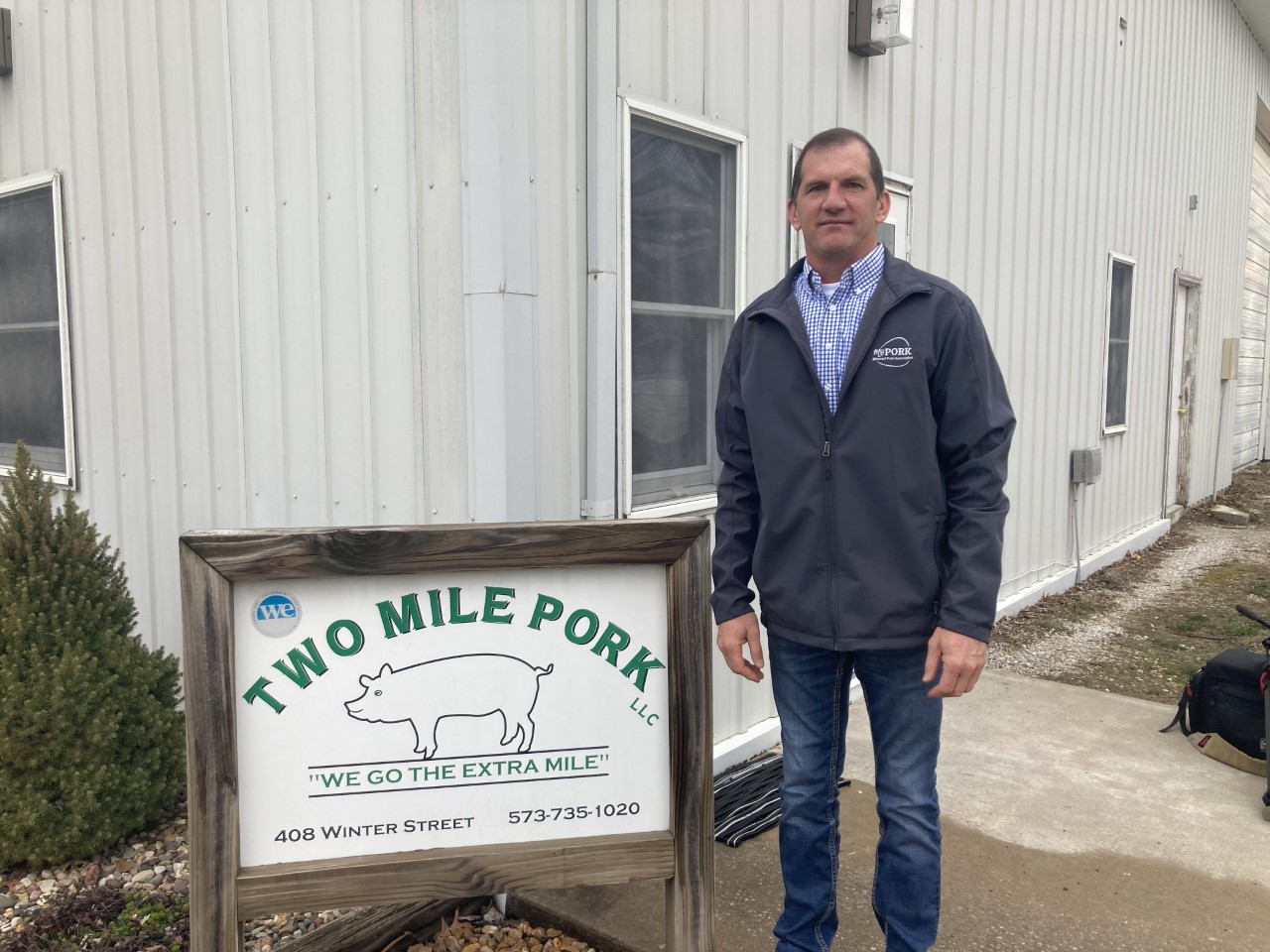
The officers of the National Pork Producers Council were among those in the public gallery of the US Supreme Court this past week when the nine Justices listened to the oral arguments over the legality of California’s Proposition 12- which prescribes controversial space requirements for sows, veal calves and egg laying hens. One of those hog farmers was Scott Hays, President Elect for the organization. The Missouri producer talked after this unique experience with Senior Farm and Ranch broadcaster Ron Hays of the Oklahoma Farm Report- saying he anticipated that it would be a once in a lifetime type experience- and it did not disappoint.
Scott Hays says that he came onto the NPPC board shortly after the initial passage of Prop 12- “this is an issue that I have worked on from the very beginning…I feel like I am getting to see it all the way through.”
The NPPC officer says California has been antagonistic to the pork producers for years- “California has regulated the pig industry out of the state,” adding “that’s not by accident- there used to be a pig industry in the state.” Hays contends that California wants to impose their values on every other state in the US- “They’re trying to impose these arbitrary rules on the rest of us, touting that it’s better for the animals or healthier- and it’s just not. This is a bunch of people that don’t know anything aout raising pigs. If you listen to the Veterinarians and University people and pig farmers themselves, who are really the experts on how to take care of the animals- you know we get up every morning and try to figure out how to make the pig’s life better.”
Scott Hays believes that the science shows that Prop 12 does not improve the lives of sows or their pigs so “all California was left with was their effort to impose their morals on the rest of the country.” Several of the justices questioned the lawyers for California- asking them to explain how their state would respond if another state tried to impose a similar moral judgement on them. Scott Hays says the lawyers for the state had little to say in response. Chief Justice John Roberts questioned the validity of Proposition 12 based on the question of morality.
Justice Ketanji Brown Jackson also addressed the moral question by saying: “To what extent does California get to control what Iowa does with respect to the housing of its pork?” She asked why California couldn’t do something less burdensome to the industry, like “segregating Iowa’s pork when it comes in, putting a big label over it that says ‘This is immorally produced.’”
Scott Hays tells Ron Hays “At the end of the day- at the end of the hearing- I had the feeling that we did our job here and and the that they get it- they understand where we are coming from and they understand the adverse effects that this is gonna have on the entire country” not just the pork industry.”
Listen to the full conversation that Ron Hays has with NPPC President Elect Scott Hays by clicking on the “click to play” link at the bottom of the story.
Oct 14
Fri, 14 Oct 2022 12:11:39 CDT
Click here to listen to audio
KC Sheperd, Farm Director, caught up with the Dean of Agriculture at Oklahoma State University, Dr. Thomas Coon about the latest at OSU and the 2023 Farm Bill.
Now that…
Oct 14
Fri, 14 Oct 2022 10:12:02 CDT
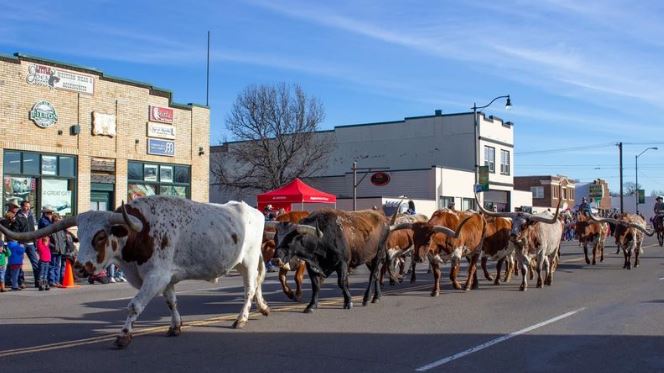
Tomorrow is the day! Stockyards City Main Street would like to invite everyone to attend the annual Stockyards Stampede event that will be held on Saturday, October 15th from 10:00 a.m. to 3:00 p.m. Activities will be held throughout the district, with additional activities after 3:00 held at the Oklahoma National Stockyards.
The Slash O’ Ranch Longhorns will kick off the event at 10:00 a.m. by parading down the street. They will begin at the iconic Oklahoma National Stockyards archway on Exchange. The longhorns will be in the National Saddlery Arena until noon, then they will return to Oklahoma National Stockyards.
For the cute cowboys and cowgirls, we have the Little Miss and Mr. Stockyards City pageant. Here is what you need to know!
There are 3 age groups.
2 – 3 Tiny Miss & Mr.
4 – 6 Little Miss & Mr.
7 – 9 Miss & Mr.
Due to time, there will be 10 participants per category
Registration starts at 10:45am at the Oklahoma Opry Stage and the pageant starts at noon. No participation fee Kids will be asked a few questions and are encouraged to wear their favorite western wear!
The event kicks off at 10:00am with the LONGHORN procession down Exchange and continues with family fun!
Live Entertainment on the Oklahoma Opry Stage
Chuckwagon Camp
Made in Oklahoma Market
Kids Corral
Equestrian Meet and Greet
Steak Out
The Armory Park Alpacas will be joining us so you can come out and visit with these Furry Friends!
The chuckwagon camp is a long-standing part of the event. Visitors can chat with the chuckwagon cooks and have a taste of traditional cowboy cooking. They will be serving from noon until 3pm or as long as supplies last.
The entire event is family friendly. Join us on Saturday, October 15th for this year’s Stockyards Stampede. For more information about the Stampede please visit www.stockyardscity.org.
Oct 13
Thu, 13 Oct 2022 16:28:15 CDT
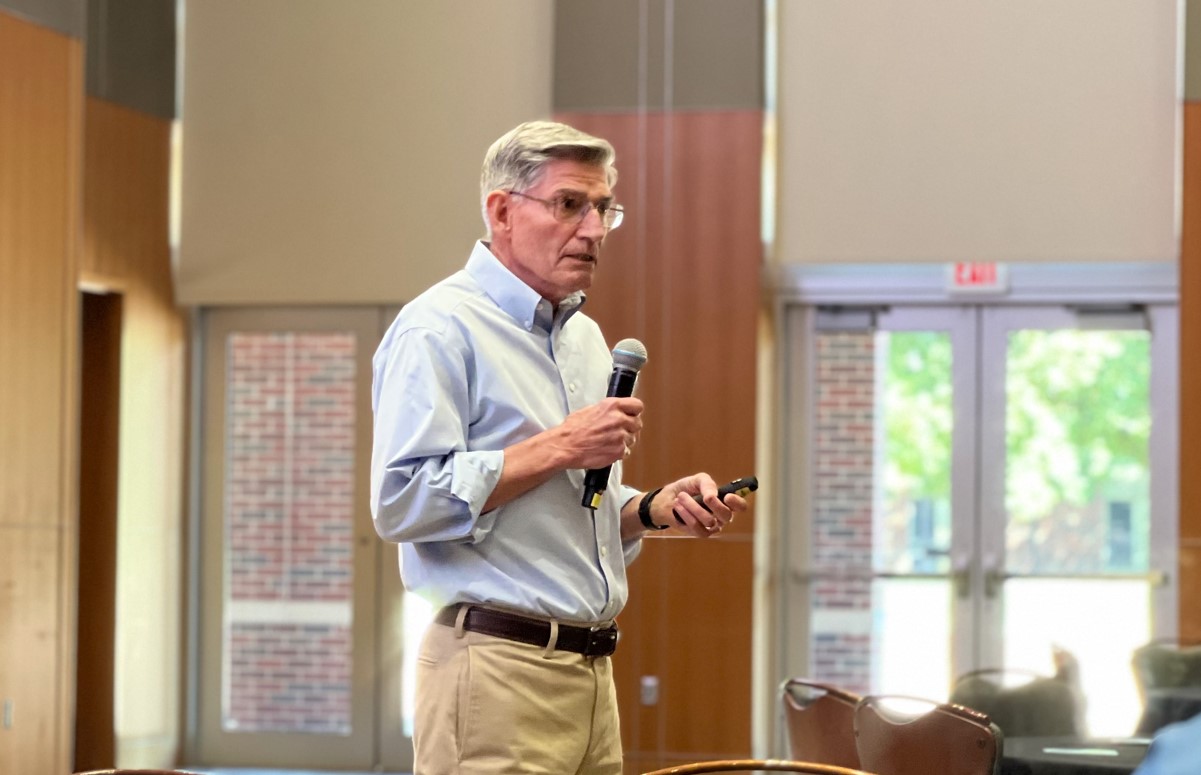
This Week on SUNUP is Oklahoma State University Extension grain market economist, Kim Anderson. During this week’s edition, Anderson talks about crop prices and factors impacting the grain markets and economy.
There was not much movement this week with corn, beans and cotton, Anderson said, but wheat went up 55 cents on Monday and came back down 33 cents on Tuesday.
Corn this time last week was $7.54, Anderson said, and went down to $7.46 and back up to $7.60 and is looking like it is moving sideways.
Soybeans last week were $13.24, Anderson said, and $13.46 this week, so they are staying in a narrow range.
“Cotton was down at 83 (cents) last week, went up to 88, back down to 86 or 87, so it is just short, small movements there,” Anderson said.
The Ukraine and Russian war, Anderson said, is to blame for the volatility in wheat prices.
“Ukraine and Russia are both important to the world’s economy- especially Russia,” Anderson said. “In the area over there, Russia invaded Ukraine and took some eastern section on around to the southeastern part of it. What they have accomplished there, is they have got poor facilities and they can, to a certain degree, control the exports, out of Ukraine and out of Russia.”
Anderson said Russia has taken over a major industrialized agricultural section of Ukraine.
“You are talking about 5 million metric tons of crops coming out of that and going into exports,” Anderson said. “Plus, you have got those export facilities along that Sea of Azov coming out there and Russia wants those export facilities so they can control them. Right now, all Ukraine has got is one export facility in the Black Sea, but the export facilities in Azov- they are not available anymore. Russia wants to control those, and when they control those, they control the good part of Ukraine’s agriculture.”
As for the WASDE (World Agricultural Supply and Demand Estimates), Anderson said he has never seen the report match the expectation so perfectly.
“There was just essentially no difference, you know minor differences, but no difference between expectations and what USDA came out with,” Anderson said.
Russia and Ukraine are having the largest impact on the markets currently, Anderson said, because they are not only impacting grain prices, but other inputs that come out of Russia such as oil and gas.
This week on SUNUP:
• Todd Baughman, OSU Extension weeds scientist, discusses the concerns of herbicides in failed summer cropsused as forage.
• Wes Lee, OSU Extension Mesonet agricultural coordinator, explains how the recent rains had little impact on soil conditions. State climatologist Gary McManus says Oklahoma and Kansas are facing the worst drought conditions in the country.
• SUNUP visits the recent Rural Economic Outlook conference and speaks with James Mintert, professor and director of the Purdue University Center for Commercial Agriculture, about the challenges producers are dealing with, including high input costs.
• Derrell Peel, OSU Extension livestock marketing specialist, says the lack of wheat pasture prospects has led to a decline in the stocker cattle market.
• Mark Johnson, OSU Extension beef cattle breeding specialist, explains why retaining heifers and marketing them as bred heifers could be beneficial to your operation.
• Kim Anderson, OSU Extension grain marketing specialist, updates us on the continuing impact Russia’s war on Ukraine is having on world crop markets.
• Finally, Marley Beem, OSU Extension aquaculture specialist, discusses drought-stricken livestock ponds.
Join us for SUNUP:
Saturday at 7:30 a.m. & Sunday at 6 a.m. on OETA (PBS)
YouTube.com/SUNUPtv
SUNUP.okstate.edu
Oct 13
Thu, 13 Oct 2022 11:09:12 CDT
Click here to listen to audio
KC Sheperd, Farm Director, had the chance to visit with Jena Nelson, who is running for State Superintendent of Public Instruction as she answers questions concerning her s…
Oct 12
Wed, 12 Oct 2022 19:38:36 CDT
Click here to listen to audio
At the 2022 Rural Economic Conference put on by the Oklahoma State University’s Agricultural Economics Department at the ConocoPhillips Alumni Center located on the O…
Oct 12
Wed, 12 Oct 2022 13:27:18 CDT
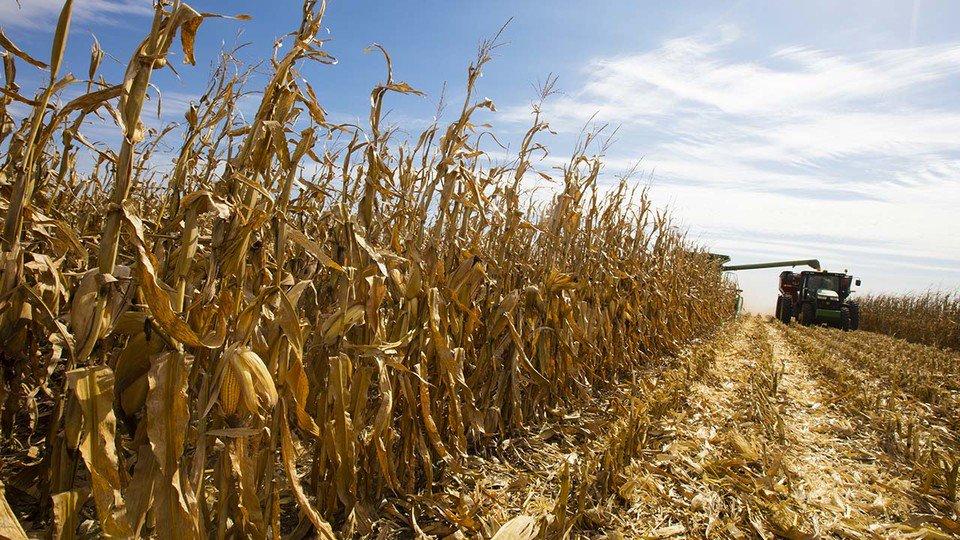
USDA on Wednesday released its October Crop Production and World Agricultural Supply and Demand Estimates (WASDE) reports.
USDA shaved corn production 49 million bushels (mb) to 13.895 billion bushels (bb) and cut yield .6 bushels per acre (bpa) to 171.9 bpa, right in line with pre-report estimates.
USDA lowered its yield estimate for soybeans to 49.8 bpa, .7 bpa lower than September’s estimate. It left planted and harvested area unchanged at 87.5 million acres and 86.6 million acres, respectively. That put overall production at 4.313 bb, within the range of pre-report expectations.
USDA estimates U.S. wheat ending stocks at 576 mb, the lowest level in 15 years and above the pre-report estimate of 563 mb.
USDA also increased corn imports from 25 mb to 50 mb as well. That put total supply at 15.322 bb, still down 172 mb from September’s forecast.
On the demand side, USDA increased feed and residual use 50 mb but lowered domestic demand 50 mb for “Feed, Seed and Residual” to 6.725 bb.
Ethanol demand was also lowered 50 mb to 5.275 bb. That put total domestic use at 12 bb, the same as September.
Exports were also lowered 125 mb to 2.15 bb as well.
Total use came in at 14.15 bb, down 125 mb from September.
The 2022-23 ending stocks are projected at 1.172 bb, a 10-year low.
USDA bumped up the farmgate price 5 cents a bushel to $6.80 a bushel.
Globally, USDA lowered 2022-23 beginning stocks 5.13 million metric tons (mmt) to 307.01 mmt. Production was reduced globally 3.84 mmt to 1168.74 mmt. Exports globally were lowered .54 mmt to 183.04 mmt. Ending stocks are now forecast at 301.19 mmt, down 3.34 mmt.
Looking at production elsewhere, USDA held pat on Brazil at 126 mmt and Argentina at 55 mmt. On Exports, USDA increased Ukraine’s export 2.5 mmt to 15.5 mmt.
SOYBEANS
USDA lowered its yield estimate for soybeans to 49.8 bpa, .7 bpa lower than September’s estimate. It left planted and harvested area unchanged at 87.5 million acres and 86.6 million acres, respectively. That put overall production at 4.313 bb, within the range of pre-report expectations.
Ending stocks for 2022-23 were left unchanged at 200 mb, although USDA did adjust demand categories. The estimate for crush use increased by 10 mb, while export demand was lowered by 40 mb. Residual use declined by 1 mb. Lower production estimates and higher beginning stocks made up the difference.
Beginning stocks, which are also 2021-22 ending stocks, increased by 34 mb to 274 mb, reflecting increased production following September’s Grain Stocks report.
For the 2022-23 marketing year, USDA lowered the national average farm gate price to $14 per bushel.
Global soybean ending stocks for 2022-23 increased 1.6 mmt to 100.52 mmt, within the range of pre-report estimates. The increase is largely due to higher beginning stocks and production.
South American farmers are just getting started planting the 2022-23 crop, and while USDA left Argentina’s soybean production unchanged from previous estimates at 51 mmt, it increased Brazilian production by 3 mmt to 152 mmt. USDA also sees higher exports from Brazil and Argentina offsetting a decline in U.S. exports.
China is expected to buy 1 mmt more soybean on the global market than previously thought, amounting to 98 mmt.
WHEAT
USDA estimates U.S. wheat use at 1.86 bb, down from 1.94 bb in September. USDA estimates production at 1.65 bb for October, down from 1.78 bbin September. USDA estimates total acres harvested at 35.5 million, down from 37.5 million in September.
Wheat exports were estimated at 775 mb, also down from September. USDA bumped the farmgate price of wheat from $9 to $9.20 in October.
Wheat world ending stocks were estimated 267.5 mmt, above pre-report estimates of 267.1 mmt and a reduction from 268.6 mmt in September.
USDA estimates global wheat production at 781.7 mmt, down from 783.9 mmt in September.
USDA estimates wheat production in Russia at 91 mmt, unchanged from September. Ukraine wheat production is estimated at 20.5 mmt, also unchanged from September.
Wheat exports from Russia were estimated at 42 mmt, unchanged from September. Ukraine’s wheat exports also were left unchanged at 11 mmt.
LIVESTOCK
Wednesday’s WASDE report shared mostly supportive news to the beef and cattle markets. Beef production for 2022 was raised, as both the third and fourth quarters expect larger production than what was originally anticipated a month ago. This hike in production stems from aggressive throughput in the packing sector, along with heavier carcass weights. Production for 2022 rose by 130 million pounds from last month’s report. The third quarter’s average steer price gained $0.42 from September’s report to average $143.42, and fourth quarter steer prices are now expected to average $148.00, which is a $1.00 increase from last month.
Both the first and second quarters of 2023 are unchanged for price projections as in the first quarter of 2023 steers are expected to average $151, and in the second quarter $152. Beef imports for 2022 were fell by 25 million pounds, while beef exports grew by 10 million pounds.
Wednesday’s WASDE report shared mixed news for the hog complex. Pork production for 2022 grew by 15 million pounds from September’s report as slaughter speeds have been running more aggressively than originally assumed for the third quarter. The third quarter saw a slight price reduction as third quarter prices are now expected to average $71.30, as opposed to $73.80, which was September’s projection. Barrow and gilt prices in the fourth quarter saw a minor reduction as they’re now anticipated to average $71.08, as opposed to September’s projection of $71.30. Pork imports for 2022 were reduced by 20 million pounds, but exports also fell by 105 million pounds.
You can also access the full reports here:
For Crop Production, click here.
For World Agricultural Supply and Demand Estimates (WASDE), click here.
Oct 11
Wed, 12 Oct 2022 05:07:06 CDT
Today, Governor Kevin Stitt signed Executive Order No. 2022-26, temporarily suspending restrictions on the size and weight of hay transported in the state. Executive order no. 2022-26 adjusts size and weight measurements for commercial hay loads, extending the width limit from 11’ to 12’, while maintaining high standards of safety.
Executive Vice President of the Oklahoma Cattlemen’s Association, Michael Kelsey, reacts to Governer Stitt’s Suspension of Hay Hauling Restrictions:
“Feed, specifically hay, in Oklahoma is in such tight supply due to the ongoing drought. Kelsey said. “Many Oklahoma ranchers are trying to find it in other states. Further, with fuel prices going back up, the freight price on hay is tremendous. The Governor’s temporary suspension will allow many Oklahoma ranchers to secure much-needed forage and have it transported to their ranch more efficiently. OCA greatly appreciates the Governor’s efforts to provide relief to Oklahoma’s beef ranchers during this horrific drought.”
To read the Executive Order, click here.