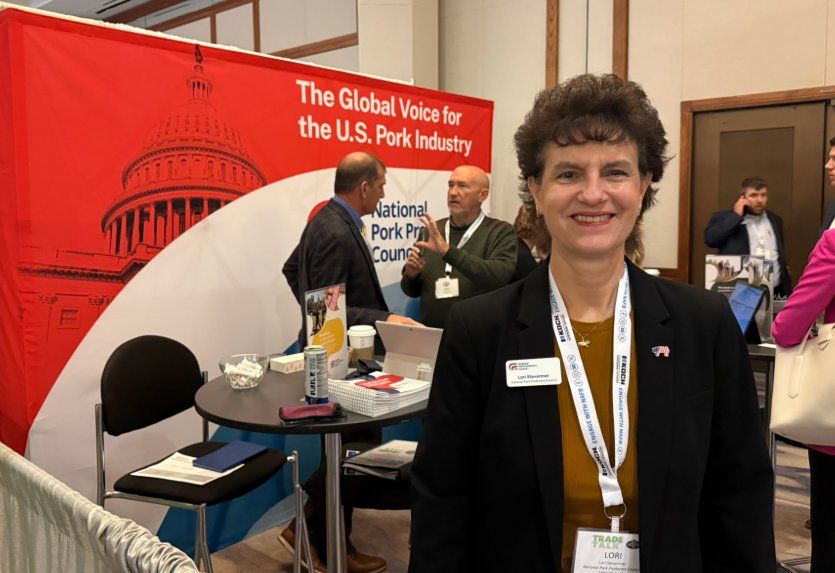
The National Pork Producers Council (NPPC), represented by immediate Past President Lori Stevermer, shared insights with Farm Director KC Sheperd regarding the need for key legislative and trade outcomes to ensure the stability and future of the pork industry. The main areas of focus include resolving issues related to California’s Proposition 12 (Prop 12), ensuring reasonable regulation of U.S. waters, and diversifying global trade.
Seeking a Federal Fix for Prop 12
A primary goal for the NPPC is achieving a federal solution to Prop 12 within the current “skinny Farm Bill”.
- The Problem: California’s Prop 12 mandates specific animal welfare standards for pig production nationwide if pork is to be sold within California. This means that the state of California is attempting to regulate how pigs are raised in the rest of the country.
- The Impact: Pork goes everywhere, meaning a single hog carcass is often broken down with different cuts (like loins, bacon, and sausage) going to different markets. Due to this, the entire hog must be Prop 12 compliant if any part is destined for California, creating a major challenge for producers nationwide.
- The Risk: Without a federal solution, the NPPC is concerned about the potential for “patchwork of regulations” across various states.
Biosecurity and Disease Traceability
Pork producers actively lead the way in biosecurity, but the industry is seeking governmental support for programs to help them manage foreign animal disease risks.
- US-SHIP: The NPPC is looking for continued government funding for US-SHIP (U.S. Swine Health Improvement Plan). This program helps farms implement biosecurity practices and allows them to resume trade quicker if a foreign animal disease outbreak occurs.
- Traceability Project: The industry has focused on developing a traceability project. The ability to quickly identify where a disease is—or is not—is critical for trade resumption. If an outbreak is confined to only one part of the U.S., effective traceability allows unaffected regions to get back to exporting sooner.
Clarifying WOTUS Regulations
The NPPC expressed pleasure with recent progress regarding the regulation of Waters of the U.S. (WOTUS).
- The industry’s initial concern was the potential for overreach, with even features like mud puddles or drainage ditches potentially subject to federal regulation.
- The goal is to define WOTUS better, offering farmers greater clarity so they can manage their cropland without unexpected federal intervention.
Focus on Trade Diversification
The NPPC sees global trade diversification as a crucial strategy, particularly as a safeguard against major disruptions in one market, like China.
- Current Deals: The industry is hopeful about recent trade discussions and frameworks. Key interest areas include:
- Cambodia-Malaysia: Recent deals offer positive details, including allowing more U.S. plants to ship pork to Malaysia and recognizing certification at those plants.
- Vietnam and Thailand: Both are key markets, with Vietnam being a high priority due to its significant pork consumption and demand for variety meats (such as organ meats).
- Value of Variety Meats: Variety meats are particularly important because they can add $8 to $10 of value to a single hog. Maintaining access to markets like Vietnam that value these meats helps balance the economics of the entire animal.
- Long-Term Strategy: The long-term approach is to avoid putting “all our eggs in one basket” (referencing China) and to explore new markets in Southeast Asia (like the Philippines) and even longer-term opportunities in Africa and India.
I can search for the current status of the “skinny Farm Bill” in Congress, or tell you more about the US-SHIP program.