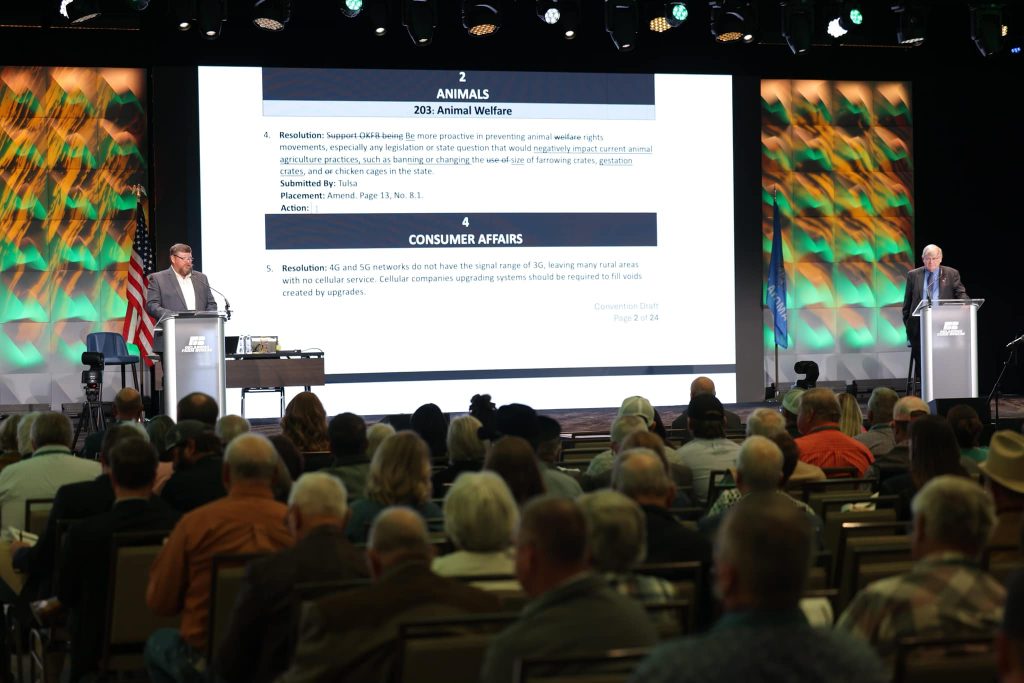
Delegates at the 2024 Oklahoma Farm Bureau Annual Meeting worked through a wide range of policy positions that was presented to them by the Resolutions Committee of the organization that had come from County Farm Bureaus back earlier in the fall.
After the several hours of debate and approval- Oklahoma Farm Report’s Ron Hays talked with OkFB President Rodd Moesel about the process and the result- a document that will help the public policy team of the group advocate for the state’s largest general farm organization this coming year at the State Legislature. Click on the Listen Bar below to hear their conversation:
Moesel says that delegates and the Resolution Committee agreed that private property rights as it related to renewable energy projects- wind, solar and transmission lines for renewables- needed to be addressed. Delegates voted to call on the group to advocate for protection of the land owner in eminent domain discussions over the a corridor across the northern part of the state for a possible transmission line that would carry electricity generated by wind power in the Panhandle region. The OkFB President says he calls a lot of this discussion “farming energy” as farmers, ranchers and rural landowners deal with companies wanting to lease their land for these renewable energy projects.
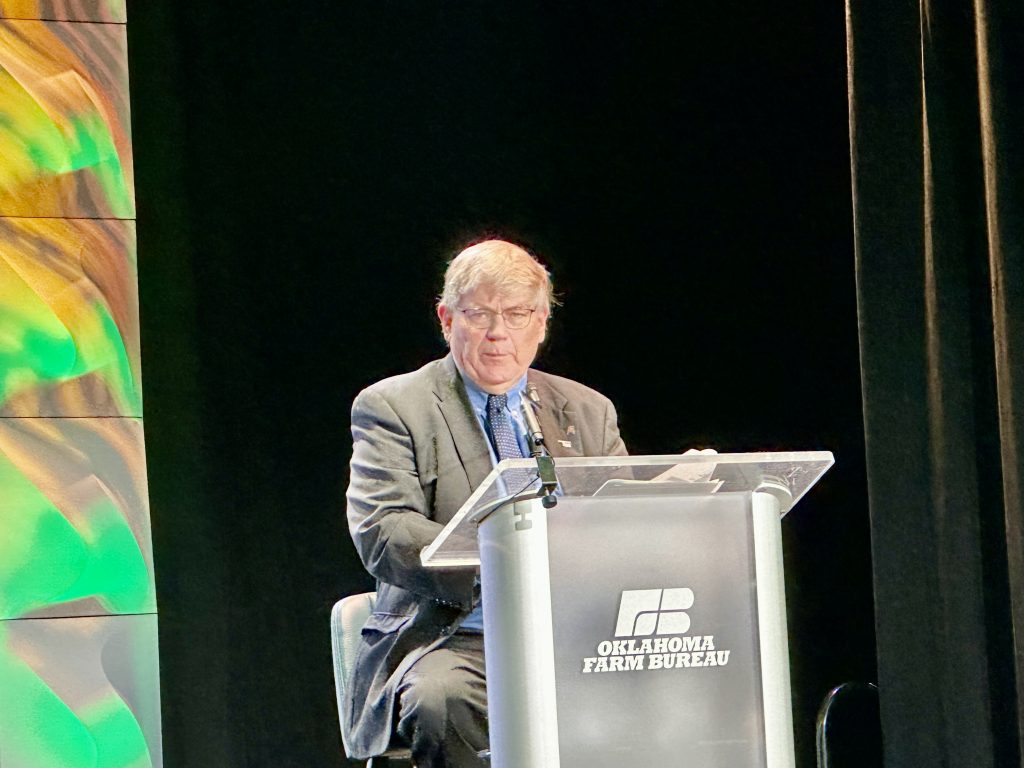
The delegates also spent a lot of their time on water policy after lunch on Saturday. Moesel says this year’s conversation was a transition from previous policy discussions- moving from policy that was more statewide water policy to 2025 policy that is “starting to look at regions or water basins recognizing that there is really tremendous differences in water availability and water issues in the different parts of the state and the different water basins.”
OkFB Vice President Monte Tucker, who farms in western Oklahoma, was on stage with Moesel as they worked through the resolutions with the delegates- and he was right in the middle this past legislative session of the debate over how different parts of Oklahoma have unique water challenges. Hays also talked with Tucker- and you can hear his take on how the delegates dealt with this important issue by clicking on the Listen Bar Below:
Tucker agrees with Moesel that the delegates were clear on water- “water policy is not a blanket policy from Idabel to Felt, Oklahoma. Every aquifer is unique, every watershed is unique, the needs are unique, the demand is unique and the water itself is unique.”
Tucker was surprised by the delegates (and earlier in the Resolutions Committee) on producers being willing to accept monitoring of their water use. “What surprised me is that our delegation really doesn’t oppose self metering. Farm Bureau members are not afraid to be monitored. We really believe we are good stewards of the resource.”
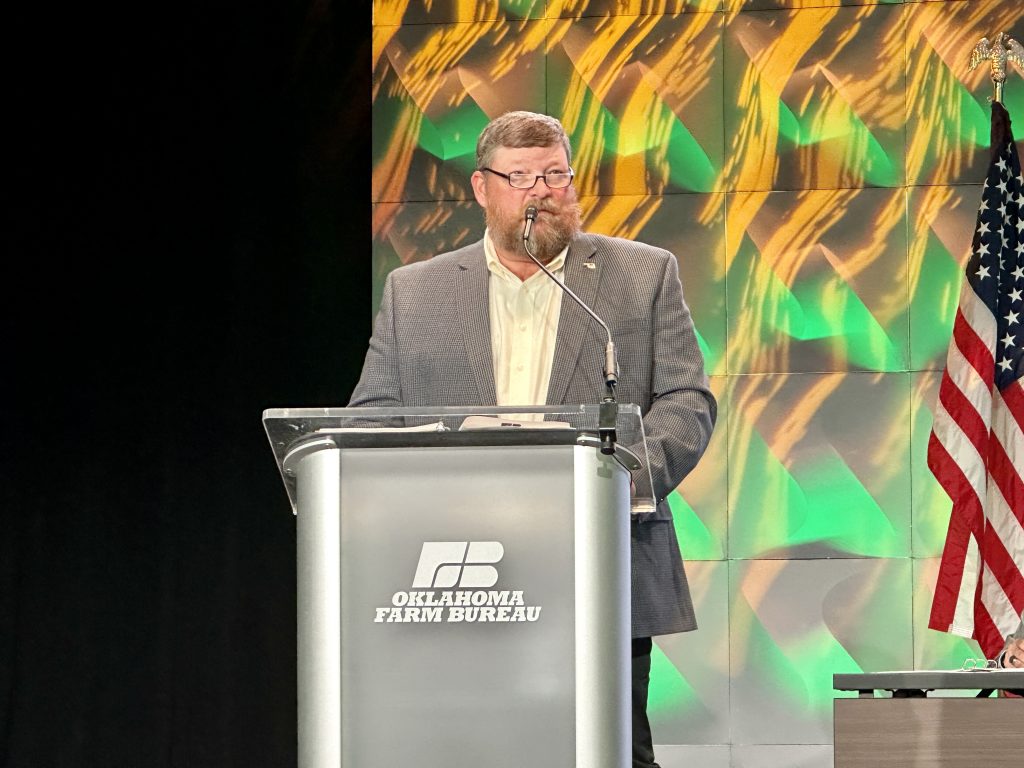
Tucker, who is ending 11 years on the board of the Oklahoma Farm Bureau here in 2024, was pleased with how Farm Bureau members are willing to come together. “I always believe our delegation gets it right.”
The grassroots process that began at the Farm Bureau’s August Area meetings concluded on Saturday- and will be the backbone of what the farm group will use as talking points with state lawmakers in 2025 at 23rd and Lincoln. There were also several policies that will be presented to the AFBF for consideration at the policy session at their annual meeting in January.