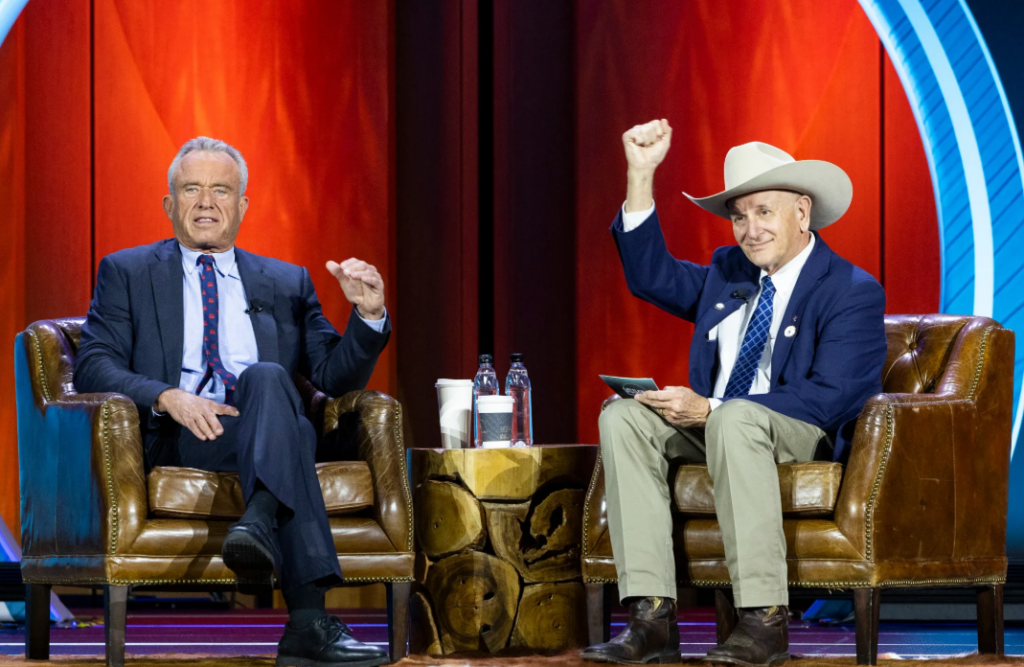
Secretary of Health and Human Services Robert F. Kennedy Jr. told the packed CattleCon26 audience that reforming America’s dietary guidance became a top priority immediately after taking office. He said the Biden-era proposed guidelines he inherited were “453 pages long” and “crafted by lobbyists and driven by the same mercantile impulses that had put Fruit Loops at the top of the food pyramid.” Kennedy said plainly, “That is not food,” calling ultra-processed products “food-like substances” that are “nutrient free.”
Kennedy explained that his department brought together top nutrition experts and demanded simplicity backed by science. Working with USDA Secretary Brooke Rollins, “We promised guidelines that were simple, under 10 pages, that everybody could understand,” he said, noting it took nearly 11 months and involved “bloodshed on every recommendation” as experts reviewed “tens of thousands of scientific studies.” The result, he said, was a redesigned pyramid that “puts protein at the top of the food pyramid.” The 2025- 2030 Guidelines are available here.
A major shift, Kennedy said, was ending what he called “the 50-year war against saturated fats,” which he argued was “waged through lies and through dogma and through bad science.” He emphasized that protein is “absolutely critical,” pointing out that it provides vitamin B, iron, zinc and other micronutrients “where Americans are chronically deficient.” He added, “Protein lowers your insulin sensitivity and stabilizes your blood sugar.”
Kennedy tied protein consumption directly to chronic disease, particularly diabetes. “We have a diabetes crisis in this country. We’re spending a trillion dollars a year on diabetes,” he said, adding that “most diabetes can be cured” when people “shift to a high-protein diet.” He summed up the philosophy behind the new guidelines by declaring, “Food is medicine,” and told the crowd that “meat and chicken and eggs and animal protein are now at the top of the priority list.”
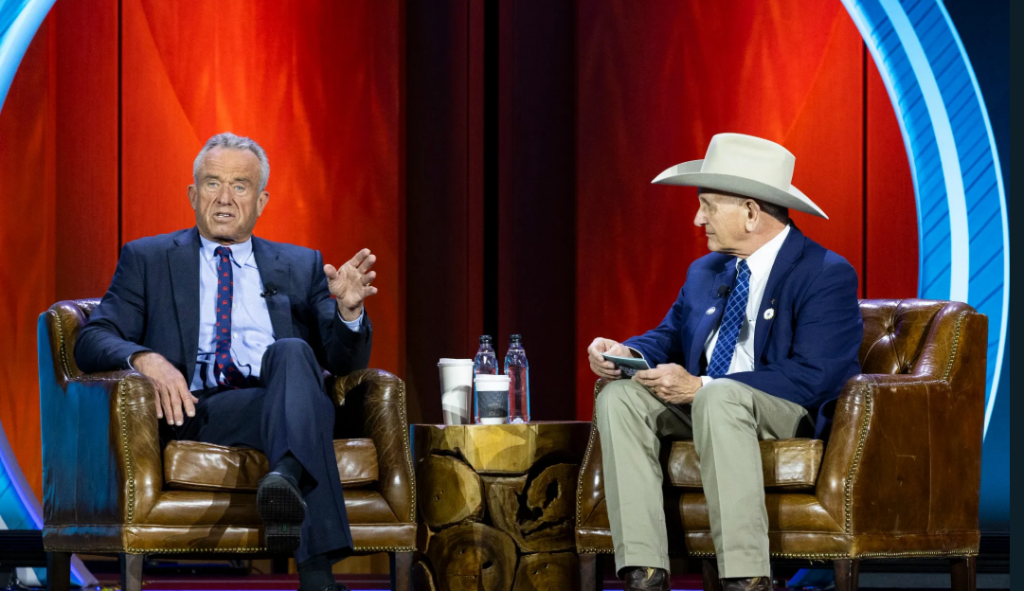
He also stressed the importance of animal protein for immune function, childhood development and long-term health. “These diets are needed for immune function… for children to have muscle growth and brain development,” Kennedy said, emphasizing deficiencies in iron and vitamin B. His core recommendation, he said, is simple: “Eat real food. Eat fruits, eat vegetables, eat protein — fish, chicken, beef — and eat high-fiber grains.”
Kennedy sharply criticized the dominance of ultra-processed foods, noting that “70% of the food that our children eat is ultra-processed foods and highly refined carbohydrates.” He called those products “poison” and said, “We poisoned a generation of kids, and now we’ve got to make them better again.” He warned that America now faces something unprecedented: “Obscene obesity and malnutrition in the same individual,” which he said is possible only because people are eating “nutrient-absent foods.”
Drawing on his background in tobacco litigation, Kennedy compared today’s ultra-processed food industry to Big Tobacco, saying companies intentionally engineered products to override the body’s natural signals. He explained that one key signal for fullness is how much a person chews, noting that “one of the metrics your brain uses to tell you when you are full is the number of times that you chew.” Kennedy said food companies learned this and responded by adding softeners so products could be eaten quickly with little chewing. “You can inhale a Twinkie, but your stomach is still telling you, ‘I need more,’” he said. By combining softened textures with sugar, salt, and artificial flavors designed to mimic real food, Kennedy argued the industry “hijacked the brain” and tricked Americans into overeating products that “look like food and smell like food, but it isn’t,” contributing directly to obesity and chronic disease.
Looking ahead, Kennedy acknowledged that science still has unanswered questions, particularly around saturated fat. “There are still knowledge gaps,” he said, noting that HHS, NIH and FDA are now conducting studies to better understand long-term impacts. But his message to families and producers remained clear and consistent. “Eat real food,” he said, urging cattle producers to expand the U.S. herd. “We need a lot of beef, and we want to make it here in America. We don’t want to be importing it from other countries.”