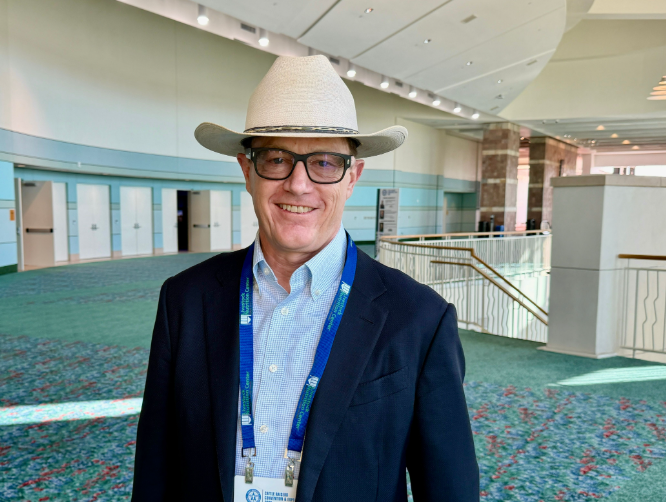
The Oklahoma cattle market remains a mix of optimism and caution, according to Oklahoma Cattlemen’s Association President Ford Drummond, who recently spoke with senior farm broadcaster Ron Hays during the Texas and Southwestern Cattle Raisers Association gathering in Fort Worth. Drummond highlighted the importance of regional collaboration, policy engagement, and staying adaptable in a time of uncertainty for agriculture.
Strong Ties Across State Lines
Drummond emphasized the close relationship between Oklahoma and Texas cattle producers through the Texas and Southwestern Cattle Raisers Association.
“They don’t always advertise it as the Oklahomans are allowed in the Texas and Southwestern Cattle Raisers, but we do have a lot of Oklahoma members that are part of this organization,” Drummond said. “It’s a good chance to meet with some of our Texas brethren and get updated.”
He also pointed to the value of shared resources, particularly specialized law enforcement support. “Our special ranger up in Osage County is an outstanding individual, and someone I definitely rely on when I need some help,” he said.
Policy Pressure at the Capitol
Back in Oklahoma, the Oklahoma Cattlemen’s Association has been active at the state Capitol, advocating for producers during a critical legislative window.
“This is a busy week at the Capitol… kind of make or break for legislation coming out of committees,” Drummond said. “We had a chance to talk about property taxes, ad valorem taxes—that’s one of the big issues for us.”
While tax cuts are a popular political message, Drummond warned of unintended consequences for rural landowners.
“Everyone likes to talk about cutting taxes… but we just need to educate members that when you start cutting taxes for your homestead exemption, that’s just going to squeeze the balloon, and that’s going to be higher taxes for us with ag property.”
Investing in the Future of Veterinary Medicine
One recent success Drummond highlighted was funding for improvements at the Oklahoma State University College of Veterinary Medicine.
“That’s going to be a crown jewel,” he said. “That’s something that we desperately needed, and we need to attract all the talent we can, especially in large animal and food animal science.”
Dry Conditions Raise Concerns
Weather continues to weigh heavily on producers, particularly in northern Oklahoma.
“We’re dry… normally this time of year, we have a lot of prescribed burns going on. Conditions just haven’t been that good for it this year,” Drummond said. “We’ve had some wildfires on the ranch, and we’re kind of holding… before we start any more fires.”
While long-term forecasts offer some hope, the wait could be challenging.
“The only silver lining… is that they are showing this fall—October, November—better chances of precipitation moving from La Niña to El Niño,” he said. “But that’s a long way from now.”
Market Strength Meets Global Uncertainty
Despite environmental and geopolitical concerns, cattle prices have remained strong.
“If you look at the fundamentals of the market… they’re still very strong,” Drummond said. “We’re at a 75-year low in the cow herd. Numbers are going to get tighter as people keep heifers back.”
However, volatility continues to shape producer sentiment.
“There’s just so much volatility in our markets… big swings are just not unusual these days,” he said. “You always want to be a little bit of an optimist in this business, but it’s just hard to know based on weather, input costs, the price of cattle—everything that’s going on.”
Cautious Optimism Defines the Industry
Ultimately, Drummond described a cattle industry balancing strong fundamentals with unpredictable outside forces.
“I think people are cautiously optimistic,” he said. “I feel very optimistic about those numbers. It’s just all the uncertainty that gives you some caution.”
As producers navigate policy debates, dry conditions, and volatile markets, the Oklahoma cattle sector continues to rely on resilience—and a careful eye on what comes next.