

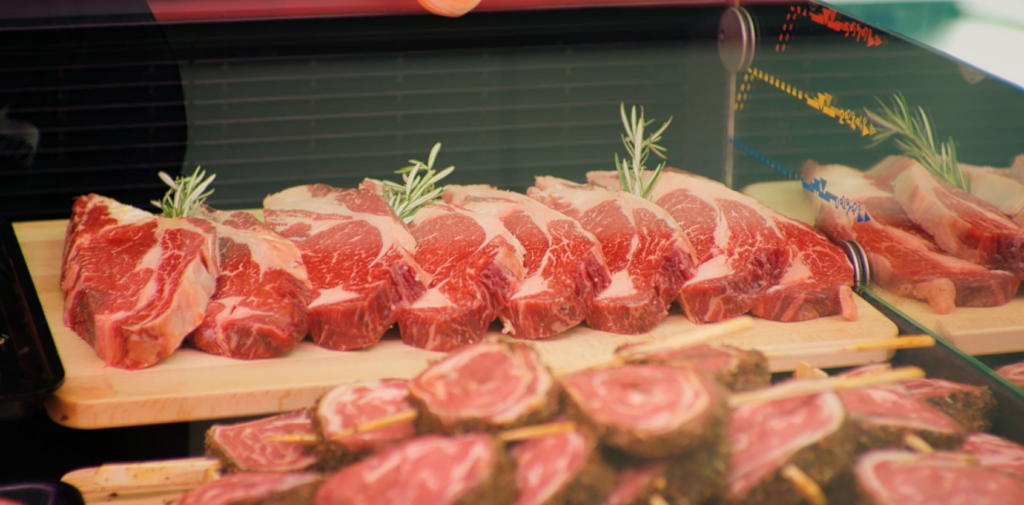
As covered last week, in recent years there has been a significant increase in the percentage of fed cattle in the US reaching the USDA Quality Grade of Prime. This level of quality is driven primarily by the degree of marbling in the ribeye at the 12th-13th rib interface of a beef carcass. Historically speaking, the beef industry routinely saw 1 – 2% of the youngest maturity groups of fed cattle reaching the Prime Quality Grade. March, 2026 ended with 15% of the monthly harvest mix grading USDA Prime and only 8% grading Select. Of the 73 – 74% grading Choice, more are shifting into the upper two-thirds of Choice, the standard that needs to be reached for quality based, premium, branded beef products like Certified Angus Beef.
The Quality Grade of Prime indicates the highest level of tenderness, juiciness and flavor of cooked beef. Thereby, Prime indicates the greatest likelihood of a satisfying eating experience. It is apparent consumers have responded favorably to improving beef quality. The beef industry is experiencing greater demand for Prime and the upper two-thirds of Choice. Greater supply of the higher quality product has permitted more consumers to try it. Consumers like it and are willing to spend more to enjoy it. The phenomenon has increased demand and value across the entire beef industry.
Marbling is a high heritability trait and selection pressure applied to Marbling EPDs has resulted in an increased genetic potential of the US cattle population to reach this level of quality. There is no doubt that the modern norm of finishing cattle longer and to heavier weights has helped to tap this genetic potential. That being said, the additive genetic potential had to be bred in before it could be tapped.
The chart below shows the significant increase in average Marbling EPD by birth year in the Angus breed over the past half century.
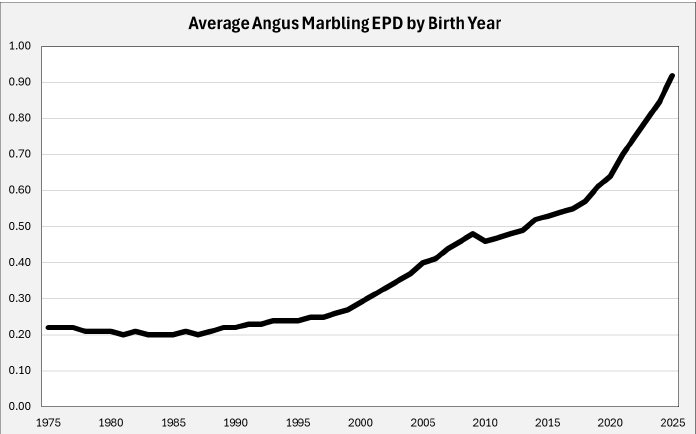
This serves as an example of what can be accomplished when we use the modern tools available to make genetic change. Selection tools such as EPDs, genomic testing, selection indexes and genetic merit scorecards make identifying high marbling genetics more dependable and more valuable than ever before. Selection for increased marbling has been driven by economics. Because marbling increases the value of carcasses and genetic potential for increased marbling increases the value of feeder cattle and breeding stock without raising production cost, cattle breeders and producers are incentivized for select for it.
Reference: https://www.angus.org/tools-resources/national-cattle-evaluation/genetic-trends
Mark Johnson explains how the percentages of Prime, Choice, and Select beef have evolved and why these changes matter for today’s producers on SunUpTV from April 11, 2026. https://www.youtube.com/watch?v=F-igSPVDGfw