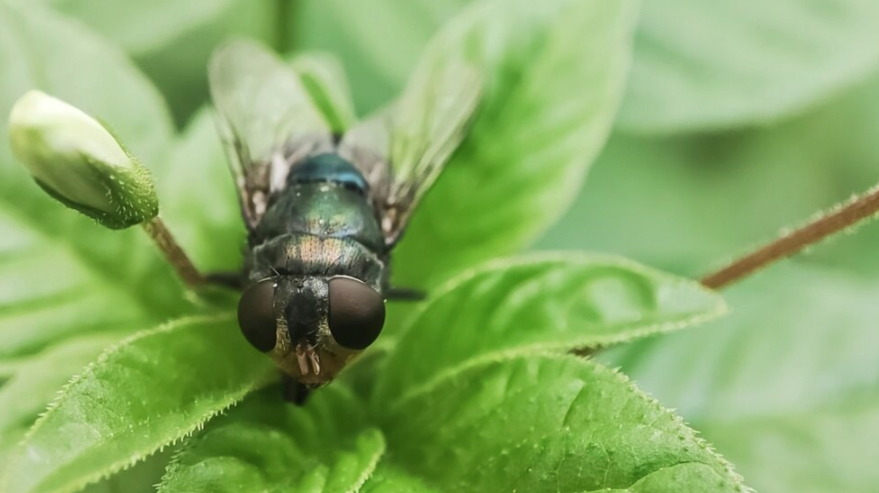
The cattle industry is watching closely as New World screwworm cases continue pushing north through Mexico, with the nearest confirmed detection now less than 100 miles from the United States. During a webinar on April 15th hosted by National Cattlemen’s Beef Association, Sigrid Johannes, Senior Executive Director of Government Affairs, offered an extensive update on the outbreak, current response efforts and why sterile fly production remains the key line of defense. In today’s Beef Buzz, Senior farm and ranch broadcaster Ron Hays highlights Johannes comments.
Johannes said the situation has advanced significantly since the pest first crossed from Guatemala into southern Mexico. “As of today, Mexico has registered more than 20,000 total cases in this outbreak since it first hopped the border from Guatemala to southern Mexico,” Johannes said.
She added that roughly 1,240 of those remain active. “That means the rest have been inactivated, either through treatment or through the animal dying.”
Majority of Cases in Cattle, But Other Species Impacted
Johannes said cattle have accounted for the majority of infections, but the outbreak has spread across multiple species. “The vast majority of those have shown up in bovines,” she said. “They have also had quite a few cases in equines, and then they’ve had a somewhat minor or negligible amount in dogs, cats, some wildlife, humans, unfortunately, and birds.”
That wide host range is one reason livestock leaders remain concerned about continued northward movement.
Closest Detection Now in Nuevo León
Johannes told webinar participants the closest known case to the United States is now in the Mexican state of Nuevo León. “We have actually had one more recent detection roughly 90 miles south of the U.S. border,” she said.
The case involved a dog, not cattle, but Johannes said it still raises concern. “This was a dog that was reported in the Mexican state of Nuevo León, with pretty advanced larva, so it implies that they’ve got some kind of problem there.”
She said officials do not yet know whether the animal traveled from another region, but current evidence points to a local issue. “Closest case now is roughly 90 miles south of the U.S.-Mexico border in a dog in Nuevo León, not in a cow.”
Editor’s note- one day after the report of the dog mentioned by Johannes, the Mexican government reported a seven-day-old calf with larvae in Nuevo Leon as well. That case is currently classified as active.
Sterile Fly Program Still the Strongest Tool
Johannes said the sterile insect technique continues to be the most effective strategy available to suppress and reverse the outbreak. “This has been and remains our most powerful tool for pushing back this pest away from the border,” she said.
Current production is centered in Panama through the longtime partner facility there. “They produce anywhere from 100 to 115 million sterile insects a week,” Johannes said.
While that output is critical, she noted it falls short of what was required when the United States eradicated screwworm decades ago. “When the United States was eradicating screw worm from our borders the last time, in the late ’60s, we needed anywhere from 300 to 400 million flies per week.”
Johannes said that means the industry still faces a production deficit if an aggressive response becomes necessary inside the United States.
More Capacity Coming in Mexico and Texas
Johannes said USDA-backed efforts are underway to increase production in Mexico by converting an existing fruit fly facility in Chiapas. “They expect that facility will be producing sterile flies in July of this year,” she said, while noting government timelines can shift.
Even a few million additional flies per week would be a welcome boost during the summer months. She also highlighted progress at a South Texas site selected by USDA. While it is not yet producing flies, Johannes said dispersal capabilities are already complete.
“That’s not insignificant. That’s not nothing,” she said. Johannes explained that if a U.S. detection occurred tomorrow, relying solely on insects shipped from Panama would create logistical challenges.
“It would be pretty difficult to get them from Panama to the United States at the chilled temperature that they need to be at, and then drop them out there and see them perform to peak efficiency.” With a Texas facility in place, aircraft can land, rechill insects, organize dispersal patterns, and redeploy quickly where needed.
Preventive Action Already Reaching Texas
Johannes also addressed questions about sterile fly release zones that now extend slightly into South Texas. “That is not in response to a Texas case of screw worm,” she said. “That is a preemptive measure, a proactive measure, to try and get ahead of the front line of this fly as it continues to advance north.”
She emphasized current fly releases inside Texas are intended to stop movement before the pest reaches livestock operations north of the border. “It doesn’t mean that we think there’s flies there today,” Johannes said. “It means that we’re trying to keep the fly out of there.”
Johannes said the South Texas production facility is expected to begin producing sterile flies about a year from now. Until then, cattle producers and animal health officials will continue monitoring movement in northern Mexico closely as they work to prevent New World screwworm from reentering the United States.
The Beef Buzz is a regular feature heard on radio stations around the region on the Radio Oklahoma Ag Network and is a regular audio feature found on this website as well. Click on the LISTEN BAR above for today’s show and check out our archives for older Beef Buzz shows covering the gamut of the beef cattle industry today.