

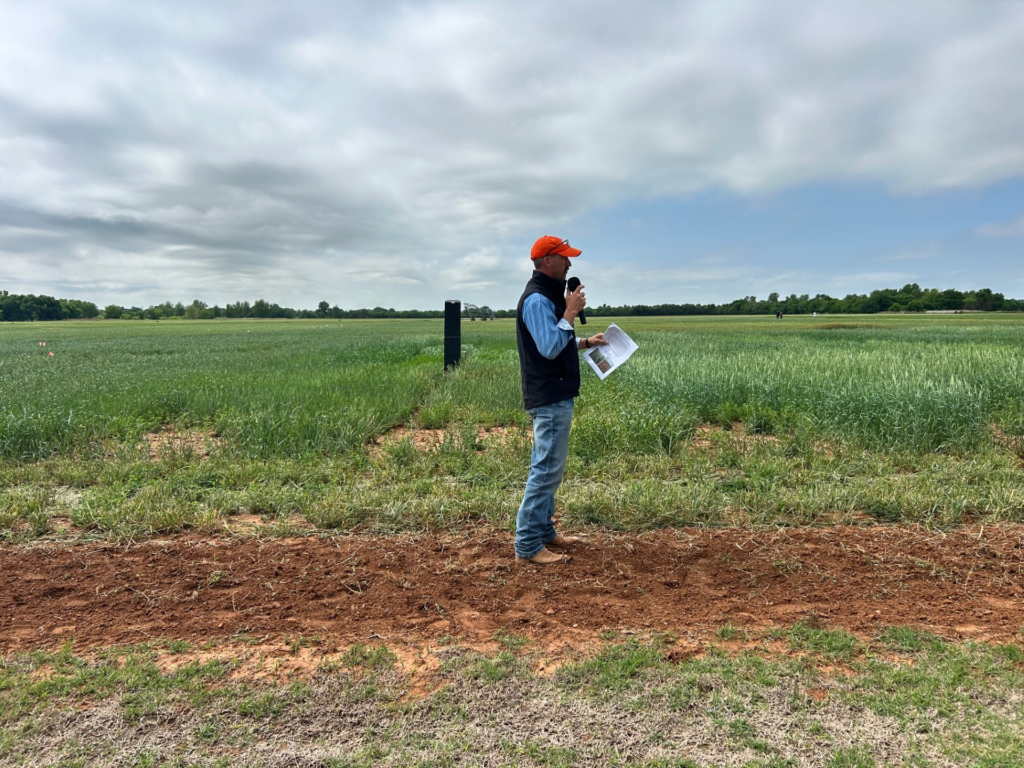
Oklahoma cattle producers looking to manage winter feed costs may find one of their best tools already in the field. According to Oklahoma State University Extension Forage Specialist Brian Pugh, in a recent conversation with associate farm reporter Carli Davenport, small-grain grazing systems are a valuable option for adding gain to stocker cattle, stretching forage supplies, and reducing reliance on expensive purchased feed.
Matching Small Grains to Producer Goals
Pugh explained that many producers across Oklahoma use small grains such as wheat, oats, barley, rye, and triticale for fall and winter grazing. Some operations graze the crop and later harvest grain, while others dedicate the acres strictly to forage use.
“The majority of the state where we’re grazing small grains, those producers are using that grain in the fall to put gain on cattle,” Pugh said. “They may harvest that as grain, but there are quite a few forage producers too that are going to strictly graze out that forage.” He said one key advantage is that different species produce forage at different times of the year, helping producers fill seasonal gaps.
Lowering Winter Feed Bills
With hay and supplemental feed often representing major winter expenses, Pugh said small-grain forage systems can make a significant economic difference. “When we look at systems that are very economically efficient, those are systems that rely much less on purchased supplements or hay,” Pugh said. “These small grain forages really make a dent in the amount of supplemental protein and energy that we have to buy for those cows.”
He added that they also help reduce the amount of hay that must be purchased or baled on-farm.
Timing Matters for Winter Grazing Success
Pugh said producers should first identify when they need forage most before selecting a species or variety. “If they’re needing forage early in the winter, say late fall, November or December, they need to pick species and varieties that are good at getting out of the ground and producing that forage early,” Pugh said. “That tends to be the barley and oat varieties.”
For operations with stockpiled warm-season grass available into midwinter, later-producing options may fit better. “Then we could look at some of the more traditional varieties of wheat or something like cereal rye or triticale,” he said.
Long-Term Focus on Perennial Forages
While annual small grain systems will continue to serve an important role, Pugh believes the future may include greater emphasis on longer-lasting perennial forage systems that spread establishment costs over many years.
“I think what we will see long term is we need to start having more reliance on perennial forages,” Pugh said. “How do we become more efficient with these perennial forages to reduce our cost up front?” Even so, he noted annual forages will likely remain especially valuable in western Oklahoma, where some cool-season perennial options are less practical.







