

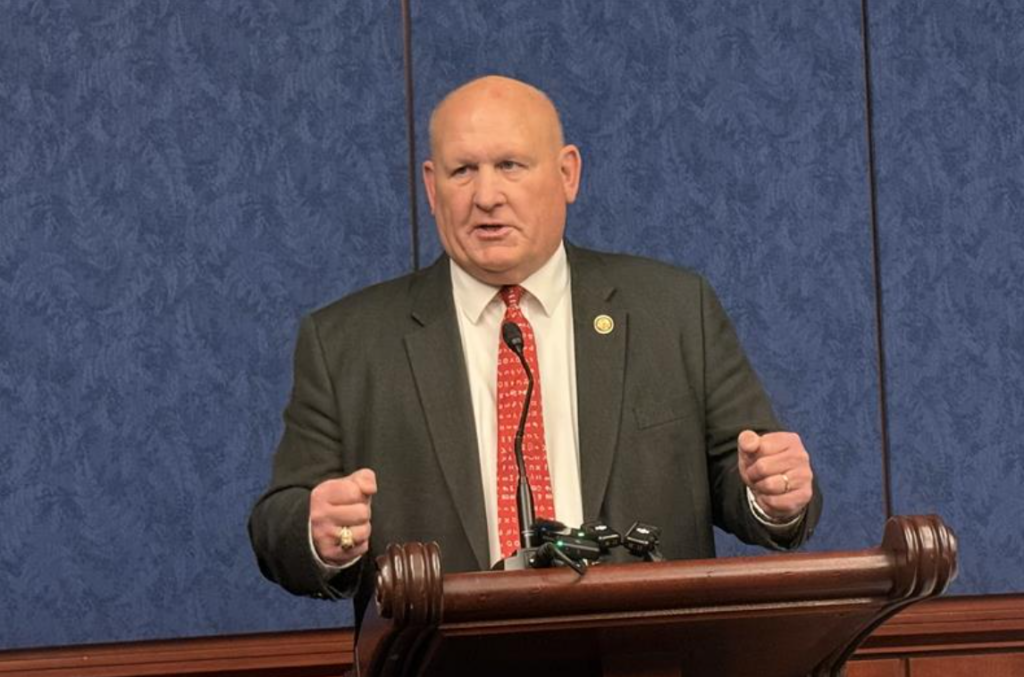
Farm policy debates are reaching a critical stage in Washington, and House Agriculture Committee Chairman Glenn ‘GT’ Thompson says the 2026 Farm Bill is moving through one of the busiest legislative weeks of the year. Speaking with farm broadcasters, Thompson outlined where the bill stands, addressed key amendment fights, and discussed issues ranging from E15 fuel policy to farmer assistance and pesticide regulations.
Thompson said the legislation was shaped by producers across the countryside, noting it was “written not in Washington, but around the countryside and pastures and barnyards and tool sheds.”
The following topics reflect the general questions Chairman Thompson was asked during the discussion, along with his responses to each issue.
E15 and Prop 12 Included in Farm Bill Debate
Asked about E15 and California’s Proposition 12, Thompson said he expects lawmakers to vote on both issues and voiced support for addressing Prop 12 within the Farm Bill.
Thompson argued that one state should not be able to dictate livestock production standards for producers in other states. He said the bill’s language dealing with Prop 12 remains in the current version and he supports keeping it there. “It’s a states’ rights issue because one state can’t be able to dictate to other states,” Thompson said. “The language… is in the baseline of the bill.”
On year-round E15, he said House leadership chose to move the issue separately for now, though it could later be combined with the Farm Bill.
No Pushback on E15 Jurisdiction
Thompson said he has seen no significant resistance over E15 being handled outside the Agriculture Committee. “I’ve been very clear. It does not fall under the jurisdiction of the Agriculture Committee. It falls under Energy and Commerce,” he said.
Even so, he said he strongly supports year-round E15 because it would benefit farmers, lower fuel costs for consumers, and provide environmental gains. “It’ll be good for farmers, good for the environment, good for consumers. Bring down the price of gas,” Thompson said.
Amendments and Rules Process
With more than 140 amendments reportedly filed, Thompson acknowledged early concern that changes could derail momentum for the bill. However, he said he has made clear that any amendment should help gain votes for the Farm Bill rather than lose support.
“I had that concern from the beginning,” he said. “Any amendments need to add votes to the farm bill, not take votes away.”
He said members on both sides of the aisle have offered constructive ideas, but his guiding principle is that amendments must strengthen the bill’s chances of passage.
Farm Labor Reform Could Come Next
Once the Farm Bill advances, Thompson said agricultural labor reform is a top priority. He said lawmakers are preparing draft language to modernize the H-2A visa program.
“I’m looking forward to a public release of draft language for reform to really a food security bill — reformed H-2A program,” Thompson said. He expects a public discussion draft to be released for several weeks of stakeholder feedback before formal introduction. Thompson added he hopes to unveil the bill with bipartisan backing.
Year-Round E15 Stand-Alone Bill
On whether E15 should move separately or be attached to another package, Thompson said that was a strategic decision made by House leadership and the Rules Committee. He said there is broad bipartisan interest in year-round E15 and he trusts leadership chose the most effective route forward.
“That was a tactical decision that was made, I think, between rules and leadership,” he said. “There’s a lot of interest on both sides of the aisle in year-round E15.” He added that lawmakers could still merge legislation later if needed.
Additional Farmer Assistance Needed Soon
On further economic assistance for producers, Thompson said farmers need near-term relief while broader Farm Bill provisions are implemented. “We need a bridge to get to that part,” he said. “It’s challenging, it’s very difficult, and it has been for some time.”
Without action, he warned, “I think we’re facing more bankruptcies… food insecurity… and economic harm.”
USMCA Review Process
On the future of the U.S.-Mexico-Canada Agreement, Thompson said he expects the trade pact to remain intact but likely updated through the review process. He praised the agreement as a major achievement and said agriculture remains a priority in ongoing discussions.
“I don’t see USMCA kept intact — not unchanged,” he said. “Overall, I think USMCA was a really good achievement.” He said agriculture remains a priority in those talks, though issues like Canada’s dairy supply management system still need attention.
Comparing Today’s Farm Economy to the 1980s Crisis
Asked about comparisons to the 1980s farm crisis, Thompson said every era has different root causes. He stressed today’s challenges include input costs, fertilizer dependence, supply chain vulnerabilities, and global competition.
“The best thing to do when we’re addressing a problem is to do a root cause analysis,” he said. He pointed to fertilizer dependence, supply chain weaknesses, and trade infrastructure as issues that must be addressed now. “We learned from COVID that we need to make our food supply chain more resilient,” Thompson said.
Monsanto Case and Pesticide Provisions
Asked about the Monsanto Supreme Court case and pesticide language in the Farm Bill, Thompson said the provision is centered on labeling standards and science-based regulation.
“This is just a labeling bill,” he said. “This is about making sure that we put science before emotion.”
He defended the Environmental Protection Agency’s review process and said labels are critical for proper storage, application, and cleanup.
“If you’re a bad actor and you lie and you mislead the EPA and the consumer, I hope you are sued,” Thompson said.







