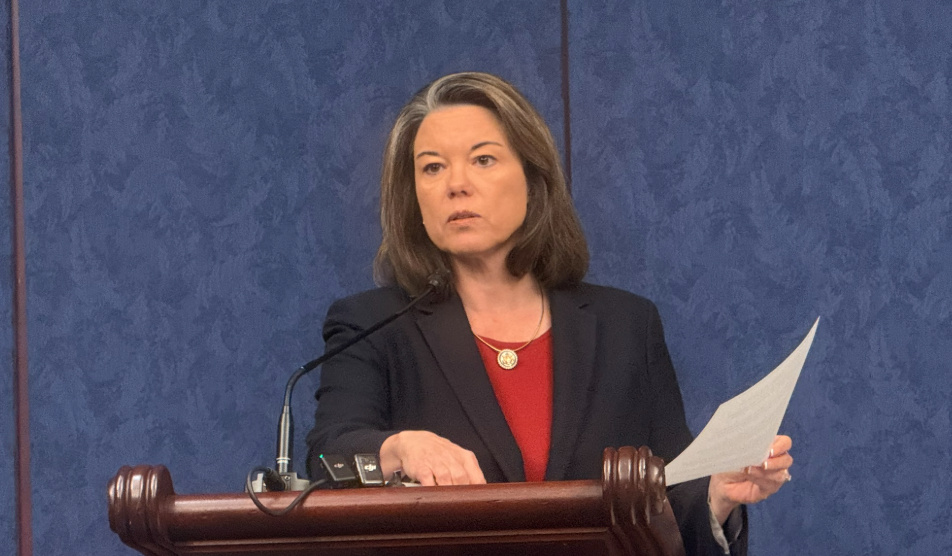
During the Washington Watch event in Washington, D.C., Democrat Angie Craig addressed members of the National Association of Farm Broadcasters to discuss the current legislative landscape. Representative Angie Craig expressed significant concerns regarding the proposed Farm Bill and its potential impact on the agricultural community and food assistance programs.
Challenges Facing Modern Farmers
Representative Craig highlighted the rising costs that continue to burden farmers across the country, citing several key areas of financial strain:
- Input Costs: Increased prices for fertilizer, diesel, seed, and utilities.
- Infrastructure and Labor: Rising costs for machinery and difficulty in finding affordable labor.
- Market Volatility: Commodities prices that remain below desired levels and the loss of international markets, specifically China, to competitors like Brazil and Argentina due to tariffs.
The Impact of SNAP Funding Reductions
A central point of Craig’s address was the proposed $187 billion cut to the Supplemental Nutrition Assistance Program (SNAP). She argued that these reductions are an “unfunded mandate” to the states and noted that:
- An estimated 3.4 million Americans have already lost access to SNAP benefits.
- The cuts come at a time when grocery costs are at record highs.
- She disputed the claim that those losing benefits are finding high-paying jobs, citing reports from the Brookings Institution and Hamilton.
Representative Craig further defended the necessity of SNAP by challenging the narrative that the program has grown too quickly. She pointed out that for those who qualify, the benefit averages only about $6.20 per day, which breaks down to roughly $2.00 per meal. In her view, providing this level of support is essential, especially as food pantries and shelters report record-high demand nationwide. She emphasized that the program was never intended to be permanent for most—noting that many recipients are only eligible for three months—but serves as a critical safety net for vulnerable individuals, such as a farmer she knows whose body is worn out from a lifetime of labor. For Craig, the program is a matter of basic fairness and food security amid high inflation.
Craig addressed the program’s efficiency, countering claims of systemic “waste” by clarifying the nature of error rates. She explained that error rates are often misunderstood, as they include both underpayments and overpayments rather than reflecting fraud or mismanagement. Furthermore, she argued for the broad necessity of the program, suggesting that in an ideal policy environment with a significantly higher minimum wage, perhaps the program wouldn’t be needed; however, given the current economic reality, she believes the support should be accessible to those struggling to afford basic necessities. By highlighting the record-high demand at food shelves, she underscored her position that SNAP remains a vital, lean, and necessary component of American food security.
Legislative Disagreements and Bipartisanship
Representative Craig voiced her frustration over the lack of bipartisanship in the current House version of the Farm Bill. She noted that only about 10% of what the committee Democrats asked for was included in the base text.
She expressed a desire for a return to the “Hunger and Farm Coalition” that has traditionally moved farm bills across the finish line. Despite the current friction, Craig remains optimistic that the Senate version of the bill may offer a more balanced, bipartisan approach that delays cost-shifts to states.
Ethanol and Energy Policy
The Representative also touched upon energy policy, specifically Year-round E15. While she authored a bill in 2022 to support year-round E15, she expressed a preference for the Sorensen Amendment, which she believes would be more fiscally responsible by addressing small refinery exemptions.
Concerns for the Next Generation
Reflecting on the 1980s farm crisis that affected her own family, Craig shared her deep concern for young and beginning farmers. She noted that those in the business for less than 10 years are struggling to secure loans for planting seasons due to high interest rates and the lack of accumulated capital.
Today Craig released the following statement after the House passage of the Farm, Food, and National Security Act of 2026 (Farm Bill) “American farmers and working people are struggling to make ends meet. Whether it’s twice as expensive to fill up your tractor or twice as expensive at the grocery checkout, Americans can feel how tariffs, war with Iran and massive cuts to food assistance are making hard economic times even worse. The so-called farm bill that passed the House today does nothing to resolve high input costs, lost markets, surging food prices or provide a single penny in economic assistance to struggling family farmers. “That said, thanks to the tremendous work of House Democrats, we defeated the Republican effort to shield pesticide companies from legal liability when their chemicals make consumers sick. “Now, our hope turns to the Senate, where I encourage Democratic and Republican members to work together to deliver for farmers and working people. America needs a bipartisan, five-year, 12-title farm bill that meets the moment. The farmers who feed, fuel and clothe our country need our support, not lip service.” |