

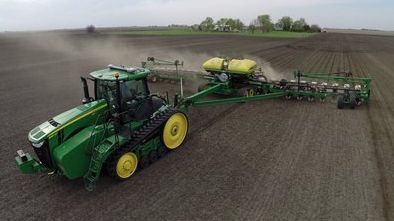
Diesel powers the tractors, planters, sprayers, and grain-handling equipment needed to grow a crop. As corn farmers move through one of the most diesel-intensive stretches of the production calendar, new USDA data show farm diesel prices climbing to record territory, adding another layer of cost risk to an already strained 2026 farm economy. Many farms use thousands of gallons of diesel fuel to plant and manage their crops, so a per-gallon swing is magnified many times over for an individual farm’s budget. When those budgets are already penciling out in the red, fuel spikes can quickly widen losses and tighten working capital.
Record Highs in USDA Reporting
In the bi-weekly USDA AMS Illinois Production Cost Report for the week ending May 1 (a series dating back to 2008), the average farm diesel price reached a record high $5.41 per gallon. Year over year, the current average price is up 95% from $2.77 per gallon a year ago. The only other time the average cleared $5.00 was June 2022, when it hit $5.30 per gallon.
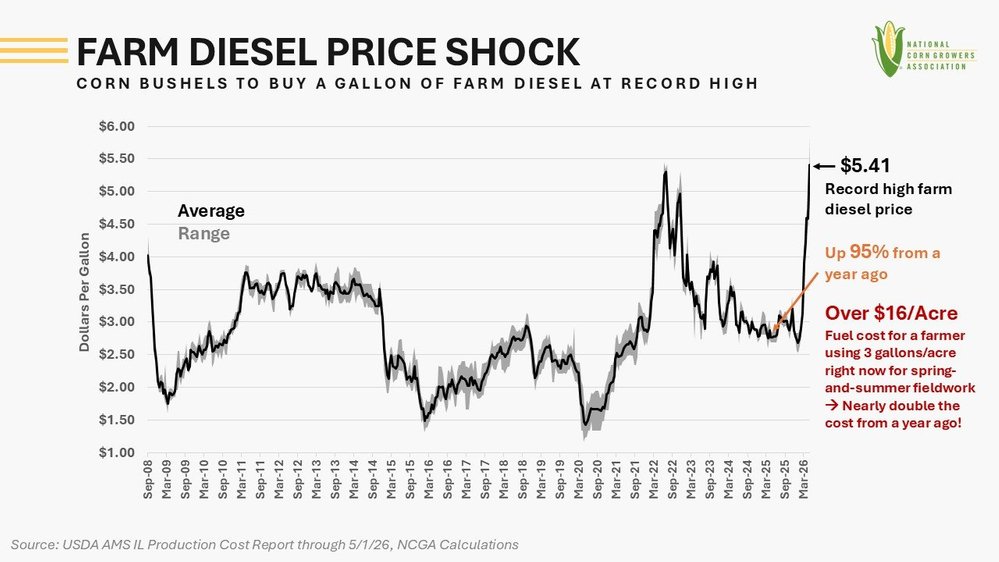
Along with the simple average, the report includes the high and low prices farmers paid to fuel distributors during the period. The latest report’s $5.88 high price also set a record, exceeding the previous highest high of $5.45 by $0.43.
Diesel in the “Currency of Corn”
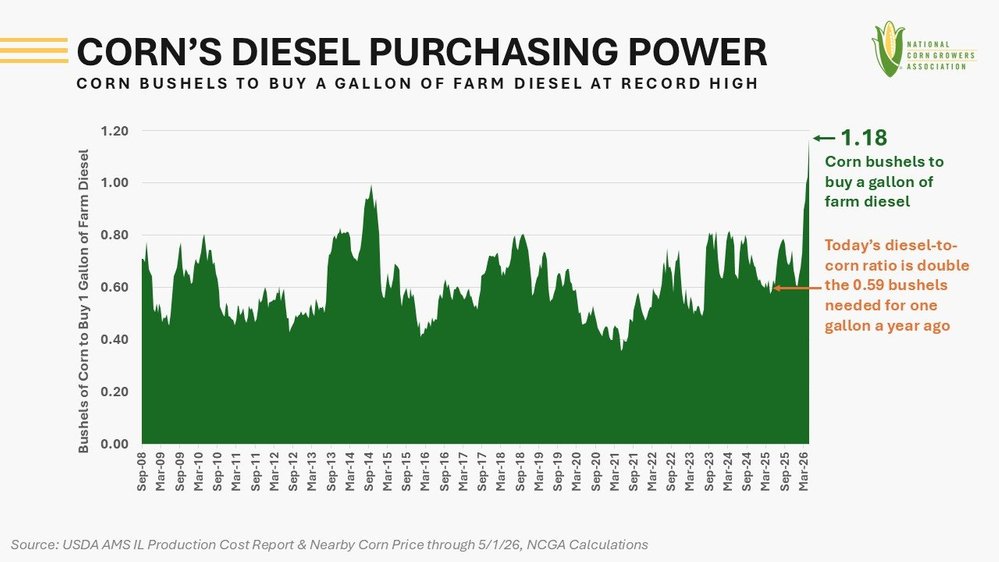
Using the nearby corn price for the same period, it now takes 1.18 bushels of corn to buy a gallon of farm diesel, another record high. Current diesel prices are nearly double a year ago, while corn prices are slightly lower, worsening the diesel-to-corn exchange rate. One year ago, it took exactly half as much: 0.59 bushels of corn per gallon. Over the past 10 years, the average has been 0.62 bushels per gallon, well below what farmers are paying today.
Why Timing Matters
This price spike hits when farmers are burning through fuel rapidly: planting their crops, plus applying fertilizer and weed control solutions. Using a simple assumption of about 3 gallons of diesel per acre for spring-and-summer fieldwork, the current average implies roughly $16 per acre in fuel (3 × $5.41 = $16.23), before accounting for harvest fuel use, grain hauling, and fall fieldwork. Because diesel prices are nearly double, the cost per acre is too. With per-acre costs already exceeding expected revenues by more than $100 per acre, that additional fuel burden compounds the pressure.
Looking Ahead to Harvest
Fuel risk doesn’t end once the crop is in. Harvest operations, grain movement, and fall fieldwork extend farm diesel demand into the fall, when corn growers could use another 3 gallons of diesel per acre. Global uncertainty can add volatility to energy markets, including ongoing tensions involving Iran and broader shipping risk through key routes like the Strait of Hormuz. In a year when profitability is already tight, that volatility raises the stakes for farm budgets and management decisions. Fuel costs volatility is difficult for farmers to manage, with few practical options to reduce needs or manage costs. Farmers may look for ways to reduce trips across the field, but agronomic tradeoffs still matter when yield depends on timing, pest pressure, and nutrient needs.
Bottom line: With farm diesel setting new records in USDA AMS reporting, fuel is once again a headline input cost for corn producers. Along with fertilizer concerns, record diesel prices are another reminder that the 2026 corn economy is being shaped as much by input-cost volatility as by the price of corn itself. The near-doubling from last year amplifies margin pressure in an already strained farm economy, and even small shifts in fuel assumptions can be the difference between making a profit for a year of work – or not.







