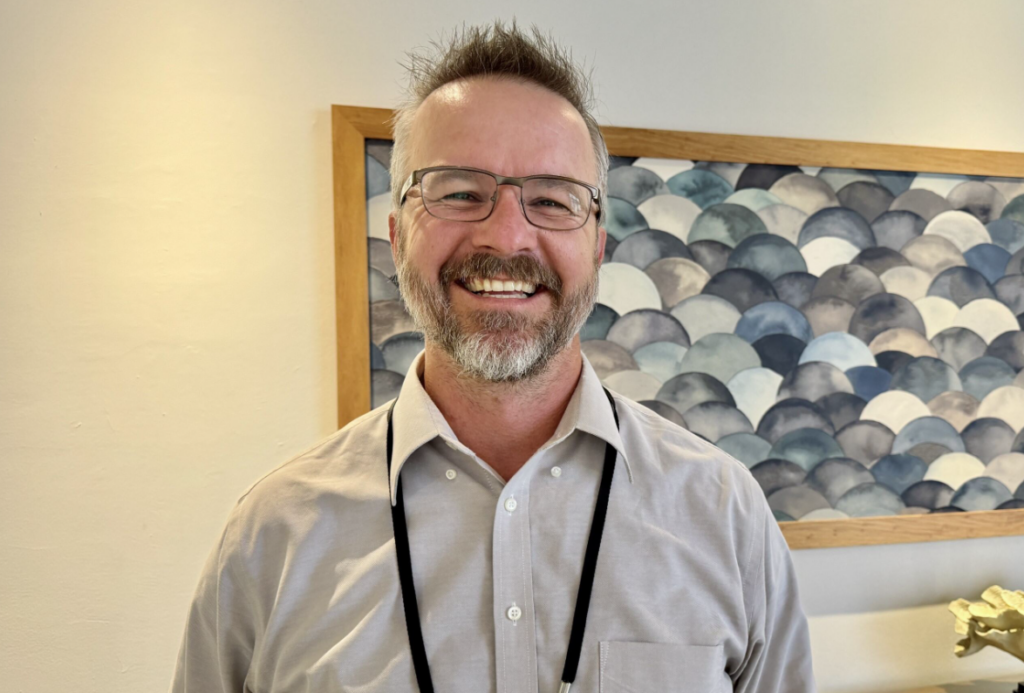
In today’s Beef Buzz, senior farm and ranch broadcaster Ron Hays speaks with Dr. Dirac Twidwell, professor and rangeland ecologist at the University of Nebraska-Lincoln, where he leads the Large-Scale Rangeland Conservation Lab.
They discussed the growing concern surrounding grassland loss and woody encroachment across the United States, a major topic of discussion at the recent U.S. Roundtable for Sustainable Beef General Assembly.
Twidwell said conversations around sustainability are evolving beyond just cattle production and are increasingly focused on protecting the grassland ecosystems that support the beef industry.
“When you’re looking at U.S. Roundtable Sustainable Beef, so much of what we start to focus on is the animal side,” Twidwell said. “You have everybody else that might have a different priority. You have wildlife tied to grasslands, you have water or carbon.”
He explained that, unlike forests or fisheries, grasslands lack a centralized group dedicated solely to their protection, despite their importance to agriculture, wildlife habitat, water quality, and air quality.
“Grasslands as a land use have lost more than any other major vegetation type on the planet, much more than tropical rainforest, and most people in the United States don’t know,” he said.
Woody Encroachment Becoming a Major Threat
Twidwell pointed to woody encroachment as one of the biggest drivers of grassland loss, especially across the Great Plains.
“Woody encroachment’s one of the biggest drivers of grassland loss, not just in the Great Plains where we are at, which is one of the big beef factories here in the U.S., but it’s an issue all over the world,” he said.
While historic grassland losses largely came from row crop conversion and cultivation, Twidwell said areas untouched by the plow are now increasingly threatened by trees, urbanization, and energy development.
For the Southern Plains, Twidwell said the prime example is Eastern Red Cedar. “Eastern red cedar in the Plains is the poster child,” Twidwell said. “Before there was this thought that there was a magical line in the sand where it wouldn’t go further north and west. Increasingly, we’re seeing that become something that more and more people understand.”
He added that ranchers and landowners are beginning to work together more proactively, but much work remains.
Ranchers Carry More Than Production Responsibilities
Twidwell emphasized that ranchers today are expected to manage much more than livestock production alone. “We ask ranchers to do a lot,” he said. “They get paid for cattle production, livestock production, but they’re also asked to do more than that on their lands.”
He noted that private working lands across states like Nebraska, Kansas, Oklahoma, and Colorado play a major role in wildfire prevention, water quality, wildlife conservation, and endangered species management. “The rancher story, we tend to think of that as just their cow herd,” Twidwell explained. “In reality, the rancher story goes way beyond that.”
Twidwell said society is beginning to recognize the broader value of grasslands and the ecosystem services they provide, but conversations about how to support ranchers financially or through incentives are still developing. “That’s going to be the discussion,” he said. “Whether that means payments, incentivization, just better appreciation and value, I think there’s more ways we can get creative in that space, and that’s being explored for the first time, and it’s probably overdue.”
Industry Organizations Have a Role to Play
Twidwell said organizations like the National Cattlemen’s Beef Association, American Farm Bureau Federation, and the Roundtable itself all have an important role moving forward. “It’s increasingly being recognized that our obligation is to not take for granted our ecosystem,” Twidwell said.
He said collaboration between researchers, ranchers, industry leaders, communities, and government agencies will be essential in finding workable solutions. “Everybody has their role and niche in this, and it’s bringing those people together to solve modern problems of today.”
The Beef Buzz is a regular feature heard on radio stations around the region on the Radio Oklahoma Ag Network and is a regular audio feature found on this website as well. Click on the LISTEN BAR above for today’s show and check out our archives for older Beef Buzz shows covering the gamut of the beef cattle industry today.