

As the Kansas Wheat Crop Tour crossed through the southern tier of the state and into Oklahoma on Day 2, the outlook for the 2026 harvest remains grim. Farm broadcaster Ron Hays and veteran scout Dennis Schoenhals, immediate past president of the Oklahoma Wheat Growers, recapped a day defined by extreme drought, temperature swings, and stunted crops. Click on the audio bar above to hear their conversation.
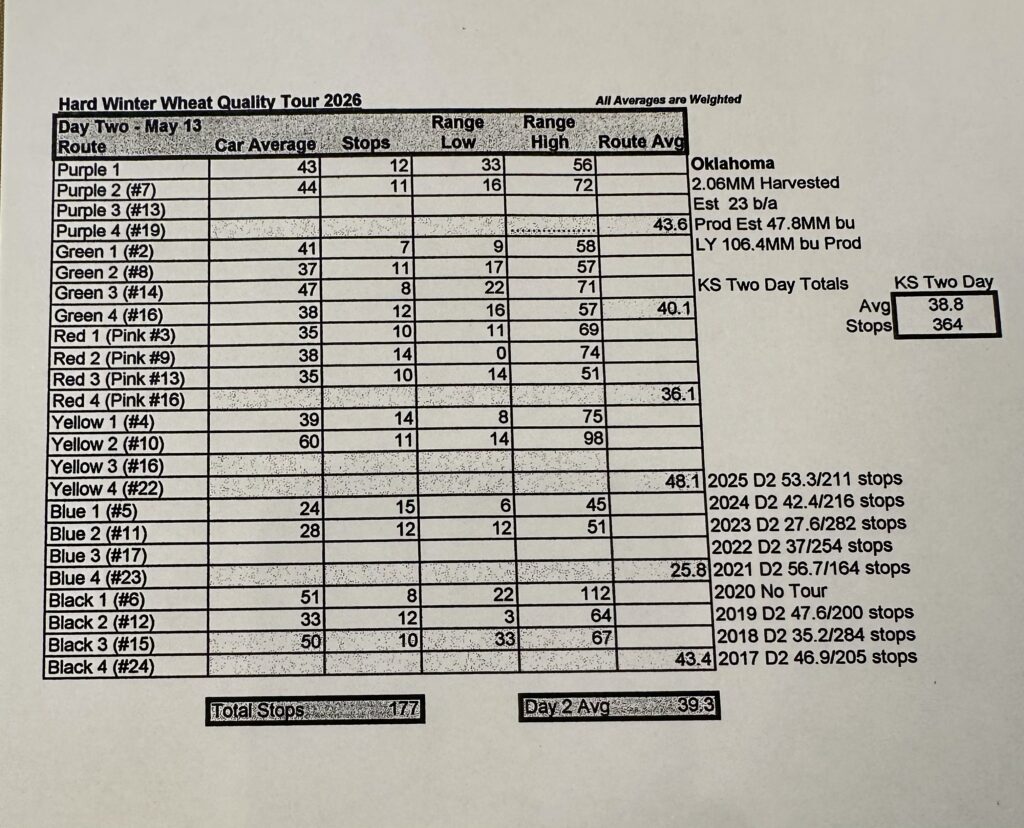
The tour’s Day 2 average across all cars came in at a disappointing 39.3 bushels per acre, a figure Schoenhals says reflects the harsh reality of the Oklahoma Panhandle and Southwest Kansas. That Day Two average compares to the 2025 Day Two Estimate from the tour of 53.2 bushels per acre. The two day total of the Tour now stands at 38.8 bushels per acere over 364 stops.
From Southwest Kansas Into the Oklahoma Panhandle
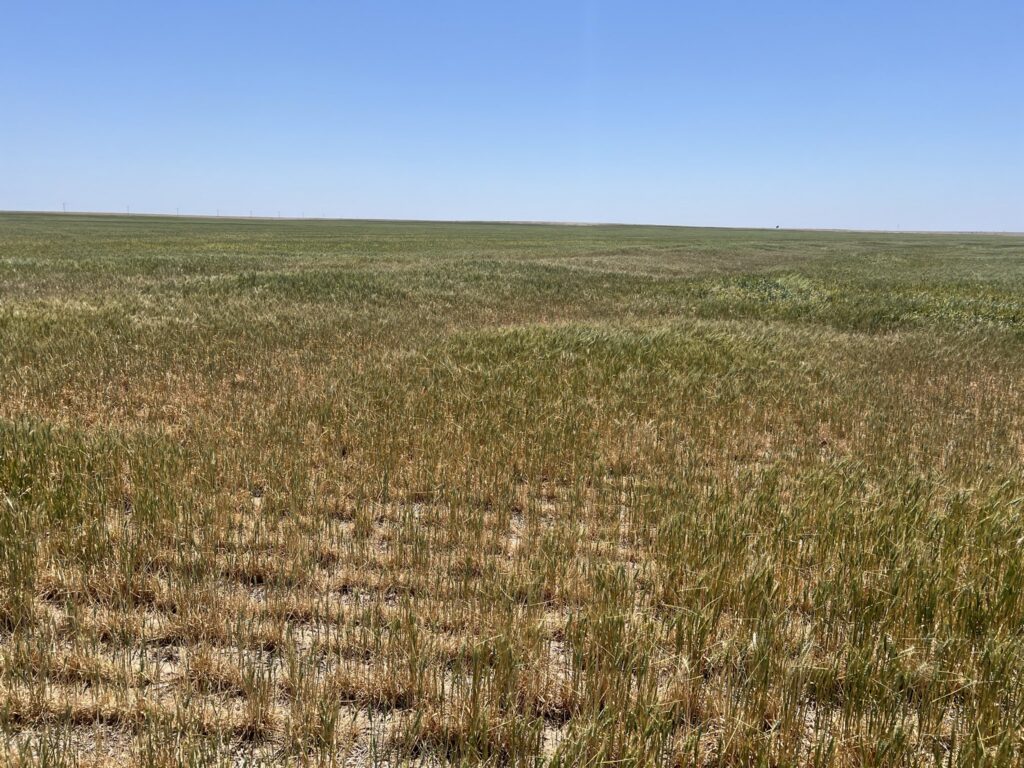
The western regions faced the most severe conditions, with many fields deemed nearly impossible to harvest or even photograph due to extreme drought.
- Liberal & Turpin: Scouts found wheat in this area to be exceptionally short. Out of three fields checked near the state line, only one measured above 15 bushels per acre, with all three falling above at least 10 bushels.
- Hooker: This area has reportedly gone nearly a full year without receiving more than a quarter-inch of rain, leading to deep “cracks in the ground” and stunted growth.
- Buffalo: Conditions were not significantly better than the Panhandle, with very low yield potential noted as scouts moved toward the Cimarron River.
North Central Oklahoma
As the tour moved east of the Cimarron River and Camp Houston, yield prospects began to improve significantly.
Pond Creek, Kremlin, & Medford: These areas were noted to be much closer to harvest than the fields further north in Kansas.
Alva & Ingersoll: Scouts identified wheat that appeared much healthier, with yields testing or pushing 40 bushels per acre. Specific stops near Ingersoll at a local producer’s farm measured two fields at 52 and 63 bushels per acre.
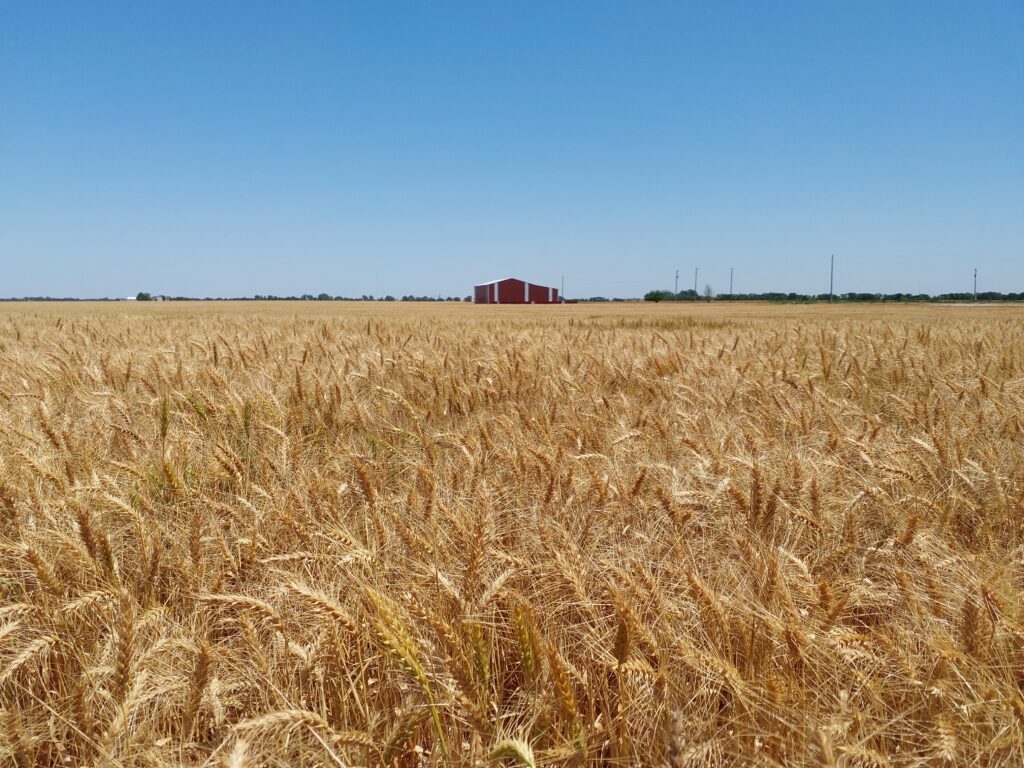
Cherokee: This area produced the “best field” of the day, located two to three miles south of town. The field was estimated at 76 bushels per acre, featuring clean, tall stalks and big heads filling three kernels per spikelet.
Beyond the drought, Schoenhals highlighted a “rollercoaster” of temperatures in March that decimated the crop’s potential.
- Heat Stress: Highs reached 96°F in March, causing the plants to “slough off” tillers early.
- Freeze Damage: Just days after the heat, temperatures plummeted to 38°F, causing visible damage to the heads.
- Disease & Hail: Wheat streak mosaic continues to plague fields, and recent hailstorms in Garfield and Grant counties have further thinned out production.
“A Really Short Crop”
Looking ahead to the final tally in Manhattan, Schoenhals expects the final numbers to align with, or perhaps fall below, the Oklahoma tour’s estimate of 47.8 to 48 million bushels.
“I think it’s going to be a really short crop,” Schoenhals concluded. “It’s been like a rollercoaster… we were losing production back in March already. It’s a short crop and it’s going to be a challenge to get it through the combine.”
The tour concludes Thursday with a final report session in Manhattan, where the official total crop estimate for the Kansas crop will be released.
Summary of Day 2 Findings:
| Region | Observation | Estimated Yield |
| Liberal, KS | Extremely short, drought-stressed | 10–15 bu/acre |
| Alva, OK | Improved moisture | ~40 bu/acre |
| Cherokee, OK | Best field of the day; clean | ~76 bu/acre |
| Sumner/Sedgwick, KS | Short on moisture; mosaic virus | 20–30 bu/acre |







