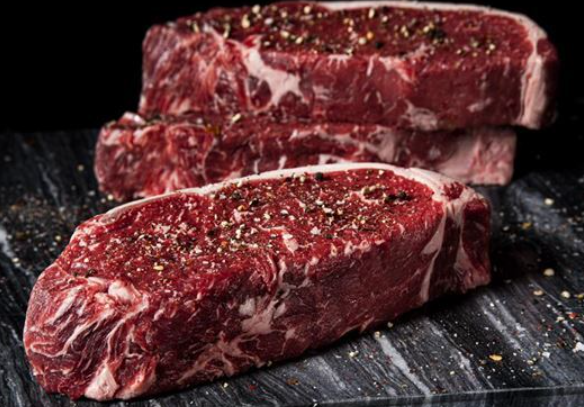
On Friday, May 15, China’s General Administration of Customs (GACC) granted a five-year registration extension to 425 overdue U.S. beef establishments in China’s Food Import Food Establishment (CIFER) system – a critical step toward restoring market access for U.S. beef. Additionally, 77 new U.S. beef establishment registrations were added to the CIFER system, with registrations valid for five years. While some U.S. beef establishments remain suspended from exporting to China, a White House fact sheet posted on Sunday states that China will work with U.S. regulators to lift all suspensions of U.S. beef facilities.
U.S. Meat Export Federation (USMEF) President and CEO Dan Halstrom offers more details on these developments, thanking the Office of the U.S. Trade Representative and the U.S. Department of Agriculture for prioritizing beef access in last week’s summit meeting between President Trump and Chinese President Xi Jinping. Halstrom emphasizes that this is tremendous news for the U.S. beef industry and for customers in China who are anxious to resume imports. He adds that access to China also enhances the value of similar cuts the U.S. industry exports to other Asian markets such as Japan, South Korea and Taiwan.
Major progress has been made toward restoring U.S. beef access to China following last week’s U.S.-China summit, as export leaders say a year-long lockout is beginning to ease. According to Dan Hallstrom, meetings between Donald Trump and Xi Jinping led to a key breakthrough for the beef industry.
Hallstrom said “425 plants were granted five-year extensions,” calling it “what we’ve been waiting for, really, for almost a year now on most of these plants.” He added that Chinese buyers “have been clamoring to regain access to U.S. beef,” saying customers are “ready and able and ready to go.” He also noted work continues to restore access for plants that remain suspended, saying trade officials are “working on getting those suspended plants reengaged as well.”
Hallstrom credited the effort to persistence by federal trade and agriculture officials, saying the industry had pushed for nearly a year to make China beef access a priority. “It took a team effort to get this done,” he said, praising the work of trade representatives and the U.S. Department of Agriculture.
Beyond exports, Hallstrom said renewed access could boost beef values across Asia because of shared demand patterns in markets like Japan, Korea, Taiwan, and China. He said products like short plates could see “one to $2 a pound increases in price” from what he described as a “halo effect” of China reentering the market, adding, “The beef industry is much better off today because of this announcement.”