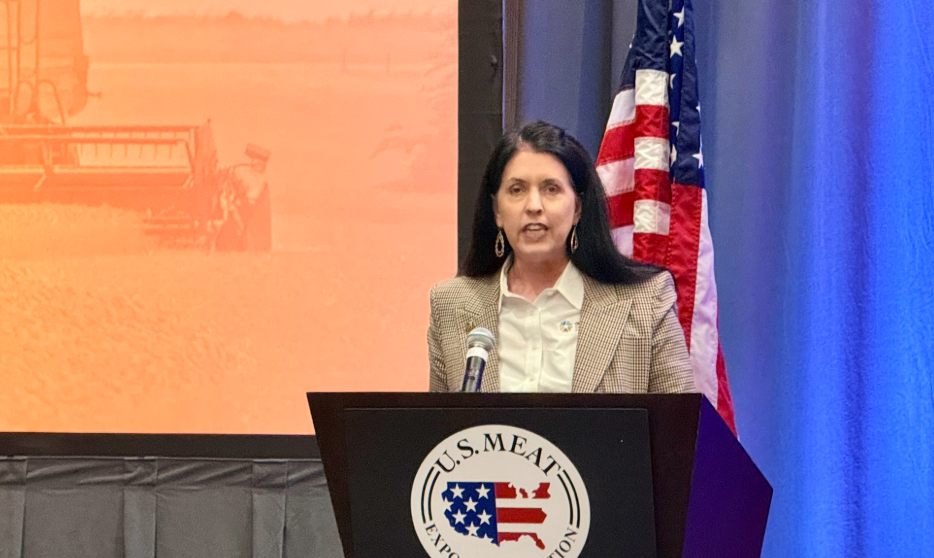
The opening session of the U.S. Meat Export Federation (USMEF) Spring meeting focused on expanding global meat demand and the vital connection between international market development and local farm families. Oklahoma Secretary of Agriculture Blayne Arthur welcomed attendees, emphasizing that while large-scale market strategies look at trade from a high-level perspective, the true impact is felt right at home on the farm.
“When we have the chance to be ultimately moving this product internationally and trying to help our farmers and ranchers be successful, I think it’s always this reminder that that’s this big scale, right? Like this is this 30,000-foot view of we’re trying to move product around the world,” Secretary Arthur noted. “But a lot of times… who we’re really impacting in a really positive way is families, and kiddos, and husbands and wives, and folks that are working every day to keep their operation going.”
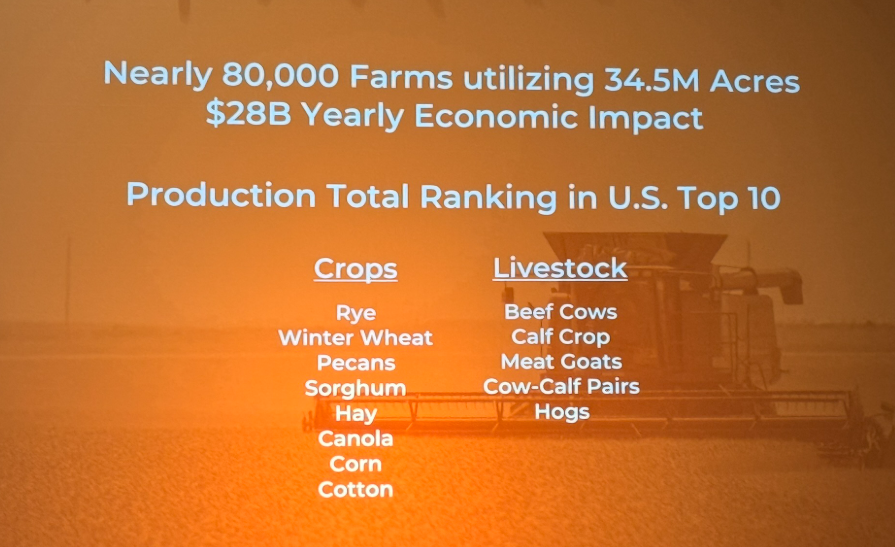
Export markets play a critical role in maximizing the value of every carcass by finding homes for products that have lower demand domestically but command a premium globally. Secretary Arthur pointed out that these international channels help ensure financial viability for producers who are laser-focused on their everyday operations.
“Why are these markets all over the world so important? And you all know why—because we’re adding that additional value to that carcass for that producer,” she said. “They’re kind of laser-focused on raising calves and keeping cows alive in a blizzard or whatever that might be, but all of those things tie together in a really unique way that helps us feed people around the world.”
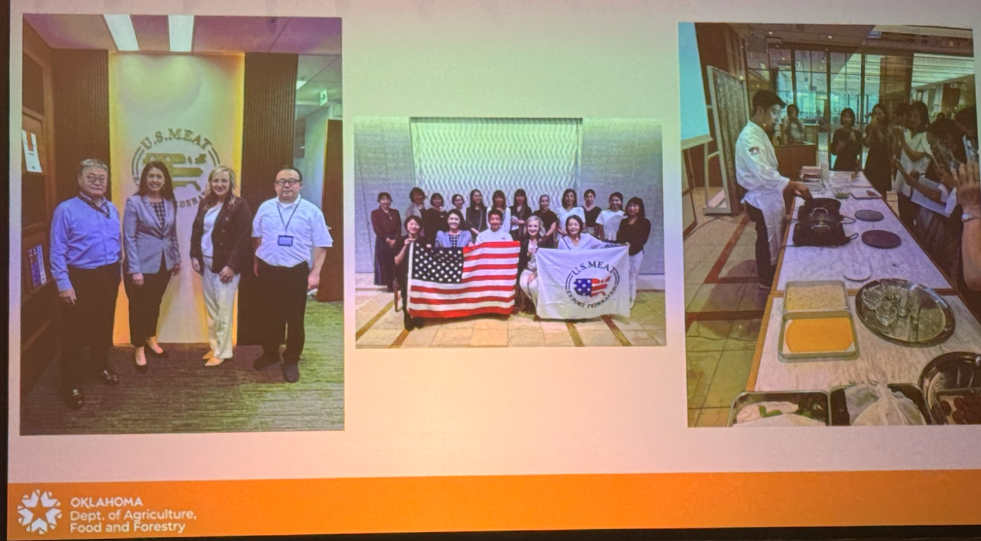
Observing Global Meat Demand in International Markets
Recent trade missions underscore the importance of firsthand market engagement to understand consumer preferences and formatting in key export destinations. Last September, a delegation that included Oklahoma Lieutenant Governor Matt Pinnell and Deputy Commissioner JanLee Rowlett traveled to Japan to observe how American beef and pork products are marketed and perceived by Japanese consumers.
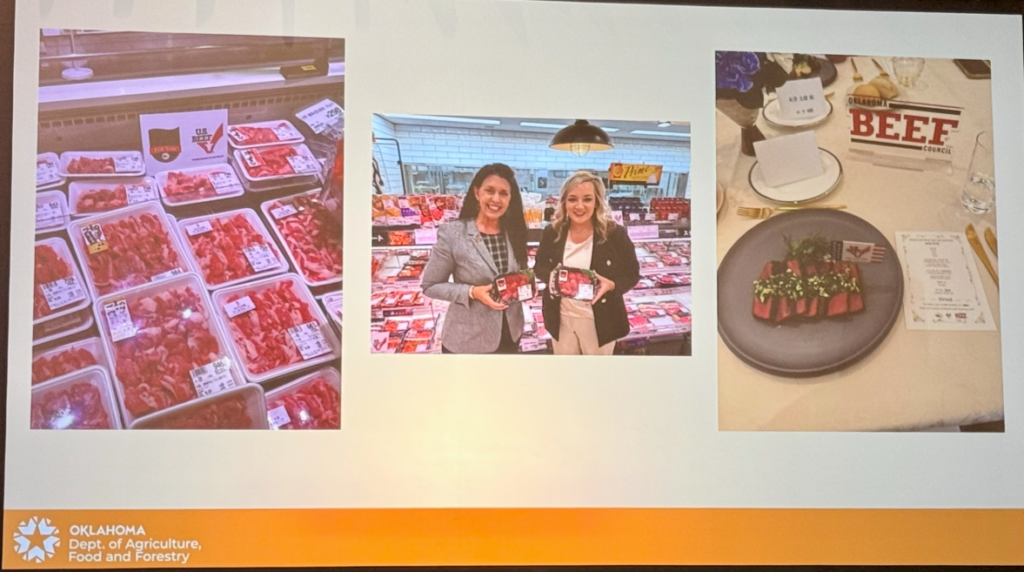
Japan remains a sophisticated and high-value destination for U.S. red meat. Reflecting on the trip, Secretary Arthur shared how meaningful it was to see U.S. products showcased effectively on foreign shelves and to engage directly with local buyers to learn what drives their purchasing decisions.
“What an interesting thing to be an American consumer, but have that chance to have that dialogue with a Japanese consumer about, ‘When you’re looking here at the store, and you’re deciding what you’re going to purchase, what does that look like for you?'” she explained. “And how things are presented, how they’re labeled, what’s of value to them—I think it just shows a really good work that’s going on every day that ultimately benefits our producers here in Oklahoma and across the United States.”
The hospitality and agricultural showcasing during the mission left a strong impression on the entire delegation, including those not traditionally embedded in the industry.
“The Lieutenant Governor was very, very impressed. He is not an Ag guy—we’ve tried to pull him into the ag world as much as we can—but he was certainly very impressed with the work that goes on and the collaboration that we had,” Secretary Arthur added. “It makes you very proud as a United States beef producer to be in another country and to see that product displayed and see that work that is happening across the world.”
The Outlook for Agricultural Production and Trade
Despite current cyclical challenges in the agricultural sector, long-term indicators suggest a strong future for agricultural production and trade. Global demographic trends indicate that as disposable income rises in developing nations, consumer demand for high-quality animal protein increases consistently.
“I am always incredibly optimistic about ag and agriculture here in the United States,” Secretary Arthur emphasized. “When people across the world start adding animal protein into their diet—when they come to that income level that allows them to add it into their diet—they don’t want to take it out. That’s something that they don’t want to take out of their diet. So I believe there’s unlimited opportunity for us in that particular space.”
The United States maintains a competitive advantage in global trade due to its abundant natural resources, advanced agricultural technology, and ongoing industry research. However, the primary driver of resiliency within the sector remains the dedication of individual producers who navigate volatile market shifts and adverse weather patterns to maintain a reliable food supply.
“We’re resilient, we’re going to find a way to make it happen,” Secretary Arthur concluded. “People need to eat, people need to eat three times a day. We’ve got the people who can produce the food they need; we know how to make it happen; we can work collaboratively; and ultimately, ag is a pretty non-partisan issue… The people in your community like to have the safest, most affordable food supply in the world available to them, and all of us here in the room make that happen every single day.”