

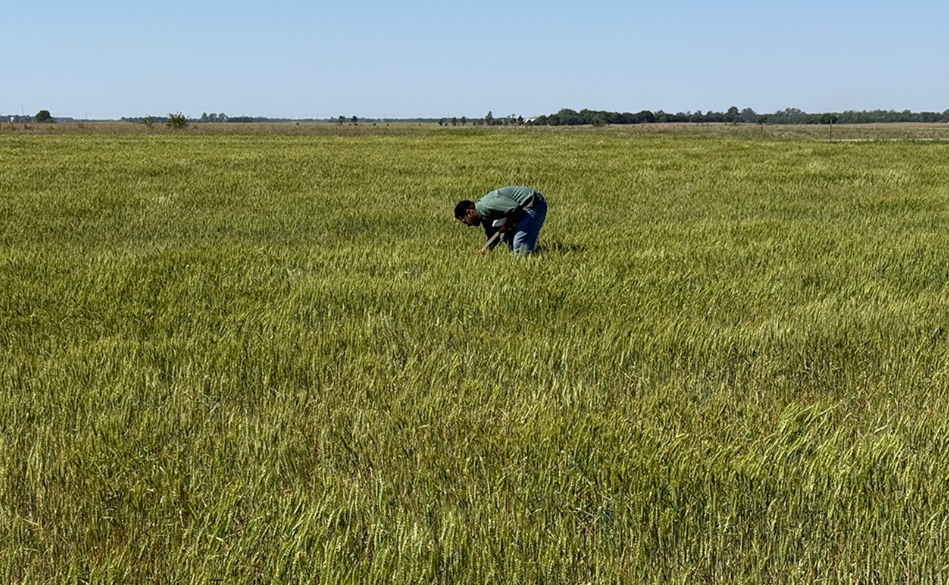
Ryan Olson, director of trade policy for U.S. Wheat Associates (USW), joined more than 60 people from 16 U.S. states and three countries on the Wheat Quality Council’s 68th Annual Hard Red Winter Wheat Evaluation Tour in Kansas from May 11 to 14, 2026. Olson took the wheel in one of 17 cars that traversed six routes from Manhattan to Colby to Wichita and back to Manhattan.
The tour included representatives from across the U.S. wheat supply chain, from farmers to wheat breeders to grain sellers and buyers to international flour millers. For Olson, the tour was a chance not only to interact with the supply chain but also to evaluate fields firsthand and meet with farmers to ask questions directly.
“Since I work in trade policy, it’s always super valuable for me to get out into the field and see wheat production areas, talk to growers and see growing practices and crop quality firsthand,” Olson said. “It grounds my work and provides a stronger connection between the policy arena, the wheat as a product and the growers we represent.”
Olson’s route covered the mid-central part of the state. On the first day, his van traveled south from Manhattan through Abilene to Great Bend, then turned north, crossed I-70 near WaKeeney and swung through Hill City before rejoining the rest of the tour participants in Colby. Joining him for the day was a USW-sponsored customer from Panama and a quality control professional from a large U.S. mill.
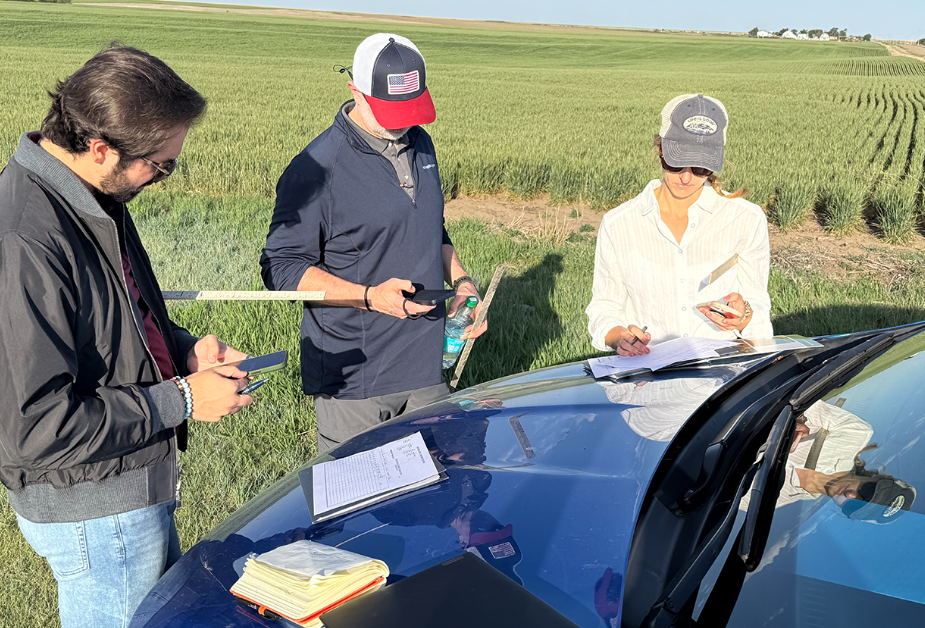
The second day, Olson’s van followed a similar route, headed back east, just a bit to the south of the prior day’s route. After stopping in Cimarron for some sweet treats, the group followed Route 50 all the way through Hutchinson and then south to Wichita, which was the gathering point for the evening.
Olson pointed out that if he had stayed on Route 50 for another 1,000 miles, he would have had a straight shot to the USW Headquarters Office in Arlington, Virginia. This day, he was joined by a staff member from USDA’s Foreign Agricultural Service (FAS), a reporter and a customer from Latin America.
This mix of wheat industry stakeholders is a unique part of the tour. Olson remarked that he constantly heard from two Fulbright fellows from Australia that this type of event – with participation from farmers, traders, millers, exporters and overseas customers – does not exist elsewhere in the world. This sentiment was a testament to the tour’s overall value.
“The real value of the tour, aside from physically seeing the crop and the conditions, is the opportunity to network with folks throughout the entire industry,” Olson said. “The focus of our whole supply chain on quality is a real differentiator for U.S. wheat farmers.”
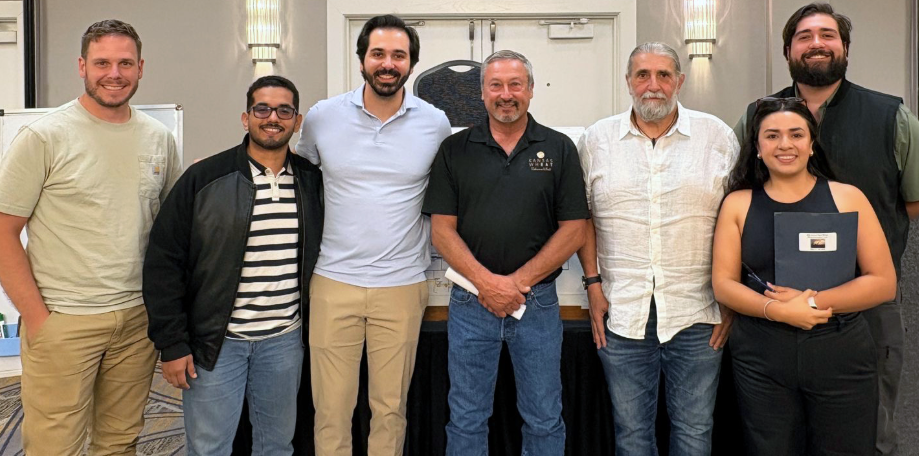
On the final morning of the tour, all of the vans headed back to Manhattan, making a few final stops in wheat fields along the way from Wichita. The van included customers from Central and South America.
“We were thrilled to have customers from Latin America participate in this year’s tour,” Olson said. “They consistently expressed appreciation for being able to see the crop, understand the production practices and interact with growers and peers in the supply chain. While the production estimates were lower this year, our customers noted the U.S. supply chain’s reputation for quality and focus on continuous improvement to help farmers overcome Mother Nature’s challenges.”
The final estimates from the tour were not overly optimistic for this year’s wheat crop. The three-day average from all routes was calculated at 38.9 bushels per acre. As reported by Kansas Wheat, an estimated 7.0 million acres of wheat were planted in the fall, but USDA’s National Agricultural Statistics Service (NASS) estimated 5.8 million acres will be harvested this summer.
Kansas Wheat reported the official tour projection for total wheat production in Kansas was 218 million bushels. This number is the average of estimated predictions from tour participants who gathered information from 394 fields across the state. Based on May 1 conditions, NASS predicted the crop to be slightly lower at 214.6 million bushels, with a yield of 37 bushels per acre.
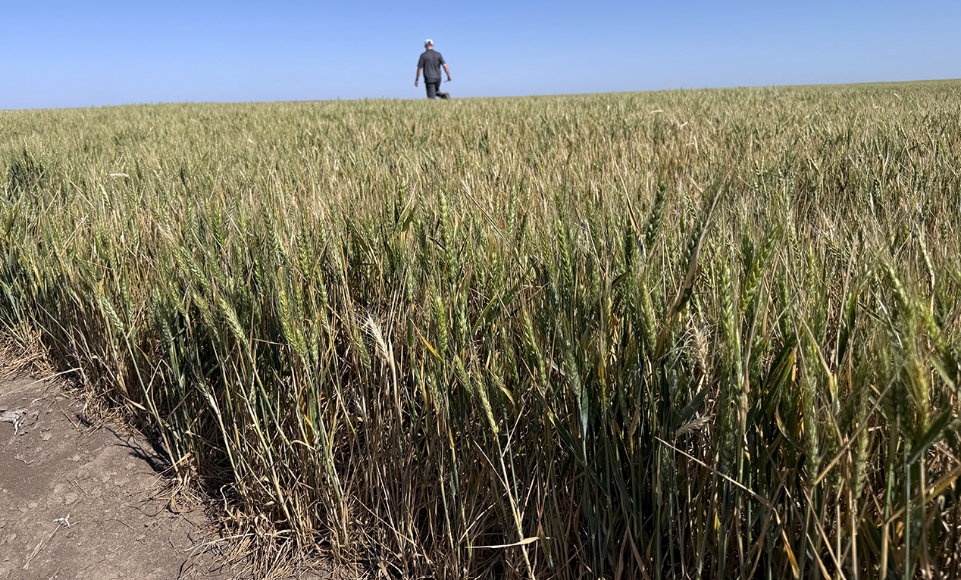
“We did hear disappointment in the outcome of this year’s crop because of ongoing drought, but we also consistently heard that if it hadn’t been for genetic and operational improvements made by breeders and growers over the last few decades, the impacts would have been much worse,” Olson said. “For me, this highlighted the importance that technology and innovation play in promoting resilience in production and our growers’ livelihoods.”







