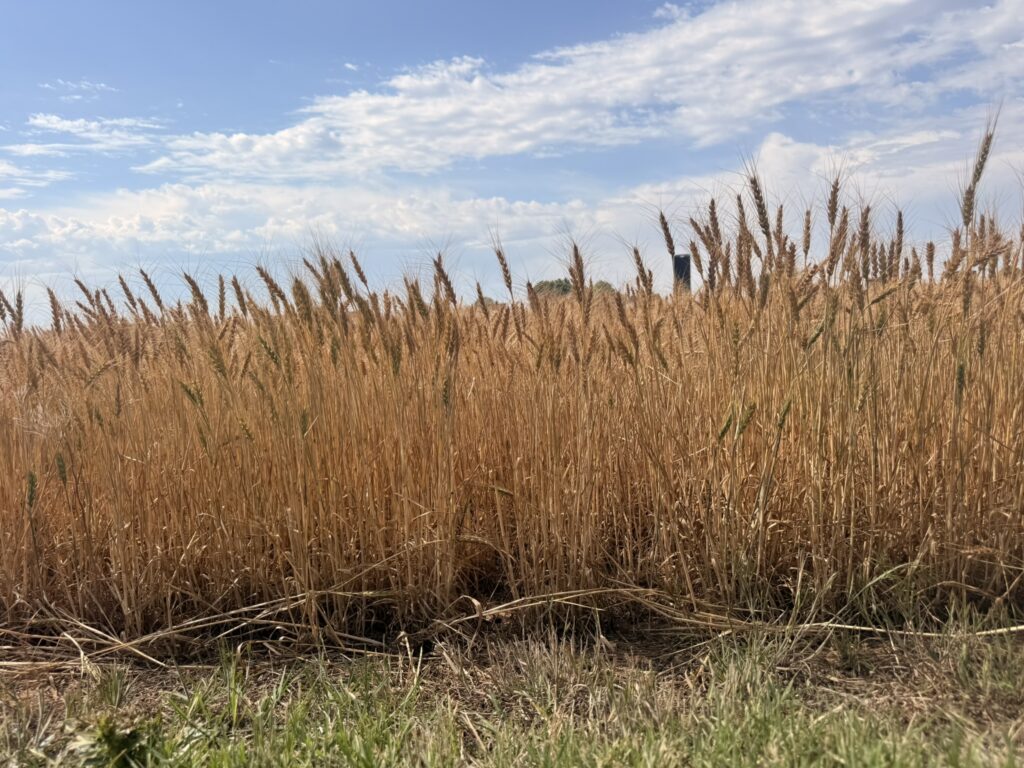
Despite persistent drought and late-season weather conditions, the regional wheat crop is demonstrating remarkable resilience as the harvest progresses across Oklahoma. Producers are discovering that modern grain varieties are yielding surprising results, proving that strategic management and advanced genetics can mitigate severe environmental stress.
Surprising Yields Across Oklahoma
In a recent conversation, Bayer WestBred’s Lance Embree and Farm Director KC Sheperd discussed how the crop has fared. While many producers faced a challenging growing season, the initial harvest data reveal a much more optimistic picture than initially anticipated, particularly in the north-central and central regions of the state.
According to Embree, the areas where the wheat managed to survive the prolonged drought are showing unexpected strength. Yield reports near Enid are reaching into the mid-60s, with some dryland fields remarkably touching the mid-70s. Additionally, test weights are holding steady, consistently landing in the 60-63-pound range.
“Really surprised given everything this crop had to deal with that it’s able to finish out as strong as it is,” Embree noted. “Through my career, I’m always amazed at just how resilient of a crop that wheat is, and hence why we grow it in the plains.”
The Role of Variety Selection in Drought Mitigation
The success seen in certain fields highlights the continuous improvement in wheat genetics. WestBred has intentionally shifted its portfolio to offer distinct varieties tailored to regional challenges, moving from a western-focused set to an eastern-focused one.
- Western Sets: Developed with a primary focus on extreme drought tolerance and resistance to viral threats, rather than foliar diseases.
- Eastern Sets: Positioned to be more offensive, incorporating defensive characteristics to combat fungal diseases prevalent in wetter environments.
This season, the western varieties—designed specifically to handle intense drought stress—performed exceptionally well when tested in central and eastern Oklahoma.
“What I’m seeing is, we’ll test those products across both areas,” Embree explained. “Those western products, where they’re able to handle drought stress a little better than our typical, say, eastern-type products, are showing up really well in those central and eastern sets. So, not a big surprise, it’s just kind of a testament to the year that we put those varieties through.”
The weather conditions in central Oklahoma closely mirrored those of arid West Texas or Western Oklahoma, allowing these drought-tolerant varieties to truly excel.
Disease Management: Lessons from a Unique Winter
The disease pressure this year brought some unexpected surprises. While stripe rust is often a primary concern, this season saw a higher prevalence of leaf rust appearing late in the cycle, alongside significant powdery mildew.
The rise in powdery mildew surprised many producers who typically associate the disease with wet conditions. Embree explained that a very mild winter allowed a large inoculum of powdery mildew to build up. Once the spores were established, it required very little moisture to activate them.
“If I saw any disease in the central and east that was an issue—which is really surprising in Oklahoma—it’s powdery mildew,” Embree said. “But I see that a lot in Texas, and so what I told people, we had a Texas winter in Oklahoma, and that’s what led to the situation of why we had so much powdery mildew.”
To counter these pressures, many producers relied on built-in variety resistance or timely fungicide applications.
“In a lot of instances, guys are willing to back off of a variety that maybe doesn’t have the best disease control, but it’s got exceptional top-end yield,” Embree observed. “The reason they’ll do that is because they can manage that disease with a fungicide.”
Conversely, as the harvest moves further west, the primary disease threat shifts from fungal issues to Wheat Streak Mosaic, a viral disease that cannot be treated with chemicals. Managing this threat requires relying heavily on genetic resistance within the variety or cultural practices, such as strictly controlling volunteer wheat prior to planting.
Planning for the Next Season: Looking at the Long-Term Average
While this season provided valuable data on how varieties handle intense drought and specific pest pressures like the Hessian fly, experts caution against making drastic changes based on a single outlier year.
Embree compares farming to a book, in which each year represents a completely different chapter. Because every year presents a unique set of weather and disease variables, the most effective strategy is to look at the law of averages rather than reacting solely to the immediate past.
“There’s things we can learn from this, such as how some of these varieties held up through drought stress or maybe some really intensive Hessian fly pressure,” Embree said. “I guess my caution would be to the producers out there—and they all know this—is you don’t want to try to adjust your farming practices to what you experienced this year. Because next year will probably be totally different.”
When selecting varieties for the upcoming planting season, producers are encouraged to look at stable performance over a two- to three-year period across multiple local trials rather than focusing on a single season’s performance.
“I wouldn’t just focus in on this one year,” Embree advised. “I’d be looking at what varieties have been stable over the last two to three years in multiple trials in my area. You know, what’s been performing well on my farm with my production practices and the things I like to do.”
Decisions should align with specific operational goals, whether that means a dual-purpose grazing variety, a grain-only system, or early-planted options that require robust Hessian fly protection. Consulting with neighbors and local crop consultants can also provide a valuable perspective on what is consistently performing well in a specific area.
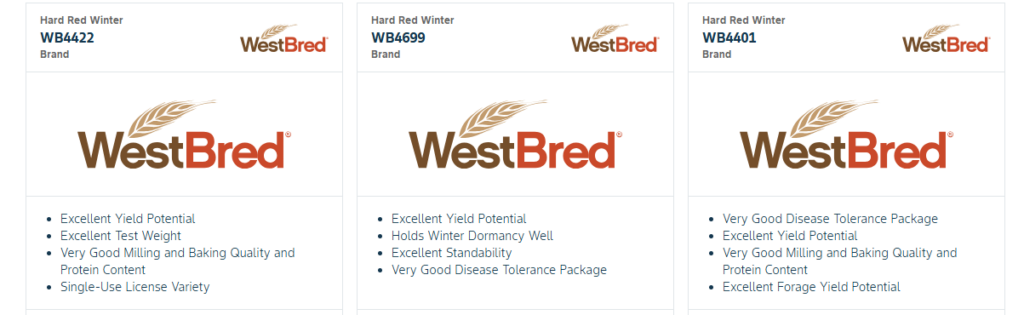
Producers interested in reviewing local trial data, analyzing detailed product profiles, or viewing agronomic ratings for WestBred varieties can access comprehensive resources at WestBred.com. The platform also provides direct contact information for regional experts, including Lance Embree and territory agronomist Mark Lubbers, to assist with specific variety selection questions.