

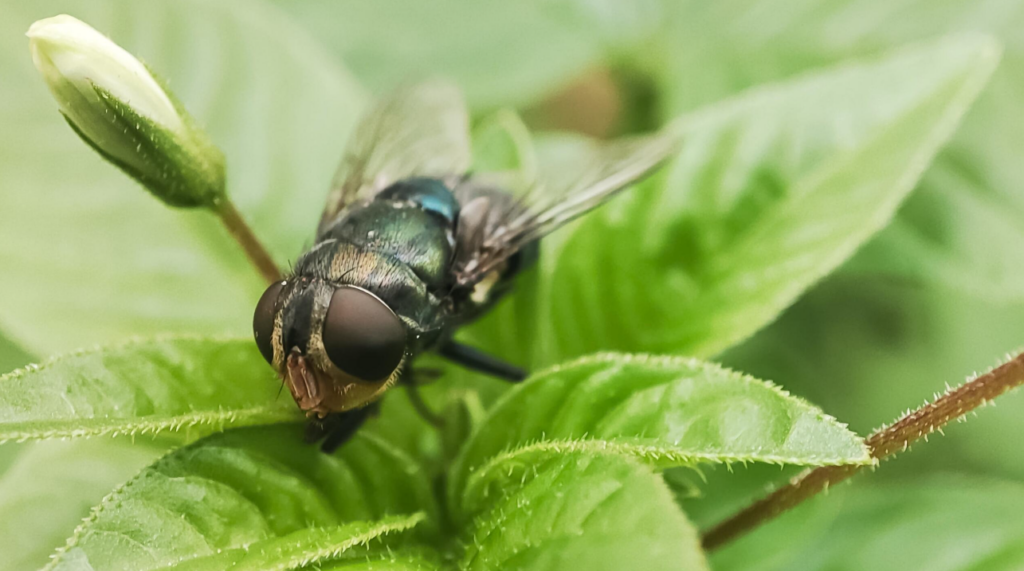
New World screwworm is the larval stage of a fly that lays eggs in wounds of living animals, even very small wounds like tick bites or scratches, in warm-blooded animals. The flies are drawn to fresh blood for laying their eggs. After hatching, larvae burrow into living tissue, causing painful, expanding wounds that may become infected and can be fatal if not treated. Cattle, horses, small ruminants, wildlife, pets, and occasionally people can be affected. A native to North and South America it was eradicated in the United States in 1982.
New World screwworm is not currently present in the United States, but the northward movement of cases in Mexico has increased concern for cattle producers. USDA-APHIS reports that the U.S. remains free of New World screwworm, while cases in Mexico and Central America continue to be monitored closely. Recent detections near the U.S.-Mexico border reinforce the need for awareness, rapid reporting, and practical prevention. The map below is updated as new information is available and can be found here.
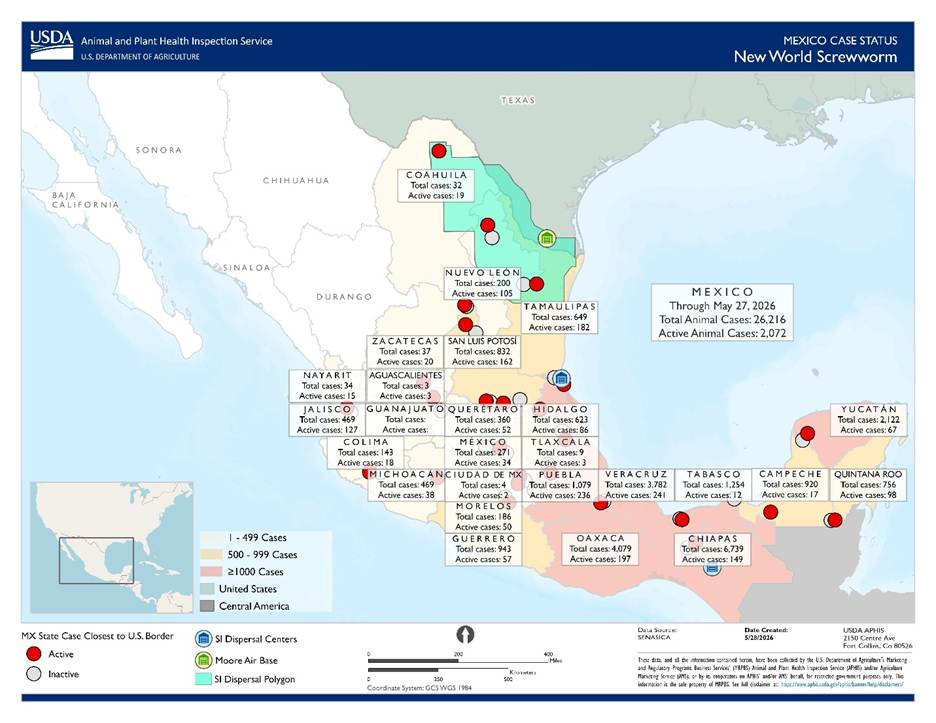
Oklahoma State University Extension livestock entomologist Dr. Jonathan Cammack emphasizes that Oklahoma and the U.S. are not currently experiencing screwworm infestations, but producers should know what to watch for. OSU College of Veterinary Medicine/OADDL resources also stress that early recognition, accurate diagnosis, and prompt reporting are essential.
What to Look for in Animals
- Irritation or discomfort
- A smell of death or decay coming from a living animal, particularly around a wound or natural body openings
- Open wounds or sores, that may be oozing or weeping
- Wounds that have become colonized by maggots
Prevention starts with good wound management. Inspect cattle regularly, especially newborn calves, cows after calving, bulls after injury, and cattle following processing, branding, dehorning, castration, or predator injury. Treat wounds promptly, control other flies, and avoid unnecessary animal movement if screwworm is suspected. Do not try to quietly manage a suspected case. Contact animal health officials at the Oklahoma Department of Food and Forestry so larvae can be collected and identified and the appropriate response can begin.
Other Useful Resources
- The Oklahoma Department of Agriculture, Food and Forestry partnered with OSU Extension to host a workshop training responders on how to detect and control the dangerous livestock pest. Learn why ranchers, veterinarians, and agriculture leaders are taking the threat seriously on SunUpTV from May 9, 2026 at https://www.youtube.com/watch?v=3Id1U26ekBk&t=5s
- OSU Extension New World Screwworm page, Dr. Jonathan A. Cammack contact and resources. https://extension.okstate.edu/programs/livestock-entomology/new-world-screwworm-info
- OSU Pest E-Alert by Cammack: Oklahoma history, signs to watch for, prevention, and key takeaways. https://extension.okstate.edu/e-pest-alerts/2025/screwworm
- OSU College of Veterinary Medicine/OADDL newsletter note: emphasizes early recognition, diagnosis, and prompt reporting. https://oaddl.okstate.edu/site-files/documents/newsletter_fall_2025_v4.pdf
- Dr. Rosslyn Biggs, OSU Extension beef cattle specialist, shares important information about the newly approved treatment for New World screwworm on SunUpTV from December 20, 2025 at https://www.youtube.com/watch?v=9b7yKXeS870&t=21s







