

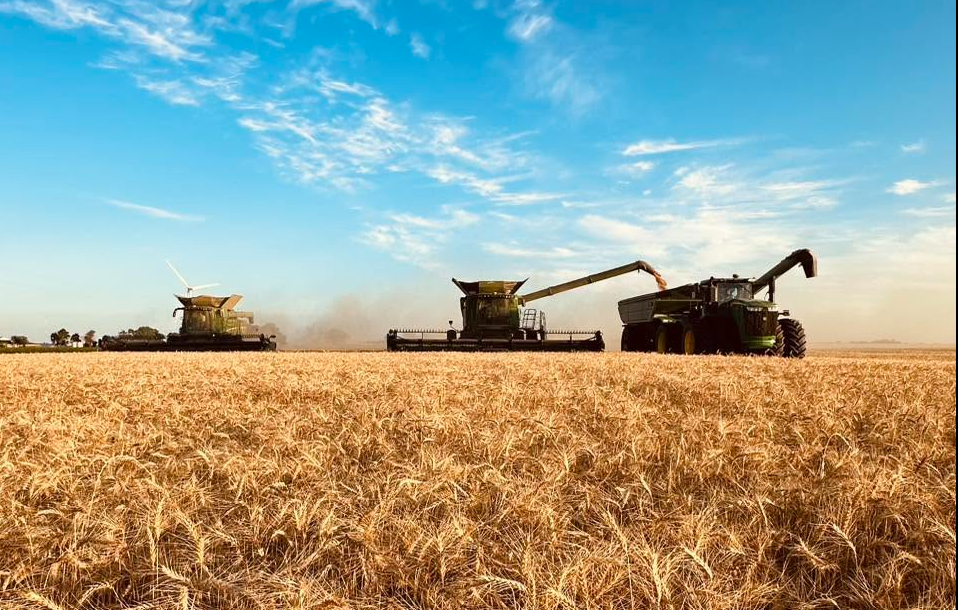
The Oklahoma wheat harvest is moving at a rapid pace, but a combination of low harvested acres, severe drought stress, and recent stalling rainfall is defining the 2026 season for producers and grain elevators across the state.
In the June 9 crop update from the Oklahoma Wheat Commission, Dave Deken reports from Kingfisher County on the complex dynamics shaping this year’s winter wheat crop. The update highlights a season marked by rapid progress on fewer acres, mixed regional yields, and the resilience of custom harvest crews pushing north.
Low Harvested Acres and Export Shifts
While grain quality remains high, grain elevators are experiencing significantly lower intake volumes than originally anticipated. Ladd Lafferty, president of Wheeler Brothers Grain, notes that while individual yields are tracking close to pre-harvest expectations, overall bushel intake is down due to a lack of harvestable acres.
“At the end of the day, it is the acres. The acres weren’t there, the harvested acres,” Lafferty says. “Whatever the hand you’re dealt, you have to work with it. So, that’s the way we do.”
Lafferty also indicates that much of the anticipated wheat crop from central and western Oklahoma has already been delivered to elevators. On the market side, a recent sell-off has dropped hard red winter wheat prices by over a dollar a bushel, which has started to generate renewed interest on the export side despite a challenging global program.
Crop Condition and Harvest Progress Discrepancies
The latest Crop Progress report from the USDA National Agricultural Statistics Service (NASS), published on June 8, underscores the severe environmental toll on the crop. NASS rates Oklahoma winter wheat conditions at:
- Very Poor: 29%
- Poor: 33%
- Fair: 29%
- Good: 8%
- Excellent: 1%
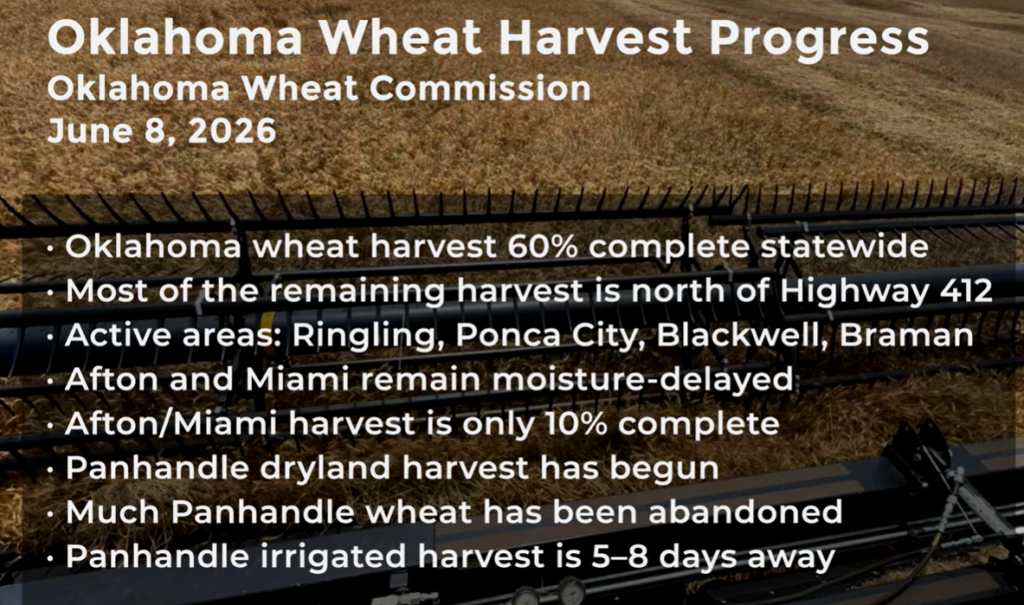
While NASS reports the crop as fully headed and 44% harvested, data from the Oklahoma Wheat Commission suggests the state is even further along, estimating harvest at closer to 60% complete.
The remaining harvest is largely concentrated north of Highway 412. Progress varies significantly by locality:
- North of Highway 412 (Ringling to Ponca City, Blackwell, and Braman): Clean-up is roughly 60% complete overall.
- I-35 Corridor (Blackwell to Braman): Harvest sits at roughly 30% complete, with producers waiting for clearer windows.
- Northeast Oklahoma (Afton and Miami): Heavy moisture delays have restricted harvest progress to just 10%.
- Oklahoma Panhandle: Some dryland wheat has been cut, but a significant portion of the crop has been abandoned entirely. Irrigated wheat harvest in the Panhandle remains five to 10 days away.
Yield Ranges and Test Weights
Statewide yields are closely aligned with the USDA projection of 28 bushels per acre, though regional management and moisture conditions have created a wide spread.
South of Highway 51, many yields are trapped in the 15- to 25-bushel range. However, productivity strengthens north of Highway 51 toward the Kansas border, where fields from Okeene to Perry are yielding from the mid-30s to the mid-50s per acre.
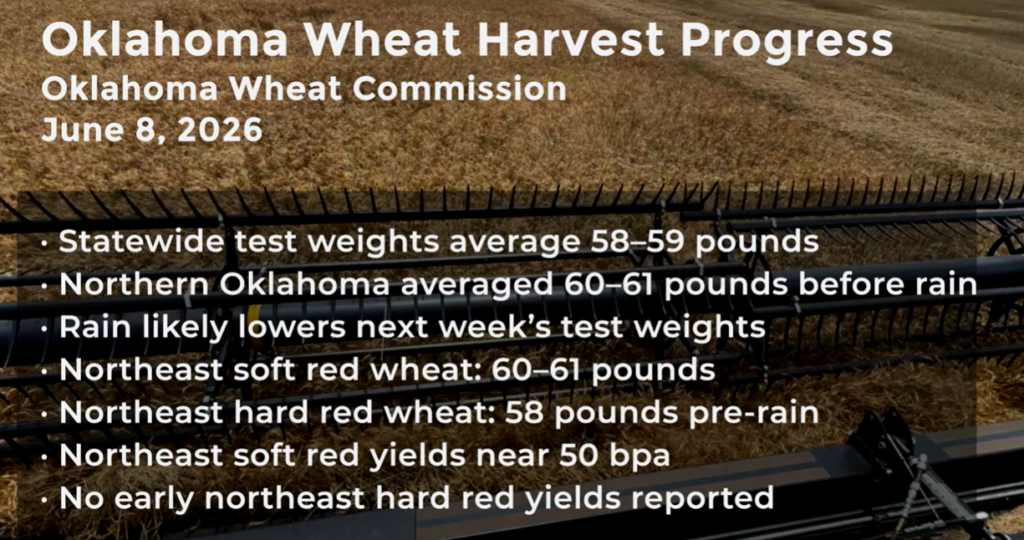
Test weights across the state are averaging 58 to 59 pounds per bushel. Prior to recent rain events, northern Oklahoma boasted test weights of 60-61 pounds, though these numbers are expected to decline in subsequent reports due to moisture exposure. In the northeast, early-harvested soft red winter wheat weighed in at 60 to 61 pounds per bushel, with early yields hitting 50 bushels per acre, while local hard red winter wheat averaged 58 pounds prior to the rains.
Rainfall Totals and Intensifying Drought
Recent weather patterns have delivered a stark contrast between localized heavy rainfall and a long-term, deep-seated drought.
According to the Oklahoma Mesonet, Bristow recorded over 7 inches of rain since Thursday, June 4, with Granfield in southern Oklahoma following. While these rains temporarily slowed harvest operations statewide and improved topsoil conditions to more closely resemble a typical March profile, critical dry pockets remain. At the two-inch and four-inch soil moisture levels, a persistent dry slot extends through Arnett, Watonga, and Elk City.
The June 4 U.S. Drought Monitor confirms that 81% of Oklahoma remains in drought status. The breakdown highlights the extreme conditions accelerating crop maturity and shrinking yields:
- Moderate Drought: 35%
- Severe Drought: 10%
- Extreme Drought: 29%
- Exceptional Drought: 9% (reflecting an upward tick)
Family Teamwork on the Harvest Trail
The fast-moving crop forced many western Oklahoma producers to finish their home acres ahead of schedule and to seek custom-cutting opportunities farther north.
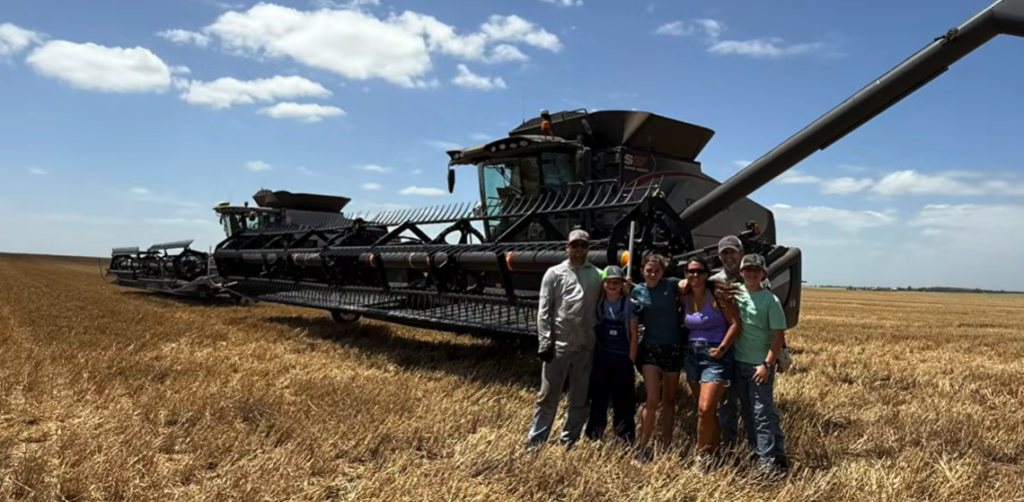
In Beckham County, a brother-and-sister harvest duo, Sarah and Jake, wrapped up their family’s crop in just five days using two combines. Out of their total acreage, they were only able to harvest 500 acres; the remaining ground was either unharvestable due to drought or grazed out entirely.
Seeking to maximize the season, they loaded up their equipment and traveled three hours north to Alfalfa County to harvest thicker fields near Amorita. Assisted by their father during the initial move of equipment, the duo finished their contracted fields over the weekend.
“One of the things that I love most about it is the teamwork behind it,” Sarah says. “It takes everybody working together to accomplish one deal, a goal, and then we’re on to the next. And it’s really cool to get to work with my brother.”
The team remains on the road looking for additional fields before returning to western Oklahoma to manage their summer crops. Once the harvest trail ends, domestic farming priorities resume. As Jake noted, the focus will pivot immediately to moisture-dependent field work: “Hopefully, it’ll start raining because I still have 1,100 acres of cotton I have to plant as soon as it rains.”
This update brought to you by the Oklahoma Wheat Commission.







