
In today’s Beef Buzz, senior farm and ranch broadcaster Ron Hays features comments from Dr. Derrell Peel, who shares his perspective on ongoing drought conditions, the market impact of New World screwworm, and what the continued U.S.–Mexico cattle border closure could mean for the beef industry.
Drought Continues to Weigh on Herd Expansion
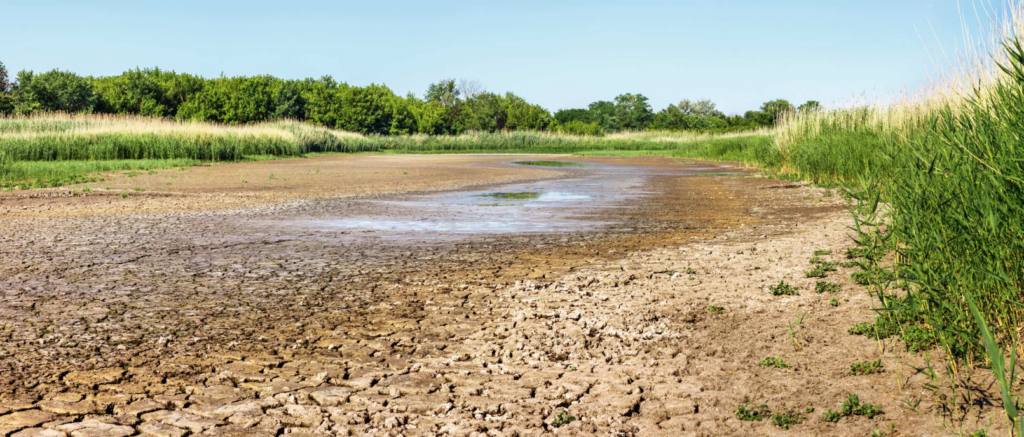
Peel said drought conditions have improved in some parts of the country, but many cattle producers are still facing serious forage concerns during a critical time of year. “If you look at the whole U.S. from the standpoint of the drought monitor… we’ve seen a little bit of improvement in drought conditions around the country, but there are a lot of areas that are still very, very droughty, very threatened,” Peel said.
He noted that while some regions have received beneficial rainfall, the broader outlook remains uncertain, especially for pasture and hay production. “We’re still in the early part of the growing season from a pasture and hay standpoint, and so it’s still pretty iffy in a lot of places,” Peel explained. “We’ve gotten some rain in some areas—that’s helpful—but all in all, it’s still a little bit of a concern as we go forward.”
Peel added that although climatologists say El Niño is now firmly in place, its full impact on weather patterns may not arrive until later in the year. “El Niño is now pretty firmly in place, but it really won’t start taking hold of our weather conditions probably until late in the summer or into the fall,” he said.
That uncertainty is making producers think twice about retaining replacement heifers and beginning herd rebuilding. “It’s providing more caution about any attempts we might be thinking about retaining heifers,” Peel said. “It’s going to really dampen those intentions. Producers that might have been thinking about doing it now have some reason to reevaluate their forage situation.”
Screwworm Is a Management Issue—Not a Market Mover
Despite heavy media attention surrounding New World Screwworm, Peel said he does not expect it to significantly impact cattle or beef markets. “New World screwworm really doesn’t have much impact on either the supply or the demand fundamentals of cattle and beef markets,” Peel said.
While affected producers face serious challenges, he emphasized that the issue is not large enough to move national markets. “It’s going to have a big impact on the people directly affected, but like a lot of disasters, it’s actually not a big enough deal to impact the overall market broadly,” he said.
Peel said markets have reflected that assessment so far. “We haven’t seen a whole lot thus far from the standpoint of cattle prices or beef prices directly as a result of the screwworm thing.”
Instead, he described screwworm as a costly management challenge. “It’s just a big management headache, and it will be very costly for the individuals involved, as well as for the public sector, but really not a major market issue.”
He also stressed that consumers should not be worried about food safety. “It’s not a food issue. It’s a pest, not a disease. It doesn’t impact the meat at all,” Peel said. “There’s no reason for consumers to have any concerns about this from either a health standpoint or from an economic standpoint—it shouldn’t impact beef prices.”
Border Closure with Mexico Remains a Wild Card
Peel also discussed the ongoing closure of feeder cattle movement across the U.S.–Mexico border, calling it an issue that remains unresolved. “We closed the border to Mexican cattle about 20 months ago at this point, mostly, and that’s an ongoing question about whether that will stay closed and for how long,” Peel said.
He said the recent screwworm detections in the United States add another layer of uncertainty to that discussion. “Now that the screwworm fly is in the U.S., Mexico has closed the border to livestock going south out of the U.S.,” he said.
Peel noted that Mexico’s closure to U.S. livestock exports is not especially significant from a trade perspective. “We don’t export very many cattle to Mexico most of the time, and we certainly haven’t in the last two or three years,” he said.
However, he believes the broader significance is political rather than economic. “It really emphasizes the fact that there’s now a continuing conversation about whether the border should remain closed either direction or both directions,” Peel said.
Ultimately, Peel believes science will inform the decision, but politics may determine timing. “It’s partly a science issue, but it’s really going to be a political decision about when to open the border,” he said. “I wouldn’t be too surprised if it happens sometime relatively soon, but that’s just a guess on my part. I have no idea what they might actually decide.”
The Beef Buzz is a regular feature heard on radio stations around the region on the Radio Oklahoma Ag Network and is a regular audio feature found on this website as well. Click on the LISTEN BAR above for today’s show and check out our archives for older Beef Buzz shows covering the gamut of the beef cattle industry today.