

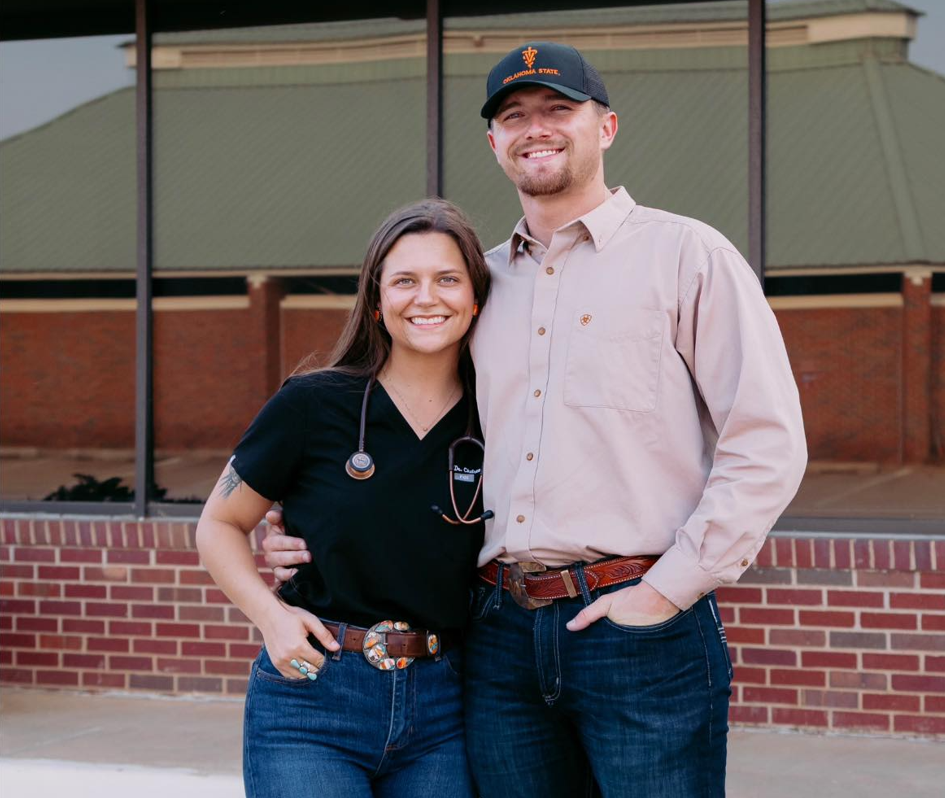
A new mobile large animal veterinary services practice is preparing to serve Oklahoma livestock producers, addressing what many in the industry see as a growing shortage of veterinarians willing to make farm and ranch calls. Speaking with associate farm reporter Carli Davenport, recent Oklahoma State University graduate Dr. Chelsea Williams explained why she launched Pleasant Valley Veterinary Services and why she believes ambulatory veterinary care is more important than ever for rural Oklahoma.
Answering a Growing Need in Rural Oklahoma
Williams said the decision to start her own practice came after realizing that many traditional veterinary clinics could not support the amount of field work she wanted to do. “There is a very large need for large animal veterinarians in general, but specifically ones that are willing to come out to the farm,” Williams said.
While searching for employment opportunities after veterinary school, Williams received offers from several mixed-animal practices. However, she found that many clinics needed veterinarians to spend most of their time inside the clinic rather than traveling to farms and ranches.
“My biggest thing is, they would tell me about how they would lose money if I were out in the field versus having me in the clinic, which is absolutely true,” she said. They didn’t say it because they don’t want somebody out in the field. It’s just from a business side of things, you do lose a lot of money being out of a clinic.”
For Williams, the issue became less about business economics and more about serving livestock producers who often struggle to find veterinary care on-site. “My whole idea going into business was I wanted to be able to help the people that don’t have a vet that can come out to them,” she said. “There wasn’t a single clinic that would let me be in the field as much as I really feel like I should be.”
After discussions with mentors, Williams began seriously considering opening a practice focused entirely on mobile large animal medicine. “There’s a very large gap in rural medicine when it comes to your producers and your vets sometimes,” Williams said. “I feel that I’m supposed to be here to fill part of that gap.”
From Veterinary Student to Practice Owner
The need became even more apparent after Williams and her husband moved to a rural community while she was attending veterinary school. “Absolutely every single one of them asked if I would be doing large animals when they found out I was in vet school, and if I would be staying around,” she said. “I knew that there was a need immediately right where I was, and then the more that I looked into it, it’s a need across the entire state.”
Williams said personal experience also reinforced her commitment to a mobile practice model. She recalled a situation involving one of her own horses that required veterinary attention but could not easily be transported. “I personally had a horse go down last year, and he was very neurologic,” Williams said. “I couldn’t haul him, even if I wanted to, and it took me a long time to find a vet that would come out to me.”
That experience helped shape her philosophy toward veterinary care. “It hits home a little bit being somebody that’s been in that position of really needing a vet to just make the drive,” she said.
Although she hopes to eventually operate a brick-and-mortar clinic, Williams believes mobile veterinary services will remain a central part of her career. “I still want to devote certain days to being out on the road because I do think it’s an important aspect of veterinary medicine that needs a few more people in it,” she said.
Producers Need Access Beyond Business Hours
Even before officially opening, Williams said producers have already been contacting her and expressing appreciation for the availability of after-hours and emergency care. “Time and time again they will tell me that they’re so excited that somebody is willing to take a call after 5 p.m. and willing to pick up the phone on a Saturday or a Sunday,” she said.
For livestock producers, emergencies rarely occur only during normal business hours. “For them, this is their life, and it doesn’t stop just because it’s no longer business hours,” Williams said.
She added that emergency availability may be one of the biggest needs producers have communicated so far. “I think what I’ve heard the most is needing somebody that’s willing to show up, even when it is in the middle of the night or on a weekend,” she said. “I would say being available for emergencies has been a really big thing with the people I’ve been speaking with.”
Pleasant Valley Vet Services Set to Open June 15
Pleasant Valley Veterinary Services plans a soft opening on June 15, and the books are currently open to new clients. Williams said she is still waiting on some equipment and supplies to arrive, but emergency services and many routine appointments will be available immediately. “By June 15, we will be open,” Williams said. “I will have most things that I need for your most common large animal emergencies.”
She noted that some specialized appointments may need to be scheduled further out while additional supplies arrive, but the practice is already accepting bookings.
Dr. Williams can be reached at 405-590-5409 or by visiting their Facebook page here.
For Williams, the goal is simple: help bridge the veterinary care gap facing Oklahoma livestock producers by bringing veterinary services directly to the farm and ranch when they are needed most.







