
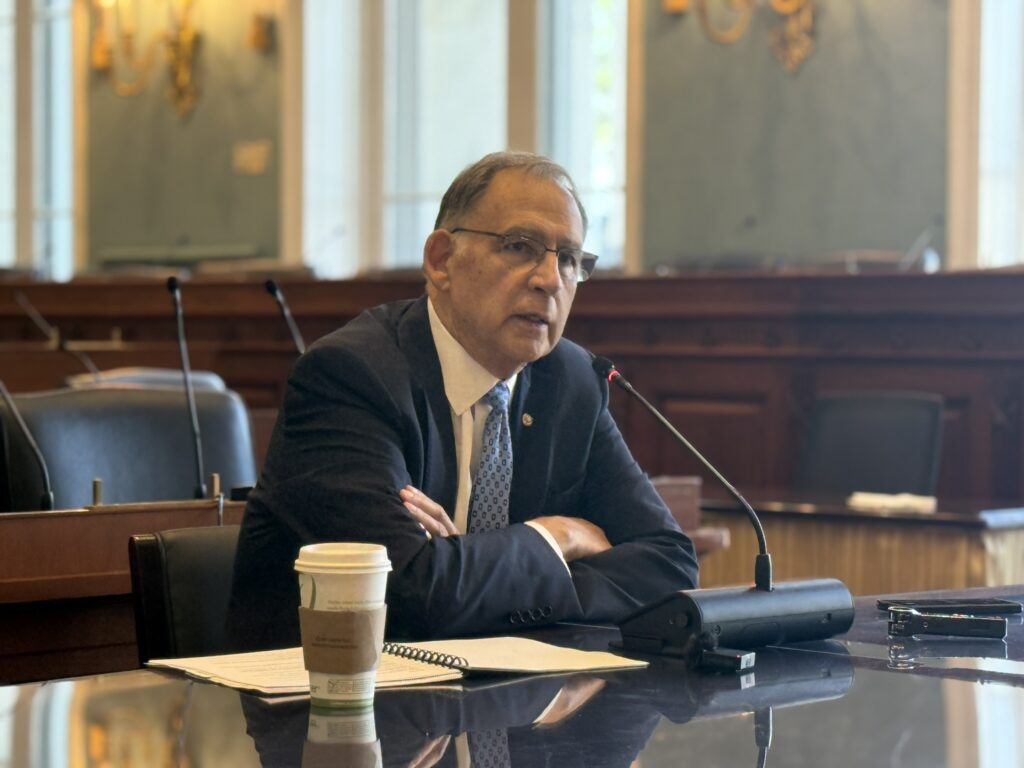
The U.S. Senate Committee on Agriculture, Nutrition, and Forestry is moving forward with a discussion draft for Farm Bill 2.0, formally titled the Agricultural Act of 2026. Introduced by Chairman John Boozman (R-AR), the legislative framework is designed to deliver stability, modernization, and long-term security to rural communities and the families who safeguard the nation’s food supply.
“We can all agree that we must take steps to help America’s farm families, and one of the most important ways we demonstrate that commitment is by passing a bipartisan farm bill,” Boozman said. “Congress delivered historic improvements to farm programs through the Working Families Tax Cuts, and we’re continuing to expand upon that success with bipartisan priorities that strengthen the American farm economy, increase investments for rural communities and foster a more resilient agricultural sector. I’m proud to put forward this discussion draft that reflects the input and priorities of Republicans, Democrats, and most importantly, rural America.”
The legislation leverages recent fiscal investments to reinforce the baseline safety net while simultaneously expanding resources for rural infrastructure, conservation, technological innovation, and international market development.
Reinforcing the Safety Net and Conservation for Producers
A primary pillar of the legislation centers on stabilizing risk-management tools for traditional farmers, ranchers, and specialty-crop producers. Building upon foundational investments from the Working Families Tax Cuts, the framework strengthens commodity programs, dairy margins, crop insurance, and standing disaster assistance. Recognizing the distinct challenges facing specialty crop operations, the bill expands tailored options to improve financial predictability across diverse production sectors.
In tandem with financial risk tools, the framework introduces updates to federal conservation programs designed to simplify execution and broaden local management flexibility:
- New Conservation Initiatives: The framework establishes two new programs—the Forest Conservation Easement Program and the State Conservation Assistance Program—designed to optimize voluntary land-management partnerships.
- Conservation Reserve Program (CRP) Calibration: The bill adjusts CRP guidelines to expand practical grazing options, providing producers with critical management flexibility during periods of severe drought.
- U.S. Forest Service Streamlining: Environmental review processes are updated to enable the Forest Service to execute essential forest health management projects more efficiently in partnership with regional partners.
The legislation also addresses supply chain and sector-specific priorities, bolstering “Buy American” requirements within federal nutrition programs, codifying the United States Department of Agriculture (USDA) Office of Seafood, and expanding credit options for commercial fishing operators.
Investing in Rural Utilities, Infrastructure, and Health Systems
The Agricultural Act of 2026 focuses heavily on strengthening the economic and physical infrastructure of rural communities. To address challenges in domestic processing, the legislation provides new funding opportunities and clearer regulatory guidance for small-scale meat and poultry processors and renderers, thereby encouraging localized processing capacity.
Infrastructure improvements are further accelerated by expanding community access to USDA Rural Development programs and private capital markets. These financing mechanisms are directed toward vital public services, enabling rural towns to improve or establish healthcare facilities, educational institutions, childcare centers, and workforce development initiatives.
Physical utility networks receive significant upgrades under the legislative framework. The bill strengthens and modernizes USDA connectivity programs to broaden high-speed broadband access across underserved regions. Concurrently, it increases targeted financing, technical assistance, and water quality testing and filtration to secure dependable drinking water systems for rural households. The framework also expands funding for the Farm and Ranch Stress Assistance Network, integrating accessible mental health resources directly into rural communities.
Positioned for the Future: Innovation, Export Expansion, and Land Security
To maintain global competitiveness, the policy framework modernizes farm loan structures, providing younger and beginning farmers with the capital reserves required to enter the industry. Research and technological innovation receive direct support through a newly established specialty crop mechanization and automation research program backed by dedicated funding.
The bill utilizes investments made available through the Working Families Tax Cuts to more than double the funding baselines for both the Market Access Program (MAP) and the Foreign Market Development (FMD) Program, significantly expanding export opportunities for American commodities. It also extends agricultural research and extension funding to address emerging or previously neglected sector priorities, while creating a formalized regulatory pathway to accelerate the development and use of innovative plant biostimulants.
Finally, the legislation implements measures to secure domestic agricultural assets and stabilize critical supply chains. The framework establishes stricter foreign ownership disclosure requirements and enhances federal enforcement capabilities to monitor and protect American agricultural land from foreign influence.
Questions from the Press Gallery: Timelines and the 60-Vote Threshold
During a press call following the release of the discussion draft, members of the media pressed Chairman Boozman on the specific logistics, timelines, and bipartisan negotiations necessary to clear the chamber.
What is the ideal timeline for moving this discussion draft through the committee and onto the Senate floor? Alex Thomas of the Arkansas Democrat-Gazette raised the critical question of timing. Boozman noted that the bill is now out for feedback from lawmakers and industry players. The baseline goal is to leave it open for review for a couple of weeks, allow members to digest it during the upcoming two-week recess, and then return to hold a committee vote before the August recess. Boozman emphasized that Senator John Thune is actively working to secure floor time for the agricultural package once it clears committee.
How confident are you that you can secure the 60 votes required to pass this through the full Senate, and what has been the nature of your conversations with Democrats like Senator Amy Klobuchar? Josh Baethge of Farm Progress focused on the legislative reality that any farm bill needs 60 votes to overcome a Senate filibuster. Boozman expressed optimism, noting that farm bills traditionally run past their initial deadlines, as the 2018 package did. He emphasized that agriculture is currently facing a generational economic crisis—marking the worst net farm income downturn in decades—which should incentivize both sides of the aisle to negotiate in good faith to protect producers.
Policy Concerns: Nutrition, Year-Round E15, and Emergency Aid
Why is year-round E15 authorization missing from this draft, and is Senator Thune leading a separate effort to address it? Additionally, will direct financial assistance for crop producers be included in the farm bill, or will it have to stand alone? Jeff Nalley of AgriPulse brought up two major points of friction for producers. Boozman clarified that he fully supports E15 and knows Congress realizes its importance for domestic demand, but the issue falls under the jurisdiction of the Environment and Public Works Committee, not Agriculture. Rather than blending it directly into this draft, the committee is following the House model of keeping the policy separate to ensure smoother passage. Regarding financial aid, Boozman stated that direct emergency bridge payments are desperately needed and should be at the top of the agenda, but they are better suited to an upcoming supplemental appropriations bill—which will likely include military spending and disaster relief—rather than the permanent farm bill structure.
Can you dumb this bill down for a non-agricultural audience? What are the two or three most consequential components of this text, and what matters most to row-crop farmers right now? Steve Brawner requested a simplified breakdown of the bill’s real-world impacts. Boozman explained that while 80 to 85 percent of the farm financial baseline was handled in the Working Families Tax Cuts, this bill focuses heavily on policy and credit modernizations. Specifically, current USDA loan caps are dangerously outdated, relying on data from 2012 rather than reflecting modern inflation and input costs. For row-crop farmers who are actively losing money on every acre in the ground, Boozman repeated that an immediate emergency bridge payment is their number-one concern, followed closely by the credit and loan cap adjustments detailed in this bill.
How will crop insurance provisions protect farmers from factors outside of their control? Brawner also asked about provisions tracking revenue losses. Committee staff member Coleman Garrison clarified that updates to the Crop Insurance title will help guard against steep market price fluctuations. These indemnities will provide price-based protections that operate entirely outside a producer’s operational control, specifically benefiting specialty crop sectors that are highly vulnerable to global market swings.
What wildcards do Republicans hold to find a compromise with Democrats on nutrition spending, given their pushback on SNAP cost shifts? Addressing the ongoing battle over federal nutrition programs, Nalley questioned how a compromise could be reached. Boozman joked that those negotiations are best left to private sessions, but insisted that both parties want to finalize a farm bill. Later in the call, Rachel Umansky-Castro of Bloomberg Government explicitly asked about Democratic concerns regarding potential delays and state-level cost shifts in SNAP quality control. Boozman countered that the provisions are not intended to reduce benefits or raise revenue from states, but rather to serve as administrative leverage. He noted that the program has suffered from sloppy oversight resulting in significant overpayments and underpayments, and the text introduces penalties to force states to administer nutrition funds more efficiently.
Oklahoma Impact: CRP Flexibilities and Broadened Infrastructure
How quickly can the proposed changes to the Conservation Reserve Program (CRP) be implemented to give drought-stricken producers the grazing flexibility they need during weather crises? Farm Director KC Sheperd brought the conversation home to the Southern Plains, noting that while recent rains have brought temporary relief, drought remains a dominant threat to Oklahoma cattlemen. Boozman turned to his grazing specialist, Coleman Garrison, to detail the rollout timeline. Garrison explained that the USDA inevitably requires administrative time to draft and implement new federal regulations after a bill is signed into law. If the legislative package is successfully signed into law by this winter, the agency should have the updated emergency haying and grazing rules fully operational ahead of the next summer drought cycle. Boozman added that they are simultaneously pushing USDA Secretary Tom Vilsack to maximize current administrative authorities to deploy immediate flexibilities.
Does the bill include measures to transition international food aid out of the State Department and into the USDA, and will that be a part of this final text? Brawner concluded the call by asking about proposed shifts in foreign food assistance programs. Boozman confirmed that the strategic goal is to transfer the jurisdiction of international food aid from the State Department to the USDA. He explained that these programs were originally created to help clear excess domestic agricultural inventory, and the USDA is far better equipped than the State Department to handle crop dynamics. While losing committee jurisdiction can cause political tension, Boozman noted that he is actively working with Senators Jim Risch, Jerry Moran, Jeanne Shaheen, and John Hoeven to smooth the transition and keep the provision embedded in the final version of the Agricultural Act of 2026.
Click HERE for legislative text.
Click HERE for a title-by-title summary.
Click HERE for a section-by-section.
Click HERE for an overview.