

The weaning period for beef calves prior to them leaving your place for the next production phase is a critical time that strengthens their future performance in terms of health, gains, and production efficiency. Calves are usually considered “weaned” if they have been off the cow for at least 30 days. With respect to longer weaning, research has suggested that calves weaned for a minimum of 45 days before shipping have significantly fewer cases of bovine respiratory disease and lower death loss rates than calves weaned for shorter periods. Those benefits continue through the rest of the beef supply chain. The market has historically rewarded producers selling weaned calves with market premiums as compared to prices for similar unweaned calves. But how do those premiums change if producers choose extended weaning periods?
A recent OSU study looked at this question using Oklahoma feeder cattle data collected at multiple auctions during 2020-2022. In addition to noting whether calves were weaned or unweaned, OSU Extension personnel documented how long those cattle had been weaned, as communicated from the auctioneer to buyers at the auction. Figure 1 illustrates the estimated weaning premium by 15-day increments as compared to otherwise similar unweaned cattle with respect to physical characteristics and management characteristics at those auctions. The premiums reported here are each relative to lots with calves weaned 0-29 days, as most cattle buyers consider those calves to be unweaned.
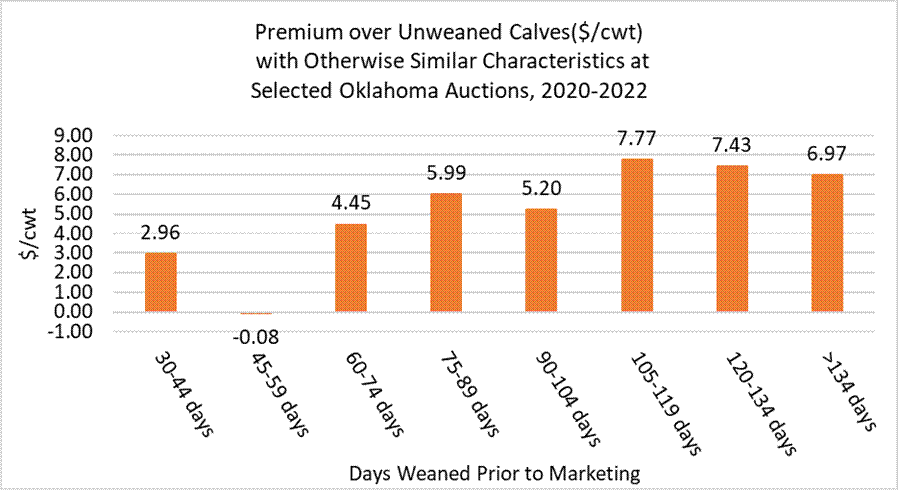
Figure 1.
An unexpected result in this data set is that calves weaned 45–59 days prior to sale did not receive prices that were statistically different from unweaned calves; that is, there was zero premium in this data set for those cattle. Aside from that, weaning premiums do generally increase as weaning length increases, with premiums ranging from $2.96/cwt for 30-44 days to $7.77/cwt for 105-119 days. Statistically speaking, the premiums from 60 days weaned to 104 days weaned are similar levels per hundred weight. Then, estimated weaning premiums take another jump up at 105 days, with premiums at similar levels through the >134 days category. Overall, the results indicate a positive relationship between weaning period length and feeder cattle prices in Oklahoma.
Why higher premiums for longer weaning periods? The premiums reflect buyer preferences for lower health and performance risks. Longer weaning periods provide more time for calves to recover from weaning stress, more time to develop stronger immune systems, and more time for feed bunk training. It is consistent with anecdotal indications from cattle buyers that longer weaning periods are a valuable way to manage health risks of purchased calves, especially for fall sales as weather fluctuations increase immune system stressors. While the standard weaning protocol in preconditioning programs has typically been 45 days, some programs have moved to 60-day minimum weaning protocols. Results here suggest that the market encourages that move and beyond. The stability of weaning premiums beyond 105 days suggest little additional effect on calf health risk beyond that.
Keep in mind that these estimates are revenue estimates only. The numbers here do not consider the associated costs for holding calves on the ranch longer. As with any management decision, pencil out the expected increase in revenue and the expected costs incurred as you consider alternatives.