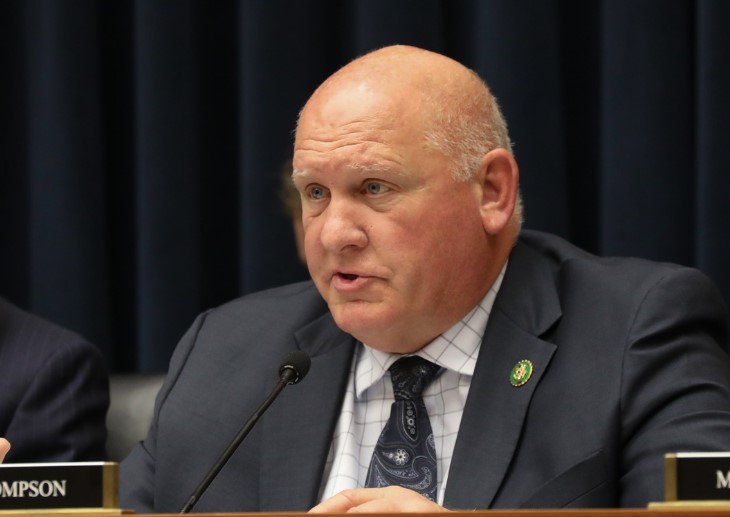
House Committee on Agriculture Chairman Glenn “GT” Thompson (PA-15) delivered the following opening statement at today’s full committee hearing, “To Review the Implementation of Farm Safety Net, Disaster, and Conservation Programs.”
Remarks as prepared:
Good morning, everyone, and thank you all for being here today. I would like to extend a special thanks to my friend, Under Secretary Fordyce, for coming before the Committee today to discuss the historic investments made in American farm policy through last year’s Working Families Tax Cuts Act.
I look forward to hearing your testimony as well as the chance to receive an update on the significant progress you and Secretary Rollins have made implementing the many provisions included in H.R. 1.
House Republicans fought hard to make those key investments to our conservation and farm safety net programs. Not because it was easy, but because it was extremely necessary.
For the first time in a generation, U.S. farmers and ranchers have an adequate farm safety net to fall back on in times of bad weather and market volatility, as well as new investment into our locally-led conservation programs.
Those of us who represent rural America know firsthand that times are tough in farm country. That is why the investments included in H.R. 1 were so critical. Without those, producers would still be waiting for an updated safety net.
Because of those investments, the farm safety net is now based on the current cost of production and recognizes the needs of modern agriculture. It is equipped to meet the moment, providing at least some degree of stability for an industry that has always faced a wide variety of challenges and uncertainty.
These updates include enhancements to ARC and PLC, boosted premium support across all levels of crop insurance coverage, and improvements to the Dairy Margin Coverage program—all of which have already been implemented due to the great work from Under Secretary Fordyce and his team.
Thanks to the work of this Committee, as we look to the future, access to commodity programs has been expanded through the historic opportunity for producers to add additional base acres to their operations. Changes to standing disaster programs such as the Livestock Indemnity Program and the Tree Assistance Program further bolster the tools available to producers in the face of predation or natural disasters.
Last summer, we also reinvested billions of dollars into conservation programs through H.R. 1. By increasing baseline funding by over 25%, conservation programs are now funded at over $8 billion per year. We know that locally-led, voluntary, incentive-based programs work, and this reinvestment will provide significant and increased support for most Title II programs, which are largely oversubscribed.
I look forward to hearing Under Secretary Fordyce’s insights on the implementation side of these critical programs, which we continue to champion and seek to make further improvements to through passage of the remainder of the farm bill.
While the updates in H.R. 1 were much needed across the board, we still have a job to do and must complete the remainder of a full, five-year farm bill authorization. The bipartisan farm bill passed out of the House earlier this year is over in the very capable hands of my good friend Senator Boozman, and just yesterday he released a discussion draft to move this process forward.
In the meantime, I am very much looking forward to hearing from Under Secretary Fordyce today on the progress made, as well as what we can expect moving forward with the remaining provisions from H.R. 1 that need to be implemented.