

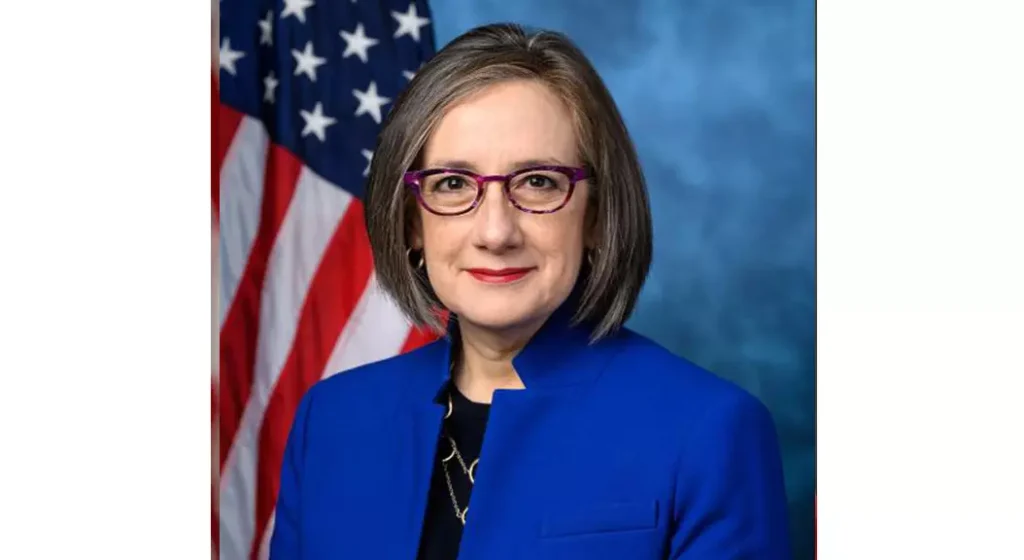
Today, House Agriculture Subcommittee on Forestry and Horticulture Ranking Member Andrea Salinas (OR-06) delivered the following opening statement at a subcommittee hearing titled “Reviewing Partnerships to Enhance Management of the National Forest System.” Watch the hearing here.
[As prepared for delivery.]
Thank you, Chairman Newhouse, for convening us today, and thank you to our witnesses for making the trip to discuss this timely topic.
I would especially like to thank Ms. Whitney, who comes to us from the Pacific Northwest, and who will shed some light, from the conservation perspective, on the importance of partnerships for effective forest management. I know her testimony and feedback today, along with the important perspectives of our other witnesses, will give this Subcommittee the information we need as we consider ways to leverage partnerships to improve forest management across our nation.
This hearing is happening against the backdrop of what experts warn will be one of the worst wildfire seasons in recent memory. From increased temperatures to a historically low snowpack and extreme drought conditions, we’re facing a perfect storm this year for an especially devastating wildfire season.
My home state of Oregon is nearly 50 percent forested and has 30 million acres of some of the world’s most productive forests. Our forests are at risk, but I am hopeful today’s hearing will prepare this Subcommittee to protect our forests, communities, and infrastructure.
Despite the threat wildfires pose to Oregon and much of the West, this Administration is taking steps that make us all less safe. Specifically, the reorganization of the Forest Service and the Administration’s consolidation of wildfire response under the Department of Interior are causing chaos in our communities and are creating more questions than answers about the future of forest management. These changes come at a dangerous time – right as wildfire season is taking hold with 2.7 million acres already burned nationwide, exceeding the 10-year average for both fires and acres burned to date.
On top of the Administration’s changes to the Forest Service, their work–or lack thereof–to reduce hazardous fuels in our forests is particularly alarming. From 2024 to 2025, the Forest Service treated roughly 25 percent fewer acres for hazardous fuels. And in Oregon, treatments were down 47 percent in that period. Treating hazardous fuels must be the absolute top priority of the agency: a forest that is vulnerable to wildfire cannot deliver the same ecosystem benefits as a treated forest. I’m talking about benefits like recreation opportunities, timber production, clean water, wildlife habitat, and carbon sequestration. The steep decline in hazardous fuels work since 2025, coupled with our changing climate, will only lead us to one outcome: catastrophic wildfires that decimate communities.
To make things worse, the Trump Administration’s fiscal year 2027 budget included an approximate 43 percent cut to the Forest Service budget, and that’s if we do not include the loss of funding as part of the proposal to move wildfire operations to the Department of the Interior. This budget proposal eliminates State, Private, and Tribal forestry; eliminates Forest and Rangeland Research; and cuts important programs like the Collaborative Forest Landscape Restoration Program that meaningfully improve the health and resilience of our forests.
At the same time the Trump Administration is calling for States and partners to take on more of the burden in managing our forests, they are cutting all support for this work. The collapse in hazardous fuels acres is just one obvious symptom of this misguided approach. This is not the time for removing opportunities for collaboration, active forest management, and progress. What we need is a path to move forward, to work together, and to invest in active forest management.
We know what effective forest management looks like. We need prescribed fires, hazardous fuels reduction, targeted thinning and timber harvests, and other practices that reduce wildfire risks to communities and restore balance to our forests after decades of overly aggressive fire suppression. We can prevent and combat wildfires without irreparably damaging the habitat and ecosystems we rely on to survive, or harming the private and industrial forests intended for harvest.
Partnerships are imperative to the success of active forest management. Tribes, states, local governments, universities, and private landowners all bring unique tools and expertise. Programs like Good Neighbor Authority, Service First agreements, and shared stewardship show what’s possible when we work together. Partnerships are the backbone of the National Forest System, and they are necessary to complete work on the ground that keeps our forests productive, healthy, and safe for the public to enjoy. They are even more important right now, considering the catastrophic changes the Trump Administration is making.
This Subcommittee has a responsibility to ensure the Forest Service can be effective, and we must work alongside one another to expand collaborative forest management, reinforce partnerships between all who care for our forests, and keep our focus squarely on protecting people, communities, drinking water sources, and ecosystems. I am eager to hear from our witnesses and to work together to chart a path forward that will help us ensure our nation’s forests are managed in a way that keeps them productive, resilient, and healthy.
Thank you, and I yield back.







