

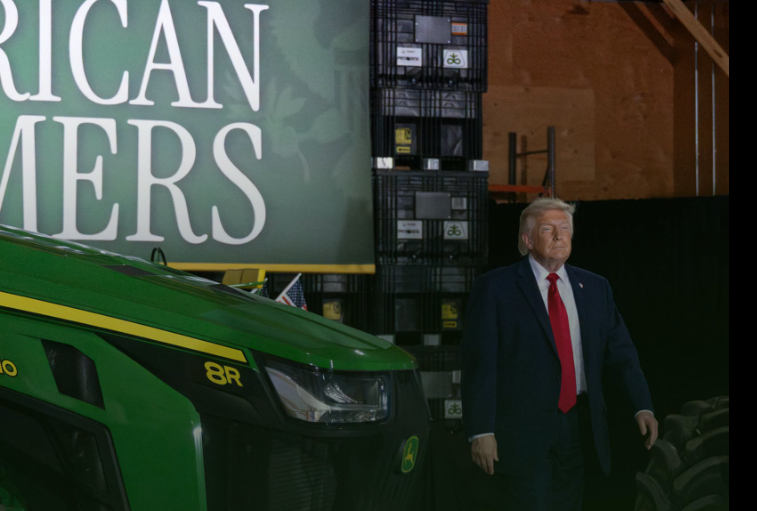
President Donald Trump hosted a gathering of agricultural leaders at the White House to launch a sweeping federal push targeting regenerative agriculture and crop protection alternatives. The event, aligned with the administration’s Make America Healthy Again (MAHA) initiative, introduced a series of executive directives and regulatory changes to modernize American farming and address human health and environmental concerns.
A central piece of the announcement came from Agriculture Secretary Brooke Rollins, who released the final Regenerative Feedstock Rule. The new rule directly links specific sustainable farming practices to the highly anticipated 45Z Clean Fuel Production Credit and low-carbon fuel standards. Under the framework, farmers who utilize voluntary conservation measures can significantly boost the credit value of biofuel feedstocks, such as soybeans. To facilitate this, the USDA issued an updated Feedstock Carbon Intensity Calculator, providing farmers with a standardized tool to quantify the carbon sequestration benefits of cover crops, reduced tillage, and precise nutrient management.
Secretary Rollins emphasized that the market-driven approach avoids Washington mandates, opening new premium avenues for producers while lowering input costs and improving long-term soil health and farm profitability. The American Soybean Association welcomed the announcement, noting that domestic biomass-based diesel capacity is projected to expand significantly to process an additional 140 million bushels of soybeans ahead of the upcoming harvests.
To accelerate these changes, the President’s executive order instructs the USDA to maximize funding for its existing $700 million regenerative agriculture pilot program and build public-private partnerships to aid adoption. Simultaneously, the order sets up a “grand prize challenge” through the EPA and the Department of Health and Human Services (HHS). This initiative tasks researchers with identifying cost-effective alternatives to conventional chemical crop protection, studying cumulative chemical exposure, and re-evaluating pre-harvest desiccation practices.
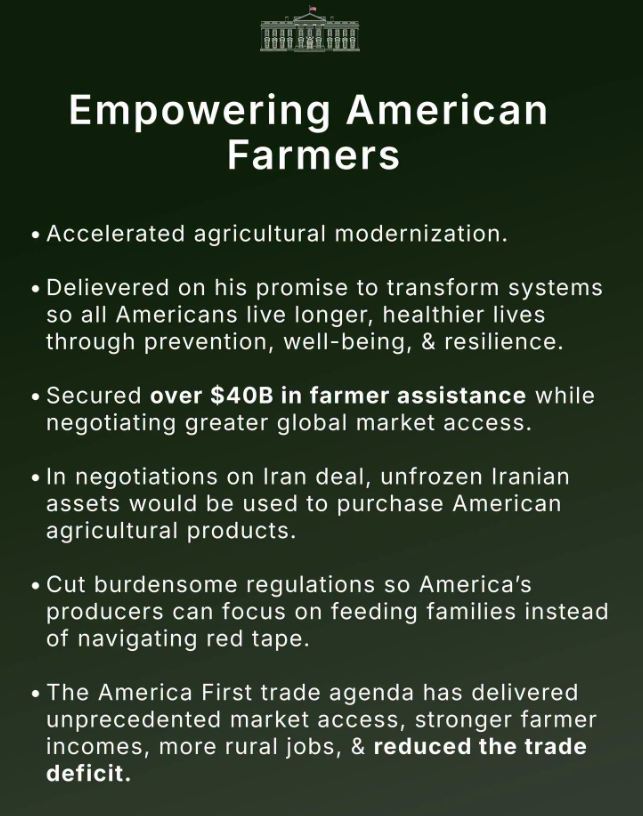
Speaking to a crowd of approximately 100 agricultural advocates and policy leaders in the Rose Garden, Trump reaffirmed that federal policy will heavily back precision agriculture, federal investments in soil health, and farm modernization.
The sweeping policy rollout occurred on the exact same day the U.S. Supreme Court delivered a landmark 7-2 decision in Monsanto Co. v. Durnell. Writing for the majority, Justice Brett Kavanaugh ruled that the Federal Insecticide, Fungicide, and Rodenticide Act (FIFRA) expressly preempts state-law failure-to-warn tort claims. The decision successfully blocks state-level lawsuits seeking to enforce cancer warnings on glyphosate-based products, like Roundup, that go beyond the EPA’s approved labels. The high court clarified that the EPA’s formal label registration process holds binding federal authority, a massive legal victory for the crop protection industry.
The ruling created a notable political backdrop at the White House event. HHS Secretary Robert F. Kennedy Jr., a prominent MAHA figure who previously won multimillion-dollar verdicts against glyphosate in private legal practice, was in attendance. The Trump administration backed Bayer in the Supreme Court case, reflecting a shift toward a more collaborative approach to balancing MAHA health objectives with industrial stability. Reassuring farm organizations, the executive order explicitly notes that federal agencies should not pursue regulatory actions that exceed existing statutory requirements.
The White House event concluded a high-stakes week for the agricultural sector, which included the Senate Agriculture Committee releasing its latest farm bill draft and a formal administration request for $11.1 billion in emergency agricultural disaster assistance for row-crop and specialty-crop producers suffering recent losses.
Addressing energy policy, Trump reiterated his calls for Congress to permanently legalize the year-round sale of E15 blend ethanol, crediting Senators Roger Marshall of Kansas and Joni Ernst of Iowa for their relentless advocacy on the issue.
On trade, Trump highlighted past agricultural trade trends, citing China’s prior commitments to purchase $17 billion in agricultural commodities, primarily soybeans. He also suggested that ongoing diplomatic negotiations in Switzerland, led by Vice President JD Vance, could eventually position Iran as a destination for American wheat, corn, and soybeans due to domestic food shortages there.
Finally, the President highlighted tax relief measures codified in the One Big Beautiful Bill Act. The legislation permanently raised the federal estate and gift tax exemption to $15 million per individual and $30 million for married couples. The adjustment aims to protect multi-generational family farms from being forced into liquidation to satisfy federal transfer taxes, thereby offering long-term estate-planning security for land-rich, cash-poor agricultural operations.
This article has parts contributed by DTN analysts Chris Clayton and Jake Zajkowski .







