

Oklahoma producers are navigating a shifting landscape following the latest USDA Acreage and Grain Stocks reports. To break down what these numbers mean for the region, Farm Director KC Sheperd sat down with Oklahoma State University Extension crop marketing specialist Dr. Todd Hubbs to analyze how surging Oklahoma soybean acreage, emerging winter canola rotations, and international trade uncertainties are reshaping local farm management.
Market Rebounds and the Soybean Surge
Following the release of the highly anticipated USDA data, grain markets experienced a notable bounce, offering a bit of relief to producers who have weathered recent pricing pressures.
“After those USDA reports, we’ve been rallying a bit,” Dr. Todd Hubbs stated. “We got about another quarter in the futures markets for HRW (Hard Red Winter) wheat. Corn a little, little less. We’re just having a tough time getting purchases with the corn price. It’s up a bit, but nowhere near where everybody would want it. Just crops in general, we’ve got a little bit of a rally after that acreage and stocks report, which were pretty supportive.”
While the general rally provided a positive spark, the unexpected expansion of soybean acres across Oklahoma was one of the most striking features of the regional data.
“The one thing that I think it was is how much soybean acreage we had following another crop; it was pretty high this year,” Dr. Hubbs observed. “I knew we were planting soybeans here in Oklahoma, I think around 500,000 acres according to NASS USDA. And that’s up for Oklahoma, but a lot of them are planted—it sort of makes sense when you think about how bad our wheat crop was in some places.”
In contrast to the climbing row-crop numbers, winter wheat acres contracted slightly relative to previous projections, aligning closely with broader industry expectations.
“We dropped HRW acres a bit from the last report,” Dr. Hubbs noted. “I don’t think any of that was much of a surprise, to be honest with you. We were expecting, or at least I was and I think most people out here were expecting, fewer acres in the Hard Red Winter wheat areas, and that’s what we saw for a total of 22.4 million acres in general. The last time they did it, it was 23.1 million acres, so we lost a bit.”
The Resurgence of Canola in the Rotation
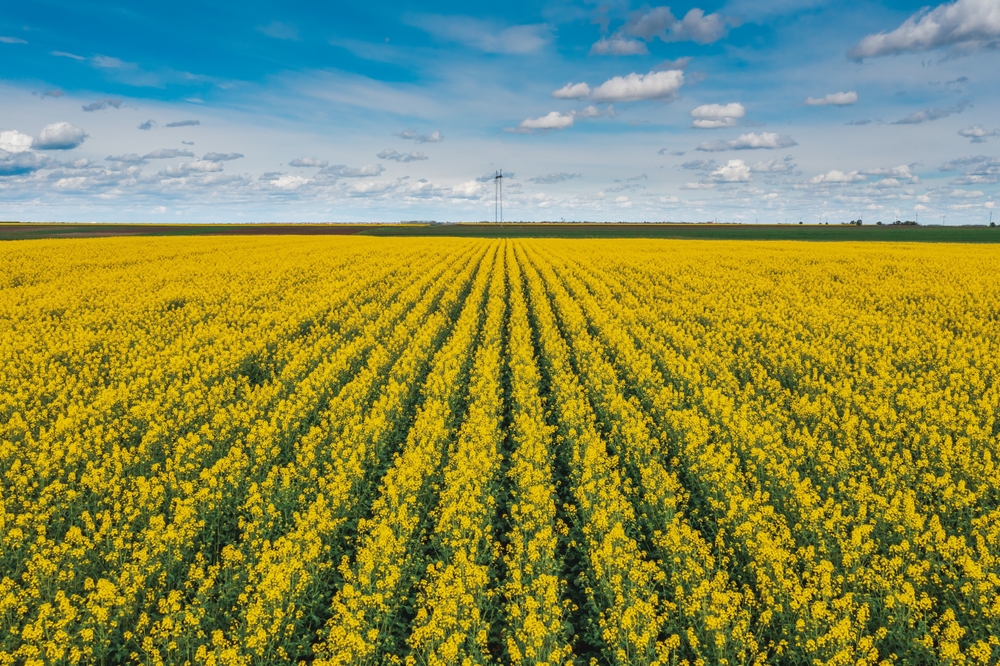
Another notable shift in Oklahoma’s agricultural landscape is the revitalization of canola acreage, driven by domestic energy policies and improved local market access.
“We’re not a huge canola planter, but 27,000 acres this year was up substantially from last year,” Dr. Hubbs explained. “Driving around the state, I’ve seen quite a few canola acres going in. That crushing facility in Kansas has allowed us to have a market much closer to us than maybe we’ve had in some time here in Oklahoma. If I had my druthers, we’d have a crushing facility here in Oklahoma, but that’s not happening; it doesn’t look like anytime soon. And so, we can go up to that crushing facility in Goodland and move some of our canola through that.”
Reflecting on the crop’s history in the region, Dr. Hubbs pointed out that past learning curves are giving way to more sustained economic incentives this time around.
“I think there’s some learning curve to doing canola,” Dr. Hubbs said. “As you mentioned, last time it sort of didn’t take off. I think maybe this time we can see some kind of purchase set in, particularly given the biofuels issue and the general domestic demand for oilseeds to meet the RVOs (Renewable Volume Obligations) under the Renewable Fuel Standard. Canola’s a really good crop to do that. So hopefully we can get in on that, and it’ll be profitable for us here in Oklahoma.”
When asked by Farm Director KC Sheperd whether canola is actively replacing other traditional crops, Dr. Hubbs clarified its structural role for local growers.
“I think it’s just in the rotation,” Dr. Hubbs specified. “We plant sort of a winter canola, not the spring type that you see. So, it’s just sort of in the rotation from what I’ve understood. It’s a nice rotator, I think, but I think the management’s a little more complex. I don’t want to be an armchair agronomist here, KC, and everybody loves to do that, but I’m not going to do that. But I think there’s a place for it in our rotations. I think it could be really profitable for us and help with pest pressure and diseases.”
Shifting Acres and Rising Productivity
The broader trends indicate a decline in total principal crop acreage across the United States, yet this reduction does not necessarily translate into lower sector output.
“You’ve got to remember that in the principal crops, hay is in the principal crop number,” Dr. Hubbs explained. “Our hay numbers are down some; the principal crop numbers are down. Are they disappearing? Yes, they are. I think people are getting out. When you take the whole bucket of crops—CRP acres, stuff in environmental programs, our actual principal crops, our main crops, and then some of what would be considered specialty crops—yeah, the acreage is down. It’s not maybe as drastic as it looks, but we are seeing crop acreage go down.”
Despite fewer total acres in production, advanced management practices and favorable conditions continue to push yield thresholds higher.
“We’re also seeing productivity of all of our acreage simultaneously go up,” Dr. Hubbs emphasized. “We did a 186-plus corn yield last year. We’re in the mid-50s on soybean yields in a lot of places. I think what we’re seeing is just people are moving out, maybe we’re losing a few acres here and there. Maybe some of it’s to expansion of cities and the footprints around major urban areas in the Midwest. But I think in the whole, it’s just a general trend of losing some acres across the whole bundle of crops as we shift around year over year and try to be profitable.”
Anticipation Surrounding Global Reports
Looking ahead to upcoming global balance sheets, Dr. Hubbs remains focused on wheat class breakdowns and international weather disruptions rather than drastic domestic revisions.
“What we’re going to get is their first forecast of the classes for wheat, which is always nice to see what they’re thinking, particularly for Hard Red Winter wheat,” Dr. Hubbs said regarding the July WASDE report. “That’s what I’ll be looking at. I’m not expecting huge changes internationally. We had that heat wave in Europe, and there’s been a lot of speculation on losing some winter wheat bushels out of Europe, particularly in France and parts of Eastern Europe. Some of the stuff that’s come out of there, I think, is way overshooting the mark.”
Dr. Hubbs intends to closely monitor how federal analysts quantify international production challenges in the coming weeks.
“I’ll be interested to see what kind of wheat number they put out for the EU and places like India crop because their monsoon’s been delayed,” Dr. Hubbs added. “I think the Black Sea area has got a good wheat crop going; I think you might see that reflected as well. But other than that, I think it’s just going to be minor tinkering on a lot of the major crop balance sheets as we get ready for that first national yield number in August.”
Trade Policy and Market Continuity
Uncertainty regarding federal trade agreements, specifically the future of the USMCA, remains a top-of-mind issue for agricultural groups that depend on consistent export channels.
“Mexico and Canada are important markets for our ag exports,” Dr. Hubbs stated. “I know our producer groups have been letting them know, and I’ve seen it, and I think you probably have seen it as well: a lot of discussion about how these markets matter for us. The mechanism is more complex. I don’t think you can just pick up sticks and go home on this; I think there’s a process in place. So, I think it just adds more uncertainty into our markets.”
Addressing concerns over sudden disruptions to international trade, Dr. Hubbs reiterated that institutional safeguards prevent immediate policy dissolutions.
“This is a long process to this,” Dr. Hubbs reassured. “It’s supposed to be a yearly review that starts a 10-year clock. He’s talked about negotiating individually with Mexico and Canada. I don’t think they’re just going to just crunk it, for no better word. And so, there’s a process in place. But just continuously letting politicians and people that may have some influence know that those markets matter is important, and I think our producer groups are doing a good job of that.”







